
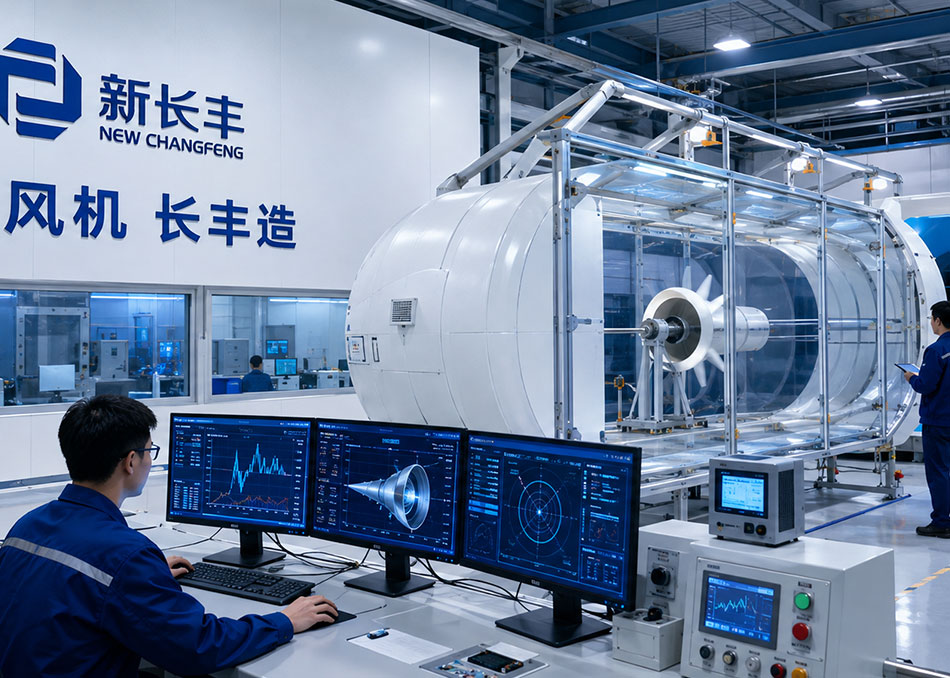
Mahjong parlors share a common ventilation problem: many people, a closed floor plan, and long dwell times. With four players clustered around each table, tobacco smoke, body heat, and humidity build up fast, and customers feel stuffy, irritated, and hot within minutes of walking in. Most operators reach for exhaust fans first, but exhaust only handles the "pulling air out" half of the job. Without a steady supply of make-up air, the room goes negative, and a familiar set of problems follows: drafts whistling in through door gaps, odors migrating back from adjacent units, and air-conditioned cooling being sucked straight out of the space.
The more effective approach is an organized make-up air and cooling system built around a water-cooled fresh air unit. This article covers the ventilation principles behind it, what to look for when specifying a unit, and practical notes on installation and maintenance for parlor operators and HVAC contractors alike.
Why Make-Up Air Matters More Than Exhaust Alone
In a mahjong parlor, the pollution sources are all indoors: tobacco smoke, carbon dioxide from breathing, moisture from perspiration, and odors trapped in upholstery and table fabrics. If exhaust fans simply pull air out, the total volume of indoor air drops and the space falls below outdoor pressure, creating negative pressure. The consequences are predictable. Unfiltered hot outdoor air seeps in through door gaps, window seams, and pipe penetrations in an uncontrolled way. Odors travel between floors and into neighboring shops. Meanwhile, cooling capacity is continuously drawn out of the room, so energy consumption climbs while comfort does not improve.
The correct logic is straightforward: supply first, exhaust second, and keep the two balanced. When make-up air volume slightly exceeds exhaust volume, the parlor holds a slight positive pressure, and hot outdoor air and odors no longer backflow through the gaps. A water-cooled fresh air unit takes on exactly this role. It draws in outdoor air, passes it through an evaporative cooling pad for temperature reduction and filtration, and delivers it into the room as a controlled, cooled supply stream.
This matters especially in enclosed commercial spaces where GB 51251 principles on smoke and heat exhaust remind designers that supply and exhaust paths must be planned together, not treated as separate add-ons. A parlor that treats ventilation as a single exhaust fan on a wall is solving half a problem.
How a Water-Cooled Fresh Air Unit Works
A water-cooled fresh air unit combines two functions in one cabinet: fresh air introduction and evaporative cooling. Outdoor air is pulled through a filter to capture dust and airborne particulates, then across a wet evaporative pad. As water evaporates, it absorbs heat from the air stream, lowering the supply air temperature without a conventional refrigerant circuit. The cooled, filtered air is then distributed into the room through ductwork or directed outlets.
Because the unit operates as a supply device, it is sized against the exhaust strategy rather than in isolation. In practice, the exhaust side may include ceiling-mounted negative pressure fans or general exhaust grilles, while the water-cooled fresh air unit provides the matching make-up volume. The slight positive pressure this creates is what keeps smoke and odors from drifting into corridors, stairwells, and neighboring tenants.
- Filtration stage: removes dust and coarse particulates before air enters the space.
- Evaporative cooling stage: lowers supply air temperature through water evaporation, with no compressor.
- Balanced supply: works together with exhaust fans to hold slight positive pressure.
- Ducted distribution: delivers air where people actually sit, rather than dumping it at one wall.
Fan performance for these units should be evaluated against GB/T 1236 test methods, and energy performance against GB 19761 where applicable, so that the specified unit is verified rather than assumed.
Selecting the Right Unit for a Mahjong Parlor
Selection starts with a simple occupancy and volume calculation, not with the biggest unit on the shelf. Count the seats, estimate the air volume of the room, and establish an exhaust figure based on the number of tables and smoking activity. The make-up air unit should then be sized slightly above that exhaust figure to maintain positive pressure. Oversizing creates drafts and wastes energy; undersizing leaves the room in negative pressure and defeats the purpose.
Noise is the second practical criterion. Mahjong parlors are quiet, conversational spaces, and a unit that roars will draw complaints regardless of how well it cools. Look at the fan type and cabinet construction: centrifugal fan designs in a well-sealed cabinet generally run quieter than axial arrangements at comparable duty. Duct routing, flexible connectors, and vibration isolation all affect perceived noise as much as the fan itself.
Third, consider the local climate and water quality. Evaporative cooling performs best in hot, dry conditions and less dramatically in humid climates, where sensible cooling gains shrink. Water hardness affects pad scaling and maintenance frequency, so a water treatment or filtration approach should be part of the plan from day one.
- Calculate exhaust volume from table count and occupancy, then add a margin for positive pressure.
- Match supply air distribution to seating layout to avoid dead zones and drafts.
- Prioritize low-noise fan and cabinet design for conversational environments.
- Confirm water quality and plan for pad maintenance intervals.
Installation and Maintenance Notes
Installation quality determines whether the system delivers its design intent. The unit should draw outdoor air from a location away from exhaust discharges, kitchen flues, and vehicle traffic. Supply ductwork should be sealed and insulated where it passes through unconditioned spaces, and return or relief paths should be planned so the parlor does not become over-pressurized when doors are closed. For parlors sharing a building with restaurants, keeping the fresh air intake clear of kitchen exhaust is essential to avoid pulling odors back in.
On the maintenance side, evaporative pads need periodic cleaning or replacement, water lines should be checked for scale and biofilm, and filters require a regular change schedule. A simple logbook with dates for pad inspection, filter changes, and fan belt checks keeps the system performing and extends service life. Operators who skip this step often conclude that evaporative cooling "doesn't work" when the real issue is a clogged pad or a dry water line.
Commissioning should include a pressure check: confirm the parlor holds slight positive pressure relative to the corridor, and verify that exhaust and supply are actually balanced in operation, not just on paper.
Frequently Asked Questions
Q: Can I just install a stronger exhaust fan instead of a make-up air unit?
A: A stronger exhaust fan makes negative pressure worse. It pulls more air out without replacing it, so hot outdoor air and odors enter through gaps, and air-conditioned cooling is lost. The fix is balanced supply and exhaust, with make-up air slightly exceeding exhaust.
Q: Does evaporative cooling work in humid climates?
A: Evaporative cooling delivers the largest temperature drop in hot, dry air. In humid conditions the sensible cooling effect is smaller, though the unit still provides filtered fresh air and ventilation, which is the primary function. Selection should account for local climate data rather than assuming a fixed temperature drop.
Q: How much maintenance does a water-cooled fresh air unit need?
A: Expect routine filter changes, periodic pad cleaning or replacement, and checks on water lines and the fan. The interval depends on local dust levels and water hardness. A documented maintenance log is the simplest way to keep performance stable and avoid premature failures.
Q: Will the unit be too noisy for a mahjong parlor?
A: Noise depends on fan type, cabinet design, duct routing, and installation details such as vibration isolation. Centrifugal fan units in sealed cabinets are generally quieter at comparable duty, and proper duct design prevents noise from reaching the seating area.
Summary
Mahjong parlors need organized make-up air, not just exhaust. A water-cooled fresh air unit provides filtered, evaporatively cooled outdoor air and, when balanced against exhaust, holds the room at slight positive pressure so smoke, odors, and hot air stay outside. Size the unit to occupancy, plan for noise and water quality, and keep up with pad and filter maintenance. For operators and HVAC contractors planning a parlor ventilation upgrade, XCFFJ manufactures water-cooled fresh air units and related ventilation equipment for commercial spaces; contact us to discuss a configuration suited to your layout.