
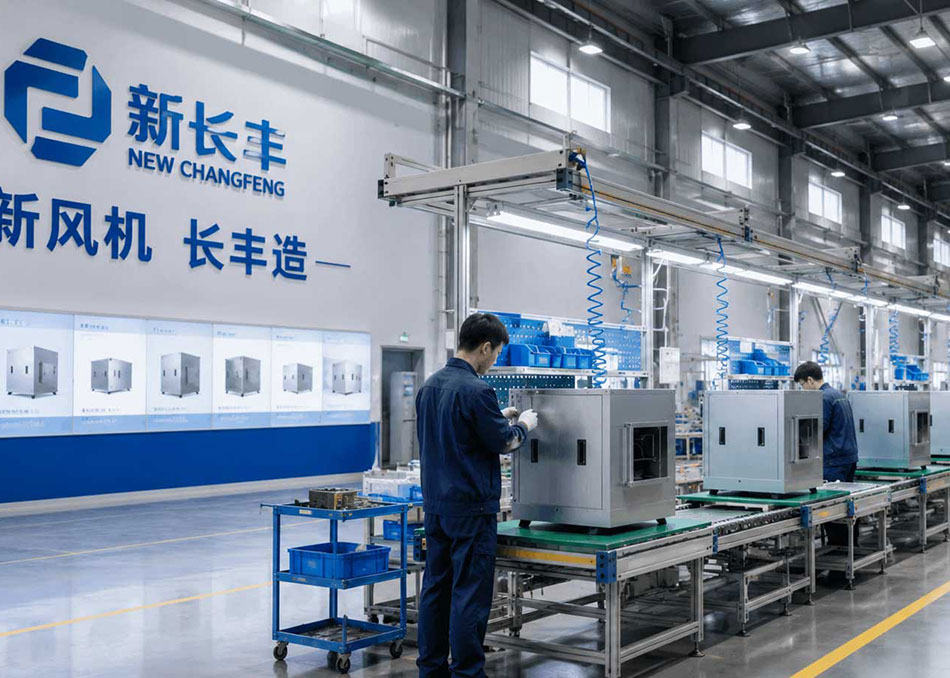
Internet cafés are among the most demanding indoor environments for ventilation and cooling. Dozens or even hundreds of gaming PCs run simultaneously, each generating heat, while monitors, lighting, and the occupants themselves add to the load. To keep out street noise and dust, doors and windows typically stay sealed, leaving little room for fresh-air exchange. The result is a familiar list of complaints: stuffiness, lingering odors, rising CO₂ levels, poor customer comfort, and shorter visits. Many operators reach first for conventional compressor-based air conditioning, but in a sealed café that approach only recirculates and cools the existing air—it does nothing to improve air exchange, and electricity bills climb accordingly. Water-cooled fresh air units are designed to address exactly this gap. This article examines why internet cafés need them, how the technology works, and how lessons from commercial kitchen negative-pressure make-up air can be applied to café ventilation.
Why Internet Cafés Need More Than Air Conditioning
The heat load profile of an internet café rules out a recirculation-only cooling strategy. Heat from people, gaming hardware, and lighting accumulates continuously, pushing the enthalpy of indoor air upward. At the same time, occupants consume oxygen and exhale CO₂, while smoke, sweat, and equipment odors build up in a sealed space. Compressor-based air conditioning may bring the temperature down, but air quality stays poor—customers still describe the environment as "stuffy."
A water-cooled fresh air unit works on a different logic. It draws in outdoor air, passes it through an evaporative cooling process, and delivers the treated fresh air into the space, while an exhaust path pushes stale air out. Cooling and air exchange happen together rather than as separate, competing systems. This is the core distinction between a fresh air unit and a conventional split air conditioner.
How Evaporative Cooling Delivers Fresh Air and Temperature Control Together
Evaporative cooling relies on the latent heat of vaporization: as water evaporates into an air stream, it absorbs heat from that air, lowering its dry-bulb temperature. The treated air is then supplied to the room at a lower temperature and with higher humidity than the outdoor air it came from. In practice, the achievable temperature drop depends on the local climate—hot, dry air yields a larger cooling effect, while humid conditions reduce it. This is why evaporative systems are most effective in dry and semi-dry regions, and why proper sizing matters in humid climates.
Because a water-cooled fresh air unit continuously introduces outdoor air, it also dilutes CO₂ and odors rather than merely masking them. The unit should be paired with a deliberate exhaust path—typically mechanical exhaust or dedicated relief openings—so that the incoming air displaces stale air instead of pressurizing the room. Without a planned exhaust route, fresh air supply alone will not achieve the intended air exchange.
Borrowing the Negative-Pressure Make-Up Air Approach from Commercial Kitchens
Commercial kitchens offer a useful model. Kitchen exhaust hoods remove large volumes of air, and without controlled make-up air the space falls into strong negative pressure—doors become hard to open, exhaust performance drops, and odors leak into adjacent areas. The standard solution is a balanced design: exhaust and make-up air are coordinated so the kitchen stays slightly negative relative to surrounding spaces, preventing fume migration while keeping exhaust working efficiently.
The same principle applies to internet cafés. A café should be kept at a slight negative pressure relative to corridors, stairwells, and neighboring units, so that smoke and odors do not drift outward. At the same time, the make-up air path must be adequate—otherwise the exhaust fans starve, air exchange collapses, and the space feels stagnant. A water-cooled fresh air unit serving as the make-up air source, combined with properly sized exhaust, gives operators a controllable balance point: enough fresh air to keep the room comfortable, and enough negative pressure to contain odors.
- Size exhaust and make-up air together—never treat them as independent decisions.
- Target a slight negative pressure in the gaming area relative to public corridors.
- Route supply air toward seating zones and exhaust intakes toward smoke- and odor-heavy areas.
- Use adjustable dampers so the balance can be tuned after installation.
Selection and Maintenance: What Operators Should Watch
Selection starts with an honest load assessment. Count the seats, estimate the heat from hardware and lighting, and account for the number of occupants. Fan performance should be verified against recognized test standards such as GB/T 1236 for airflow and pressure, and energy performance should be considered in light of GB 19761 for fan energy efficiency. Where smoke exhaust or fire safety systems are involved, GB 51251 governs smoke and heat exhaust design and should be respected in the overall ventilation plan.
Maintenance is equally important. Evaporative cooling media, water systems, and filters require regular cleaning and replacement; neglected pads lose cooling effectiveness and can become a source of odors. Exhaust fans and supply fans should be inspected for balance and belt wear, and the negative-pressure balance should be re-checked after any change in layout or seating capacity.
Frequently Asked Questions
Q: Can a water-cooled fresh air unit replace air conditioning entirely in an internet café?
A: In many climates it can carry most of the cooling and ventilation load, but the right answer depends on local humidity, the heat load, and comfort targets. In hot, humid regions, a hybrid approach that combines fresh air supply with supplementary cooling is often more reliable than relying on a single system.
Q: Why is negative pressure important in a café?
A: Slight negative pressure keeps smoke and odors from leaking into corridors and neighboring spaces, and it helps exhaust systems work as designed. Too much negative pressure, however, starves the exhaust and reduces air exchange, so the balance must be engineered rather than guessed.
Q: How often should evaporative cooling media be serviced?
A: Service intervals depend on water quality, dust levels, and operating hours. As a practical rule, inspect the media and water system regularly and clean or replace components when cooling performance drops or odors appear—waiting until customers complain is too late.
For internet café operators, the goal is not simply a lower thermometer reading but a room that feels fresh, smells clean, and keeps customers comfortable enough to stay. A water-cooled fresh air unit, designed and balanced with a proper exhaust path, addresses cooling and air exchange in one system. XCFFJ manufactures water-cooled fresh air units and a full range of industrial and commercial ventilation equipment; to discuss your café's layout and ventilation plan, visit www.xcffj.com.