
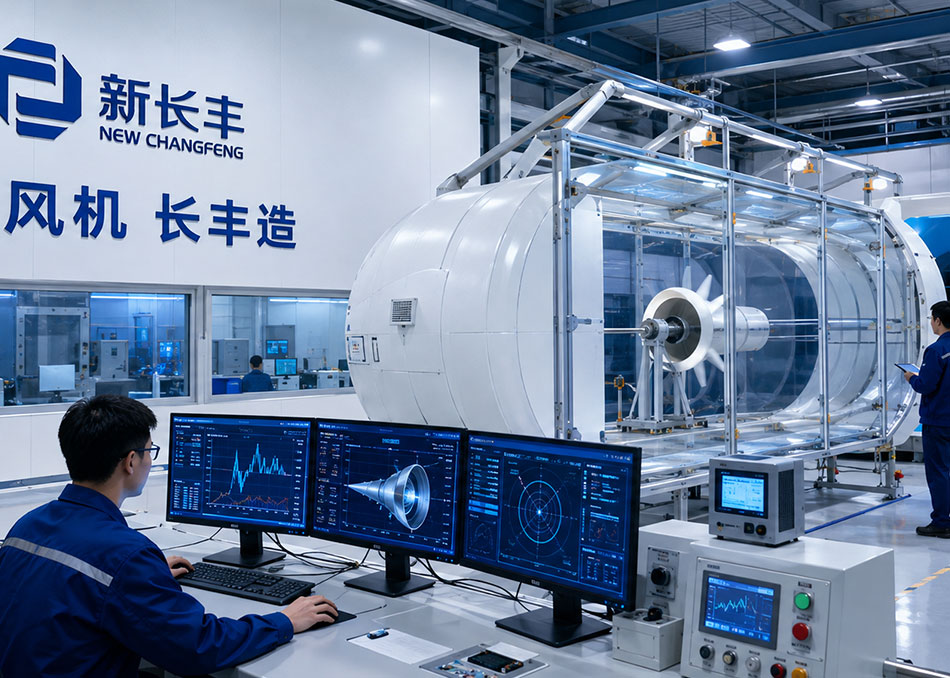
Mahjong clubs are a textbook example of a high-occupancy, tightly enclosed business environment. With four players at every table and dozens of customers in a full house, cigarette smoke, body odor, and exhaled air circulate endlessly between private rooms and the main hall. Customer comfort drops fast. In summer, air conditioners run for hours, oxygen levels fall, and the space feels stuffy. Many operators instinctively add exhaust fans, only to find the room gets more oppressive, not less. The reason: exhaust without make-up air creates negative pressure, fresh air cannot get in, and the exhaust fans themselves lose effectiveness. XCFFJ water-cooled fresh air units are designed specifically for this kind of make-up air and air-exchange challenge. This article breaks the problem down across four dimensions: ventilation principles, real-world pain points, selection criteria, and operation and maintenance.
Why Mahjong Clubs Need Make-Up Air, Not Just Exhaust
Ventilation is fundamentally about air replacement, and exhaust and make-up air must work as a pair. If a mahjong club installs only exhaust equipment, indoor air is pulled out and indoor pressure drops below outdoor pressure. Leakage through door and window gaps is nowhere near enough to offset the exhaust volume, so the actual airflow of the exhaust fans drops noticeably—the system simply cannot move air as designed. Negative pressure also draws odors back from restrooms, pulls kitchen fumes into the hall, and can even make doors hard to open.
A make-up air system does the opposite: while exhaust runs, it delivers treated outdoor air into the space, maintaining slight positive pressure or pressure balance so exhaust equipment keeps working at its design condition. The high occupant density and long dwell times in mahjong clubs make this even more critical. Estimated on a per-person fresh air requirement basis, the fresh air demand during full occupancy is substantial, and natural infiltration alone falls far short.
Water-cooled fresh air units address this by drawing in outdoor air, passing it through an evaporative cooling pad to lower its temperature, and then delivering it indoors. The result is a supply of cooler, cleaner air that supports both air exchange and thermal comfort—without competing with the existing air conditioning in the way an untreated outdoor air intake would.
The Real Pain Points in Mahjong Club Ventilation
Operators typically describe the same set of complaints. The hall feels stuffy even with the AC on. Smoke lingers in private rooms. Restroom odors drift into seating areas. Exhaust fans seem to run but do not actually clear the air. In many cases these symptoms share a single root cause: an unbalanced ventilation system.
- Stuffy, low-oxygen air: Sealed rooms with high occupancy and recirculated AC air lead to rising CO₂ and declining comfort over long sessions.
- Persistent smoke and odor: Without directed make-up air, contaminants migrate between rooms instead of being flushed out.
- Ineffective exhaust: Negative pressure suppresses exhaust fan performance, wasting energy on equipment that cannot deliver its rated airflow.
- Reverse airflow from restrooms and kitchens: Negative pressure pulls odors from adjacent spaces into the gaming area.
- Heat gain in summer: Untreated outdoor air introduced for make-up purposes adds cooling load and raises energy costs.
Water-cooled fresh air units tackle several of these at once. By supplying air rather than only removing it, they restore pressure balance, improve exhaust effectiveness, and reduce the temperature of incoming fresh air through evaporative cooling. This makes them a practical fit for the continuous, long-hour operation typical of mahjong clubs.
Selection Criteria for Water-Cooled Fresh Air Units
Choosing the right unit starts with a proper ventilation calculation, not a guess. The make-up air volume should be matched to the exhaust volume and the occupancy-based fresh air requirement, with the larger of the two governing the design. Undersizing leaves the negative-pressure problem unsolved; oversizing can create excessive positive pressure and unnecessary energy use.
Beyond airflow, several technical factors deserve attention:
- Airflow and pressure matching: Confirm the unit's rated performance against the calculated make-up air demand, referencing fan performance testing standards such as GB/T 1236.
- Energy efficiency: Compare fan energy efficiency against GB 19761 to avoid units that consume more power than necessary during long operating hours.
- Evaporative cooling performance: The cooling pad's effectiveness and the local climate's wet-bulb temperature determine how much temperature drop is realistic.
- Noise level: Mahjong clubs are quiet environments; fan and airflow noise should be appropriate for the space, especially in private rooms.
- Filtration and air quality: Adequate filtration protects the cooling pad and improves the quality of supplied air.
- Ducting and distribution: Supply air should be directed to occupied zones and coordinated with exhaust points to create effective airflow paths.
Where smoke control or fire safety systems are involved, coordination with applicable smoke and heat exhaust requirements, such as GB 51251, should be confirmed with the design professional. For clubs that also operate food service, kitchen exhaust should be handled separately in line with GB 18483, with the water-cooled fresh air unit focused on the gaming and public areas.
Installation, Operation, and Maintenance
Correct installation is as important as correct selection. The unit should be positioned to draw in clean outdoor air, away from exhaust discharges and kitchen fume outlets. Supply and exhaust points should be laid out to encourage cross-flow through the occupied space rather than short-circuiting air directly from supply to exhaust. Balancing the system after installation—adjusting dampers and confirming actual airflow—is essential to achieving the intended pressure relationship.
Ongoing maintenance protects both performance and air quality:
- Inspect and clean or replace the cooling pad regularly to prevent scale buildup and microbial growth.
- Clean filters on a schedule matched to local dust and smoke levels.
- Check fan belts, bearings, and motor condition to keep airflow at design levels.
- Verify pressure balance periodically, especially after layout changes or occupancy increases.
- Keep drain lines and water systems clear to avoid standing water and odors.
For operators, the payoff is straightforward: a balanced system means exhaust fans finally work as intended, rooms feel fresher, odors stop migrating, and customers stay longer. Energy use also tends to fall when equipment is no longer fighting negative pressure.
FAQ
Q: Can I just add more exhaust fans instead of a make-up air unit?
A: Adding exhaust without make-up air usually makes the problem worse. More exhaust increases negative pressure, which suppresses the airflow of every fan in the system and pulls odors in from restrooms and kitchens. A make-up air unit restores balance so the exhaust equipment can perform as designed.
Q: How is a water-cooled fresh air unit different from a standard fresh air fan?
A: A standard fresh air fan delivers outdoor air at roughly outdoor temperature, which adds cooling load in summer. A water-cooled fresh air unit passes the incoming air through an evaporative cooling pad first, lowering its temperature before it enters the space. In hot climates this improves comfort while supporting ventilation.
Q: Does evaporative cooling work in humid weather?
A: Evaporative cooling performance depends on the wet-bulb temperature of the outdoor air, so the achievable temperature drop is lower in humid conditions. The unit still provides the make-up air and air-exchange function regardless of weather, and selection should account for local climate data.
Q: How do I know what size unit my club needs?
A: Size the unit based on both the exhaust volume and the occupancy-based fresh air requirement, using the larger value. A proper calculation considers room volume, occupant count, and air-change targets. Avoid sizing by rule of thumb alone, since undersizing leaves negative pressure unresolved.
Conclusion
For mahjong clubs, the ventilation problem is rarely a lack of exhaust—it is a lack of balance. Water-cooled fresh air units from XCFFJ combine make-up air supply with evaporative cooling, helping operators restore pressure balance, improve exhaust effectiveness, and keep customers comfortable through long sessions. If your club is dealing with stuffy rooms, lingering smoke, or exhaust fans that seem to do nothing, start with a proper ventilation assessment and match the equipment to the calculated demand. Explore the XCFFJ water-cooled fresh air unit range at www.xcffj.com to find a configuration suited to your space.