
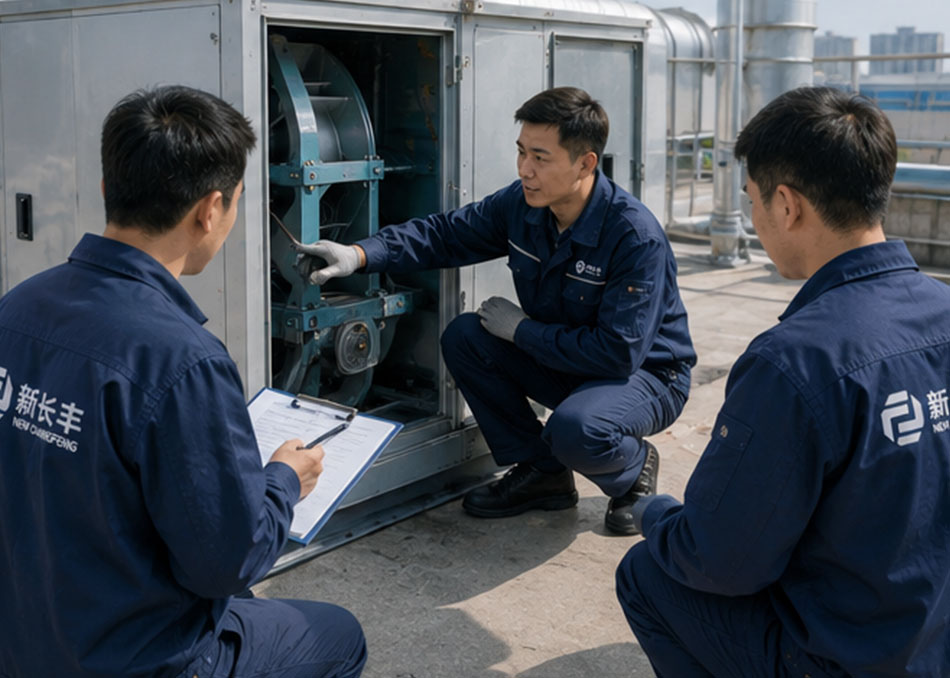
In busy commercial kitchens, operators often grapple with a frustrating paradox: despite installing powerful exhaust hoods and fans, the space remains stiflingly hot, doors become hard to open, and cooking odors seep into dining areas through service windows, floor drains, or door gaps. The root cause is rarely the exhaust system itself—it's an imbalance in make-up air that creates negative pressure. This article explores how water-cooled fresh air units address this challenge, providing a practical solution for kitchen ventilation and make-up air.
Understanding the Negative Pressure Trap in Commercial Kitchens
During peak cooking hours, exhaust hoods and fans work simultaneously to remove large volumes of air. When the amount of fresh air supplied is significantly less than the air being exhausted, a negative pressure condition develops. This triggers a cascade of problems: reduced exhaust efficiency, grease-laden air spilling into dining areas, incomplete gas combustion, difficulty opening doors, and a general sense of stuffiness for staff.
According to fundamental HVAC design principles, every organized exhaust system must be paired with an organized make-up air system. Without proper balance, even the best exhaust purification equipment cannot perform as intended. Negative pressure not only undermines kitchen comfort but also compromises food safety and worker well-being.
How Water-Cooled Fresh Air Units Work and Why They Fit Commercial Kitchens
The core of a water-cooled fresh air unit lies in combining two functions: cooling and ventilation. The unit draws in outdoor air, passes it through a wet curtain or water-cooled heat exchange structure, and uses the physical process of water evaporation to absorb heat—thereby lowering the air temperature. The cooled air is then delivered indoors in an organized manner.
Compared to simply introducing hot outdoor air, a water-cooled fresh air unit supplies air at a more comfortable temperature, directly addressing the dual challenges of make-up air and kitchen heat. This makes it an essential component in negative pressure solutions and ventilation strategies for commercial kitchens.
Key advantages include:
- Effective make-up air: Balances exhaust volumes, restoring proper pressure relationships and improving exhaust efficiency.
- Evaporative cooling: Reduces incoming air temperature, alleviating kitchen heat without relying solely on traditional air conditioning.
- Organized ventilation: Ensures a controlled flow of fresh air, preventing grease and odors from migrating to other areas.
- Energy efficiency: Evaporative cooling consumes less energy than compressor-based cooling, aligning with green building practices.
Key Considerations for Selecting and Installing Water-Cooled Fresh Air Units
Choosing the right water-cooled fresh air unit requires careful assessment of kitchen layout, exhaust capacity, and local climate. The unit's airflow and cooling capacity must match the exhaust volume to maintain slight negative pressure—not excessive—to prevent odor migration while ensuring proper exhaust.
Installation location matters: the unit should draw in clean outdoor air, away from exhaust outlets or grease-laden discharges. Ductwork should be designed to minimize resistance and ensure even air distribution. Regular maintenance, including water quality management and filter cleaning, is essential to sustain performance and prevent microbial growth.
Incorporate controls that allow modulation based on cooking intensity. Variable-speed drives or multiple units can provide flexibility, matching make-up air to actual exhaust demand and saving energy during off-peak hours.
Integrating Water-Cooled Fresh Air Units with Kitchen Exhaust Purification
While water-cooled fresh air units solve the make-up air side, they work best when paired with high-efficiency exhaust purification systems. Electrostatic precipitators and UV systems can remove grease and odors from exhaust air, but their performance depends on proper airflow. Balanced pressure ensures that exhaust hoods capture grease effectively and that purified air is discharged without recirculation.
For school canteens, hotel kitchens, and central kitchens, this integrated approach enhances compliance with emission standards such as GB 18483 for kitchen fume and improves the working environment. It also reduces fire risks associated with grease buildup in ducts.
Frequently Asked Questions
Q: Can a water-cooled fresh air unit replace a traditional air conditioner in the kitchen?
A: Not entirely. While it provides cooling through evaporation, its primary role is make-up air and ventilation. In extremely hot and humid climates, it may not achieve the same temperature reduction as a refrigerant-based air conditioner. However, it significantly reduces heat load and improves comfort at a lower energy cost. For best results, combine it with targeted spot cooling or a hybrid system.
Q: How do I know if my kitchen has a negative pressure problem?
A: Common signs include difficulty opening doors, exhaust hoods not capturing smoke effectively, odors drifting into dining areas, and staff complaints of stuffiness. A simple test is to observe whether air rushes in when you crack open an exterior door. If so, you likely have negative pressure. A qualified HVAC professional can measure pressure differentials and recommend appropriate make-up air solutions.
Q: What maintenance does a water-cooled fresh air unit require?
A: Regular maintenance includes checking and cleaning the water distribution system, replacing or cleaning the wet curtain, inspecting the water quality to prevent scale and algae, and cleaning air filters. The frequency depends on usage and local water conditions. Following the manufacturer's guidelines ensures efficient operation and longevity.
Q: Are there government regulations regarding kitchen ventilation?
A: Yes, many regions have codes specifying minimum ventilation rates and require make-up air systems to balance exhaust. In China, standards like GB 51251 for smoke and heat exhaust and GB 18483 for kitchen fume emission set requirements. Local building codes also apply. Consulting a professional engineer ensures compliance and optimal design.
Conclusion
Addressing negative pressure and heat in commercial kitchens requires a holistic approach. Water-cooled fresh air units provide an effective, energy-efficient way to supply cooled make-up air, improving exhaust performance and worker comfort. By integrating these units with proper exhaust purification and controls, kitchen operators can create a safer, more productive environment.
For more information on selecting the right water-cooled fresh air unit for your kitchen, visit www.xcffj.com or contact our team of ventilation specialists.