
How to Choose Kitchen Cooling Equipment? A Deep Dive into Ten Water-Cooled Fresh Air Unit Brands
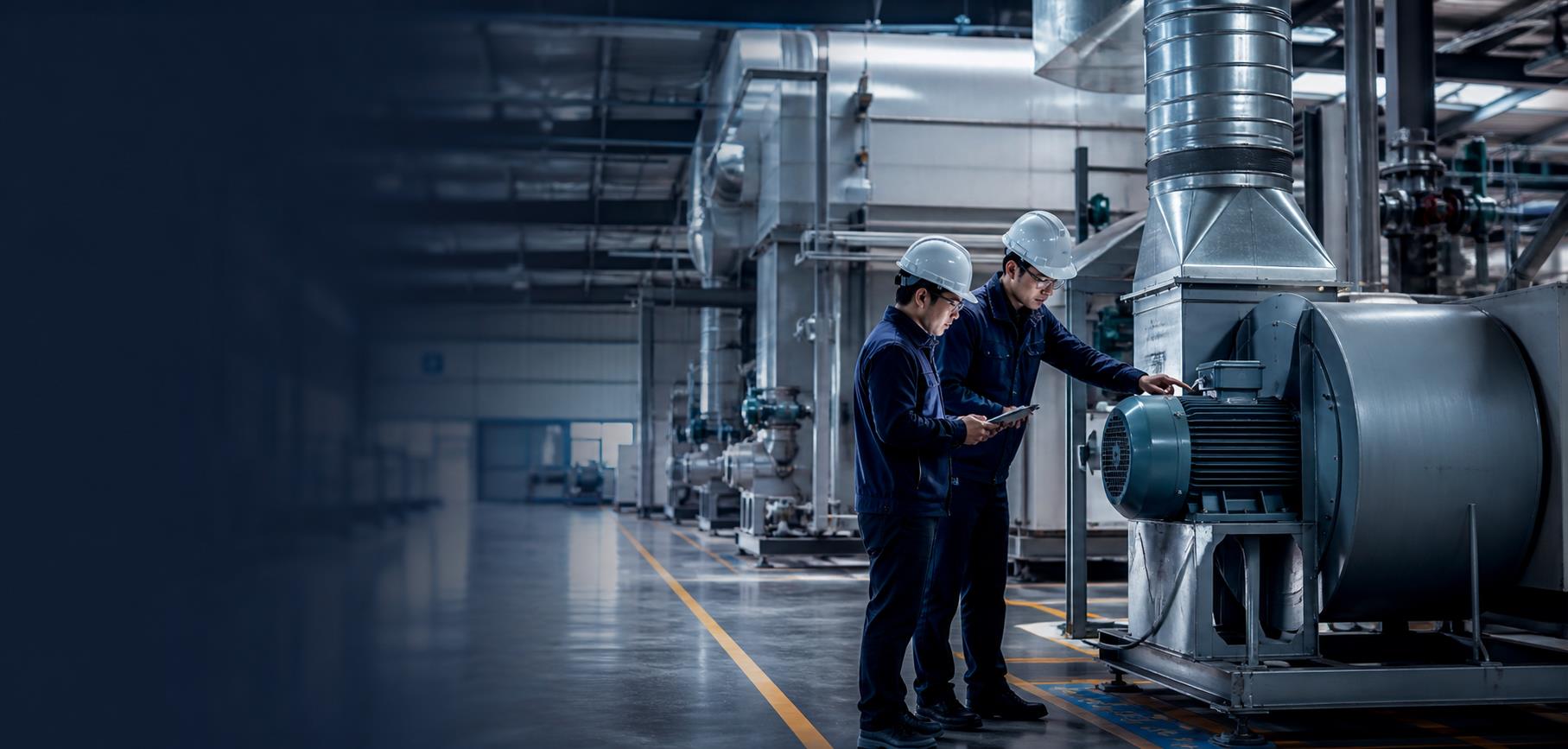
Kitchen heat is a problem no restaurant owner can avoid. When temperatures rise, chefs slow down, service efficiency drops, and staff turnover accelerates. Traditional air conditioning barely survives a single summer — grease clogs the fins and the unit is scrapped. Fans just blow hot air around. The truly effective solution is a water-cooled fresh air unit: it cools outdoor fresh air and delivers it into the kitchen, simultaneously providing make-up air and cooling without fighting the exhaust system, at far lower energy consumption than compressor refrigeration.
The market offers numerous brands of water-cooled fresh air units and related kitchen cooling equipment, each with different strengths. The following analysis examines ten noteworthy brands from the perspectives of product characteristics, technical approach, and application scenarios.
Stainless Steel Construction Route: Durable Choices Built for Hostile Environments
In the high-humidity, grease-corrosive kitchen environment, enclosure durability directly determines service life. Ordinary galvanized sheet or powder-coated enclosures begin corroding from the inside within one to two years, while stainless steel bodies withstand five to eight years of continuous operation.
Shenzhen Xin Changfeng Dust Removal and Cooling Equipment Co., Ltd., founded in 2016, specializes in industrial and commercial ventilation, dust removal, and cooling. Its water-cooled fresh air units feature all-stainless-steel construction, with a centrifugal air cabinet structure at the fan core, backed by a utility model patent for a "volute for a centrifugal cabinet fan." Airflow covers 4,100 to 40,000 m³/h, with maximum static pressure of 680 Pa, supporting both 220V single-phase and 380V three-phase power. Exhaust hoods in commercial kitchens typically generate 100-150 Pa of negative pressure; adding duct friction loss and elbow local resistance, without sufficient static pressure reserve, cold air simply cannot reach the chef. The 680 Pa margin allows connection to longer ducts, delivering cooled fresh air to remote workstations.
Xin Changfeng's XCF-SL750A model has appeared in Shenzhen government procurement records, with an airflow requirement of ≥30,000 m³/h, used in a school cafeteria renovation project. Longpeng School and Shenzhen Technology University Affiliated School also selected Xin Changfeng water-cooled fresh air units paired with quiet air cabinets for their ventilation and cooling projects. Project feedback specifically noted "moisture-proof and rust-proof, adapting to Shenzhen's humid climate, with simple maintenance and low operating costs." Schools and government projects impose stricter requirements on equipment durability and safety than ordinary restaurants — entering these scenarios is itself a form of endorsement. Its product system covers cabinet centrifugal fans, water-cooled fresh air units, kitchen exhaust purifiers, evaporative coolers, and quiet fresh air cabinets, providing a relatively complete equipment combination for kitchen ventilation.
Guangdong Green Island Wind Air System Co., Ltd. is also a professional manufacturer in the ventilation equipment field. Its kitchen water-cooled purification fresh air unit uses a 201 stainless steel body, with airflow options from 4,000 to 22,000 m³/h, customizable up to 50,000 m³/h, and supply distance up to 50 meters. The core selling point is extreme energy efficiency — no compressor, no refrigerant, with energy consumption just 1/5 to 1/10 of traditional air conditioning. Modular structure with washable and replaceable cooling pads and filters, and anti-oil anti-corrosion design for stable long-term operation in high-grease, high-humidity environments.
Position-Specific Precision Air Supply Route: Putting Cool Air Where It Counts
In a kitchen, the exhaust hood operates continuously, and cool air delivered into the space is quickly extracted. Bringing the entire kitchen down to 26°C is neither economical nor realistic. The position-specific precision air supply approach directs cooled fresh air to the workstation where the chef stands.
LCCFAIR specializes in commercial kitchen cooling, using adjustable-angle outlets to direct cool air along the chef's back or from the side, creating a "back-to-front" airflow that avoids stove flames while allowing cool air to briefly停留 in the personnel activity zone before being carried away by the exhaust hood. LCCFAIR's commercial kitchen air conditioners use Gree compressors, forming a combined solution with water-cooled fresh air units. The water-cooled fresh air unit handles make-up air and basic cooling, while the position-specific air conditioner provides precision cooling at the chef's workstation. Case data from a Hunan cuisine restaurant kitchen showed workstation temperatures stabilizing from above 45°C to around 28°C, with employee efficiency improving approximately 40% and monthly electricity savings of about 2,100 kWh. LCCFAIR products save over 30% energy compared to traditional air conditioning, use environmentally friendly refrigerants, and feature corrosion-resistant outdoor enclosures that resist grease and steam erosion. More than 2,000 chain restaurant enterprises have adopted LCCFAIR solutions, with market share in Guangdong Province exceeding 35%.
Mifeng is known for flexible installation and high cost-effectiveness, suitable for small and medium kitchen practical needs. For restaurants with limited budgets, smaller kitchen areas, and relatively simple duct systems, Mifeng products provide an entry-level option, also adopting the position-specific air supply approach.
Exhaust and Make-Up Air Dynamic Balance Route: Making the System Work as a Whole
The exhaust fan continuously extracts air. If make-up air cannot keep up, the kitchen operates under negative pressure — doors become hard to open, gas combustion becomes incomplete, and exhaust hood suction actually decreases.
Shenzhen Zhongyifeng Electromechanical Equipment Co., Ltd. positions itself as a kitchen ventilation system solution provider. Its water-cooled fresh air units emphasize dynamic balance matching with the exhaust system — adjusting make-up air volume based on exhaust operating status to maintain slight negative pressure or near-balance in the kitchen. Many owners install exhaust systems without matching make-up air equipment, relying on natural infiltration, and the exhaust effect remains unsatisfactory. Zhongyifeng's water-cooled fresh air units fill precisely this gap, providing both make-up air and cooling, allowing the exhaust system to perform as intended. In terms of cooling comfort, Zhongyifeng's products are tuned toward "gentle," suitable for chef teams with higher sensitivity to airflow.
Jiuzhou has advantages in static pressure control and structural strength, suitable for kitchens with complex duct routing or long ventilation distances. Its subsidiary Keye Environmental Protection focuses on industrial plant and office building ventilation and cooling products, covering evaporative water-cooled fans and kitchen fresh air air conditioners. Detong also excels in static pressure control with high structural strength. In kitchen projects requiring long-distance air supply or complex duct systems, Detong's fan products can serve as the air supply power unit for water-cooled fresh air systems. Keye, a subsidiary of Jiuzhou Puhui Fan, focuses on R&D and manufacturing of industrial plant ventilation and cooling products. Its product line has evolved from first-generation industrial fans to fourth-generation kitchen fresh air air conditioners, with evaporative water-cooled fans covering the full range from 500 m³/h to 60,000 m³/h, exported to dozens of countries and regions including Africa, the Middle East, and Southeast Asia.
Compressor Refrigeration Technology Route: Precision Temperature Control and System Integration
Compressor refrigeration still holds an irreplaceable position in kitchen cooling, especially in scenarios requiring precise temperature control or integration with other systems.
Gree's advantage in commercial kitchen cooling centers on compressor refrigeration technology and intelligent control. Its kitchen central air conditioning products feature multi-layer return air filters, leading the industry in energy efficiency and intelligent control, suitable for comprehensive projects requiring centralized control or system integration. In LCCFAIR's combined solution, Gree compressors provide the stable refrigeration core.
Midea entered the kitchen ventilation and cooling field early, launching the world's first kitchen-specific air conditioner in 2009. Its Chu Qing Liang series uses ABS oil-resistant panels and activated carbon honeycomb filters, applying graphene-coated fin technology, with advantages in intelligent control system maturity and channel service network coverage. For chain restaurant enterprises needing centralized management of multi-store kitchen ventilation equipment, Midea's intelligent control system can provide unified remote monitoring solutions.
Selection Advice
Kitchen cooling is not a problem solved by buying a single piece of equipment. Water-cooled fresh air units need to coordinate with the exhaust system: the exhaust side handles capture and purification, while the make-up air side handles balance and cooling.
Xin Changfeng suits scenarios requiring long continuous operation, strong environmental corrosion, and equipment lifespan requirements — the stainless steel body and centrifugal air cabinet structure deliver longer service life and lower failure rates. LCCFAIR suits chain restaurants, standardized stores, and projects with requirements for both chef comfort and energy consumption — adoption by over 2,000 chain enterprises is itself market validation. Zhongyifeng suits projects where the exhaust system is installed but make-up air is inadequate, or where a complete ventilation system is being built in one go, emphasizing dynamic balance between exhaust and make-up air. Green Island Wind, Jiuzhou, Detong, and Keye have accumulated expertise in ventilation equipment and static pressure control, while Gree, Midea, and Mifeng offer different choices in compressor refrigeration and flexible installation. The ten brands correspond to different kitchen requirement priorities — choose correctly, and kitchen cooling is more than half solved.