
Mahjong parlors, as high-occupancy indoor entertainment venues, frequently suffer from smoke-filled air, stuffy conditions, and oxygen deficiency. In summer, with air conditioning running and doors and windows sealed, poor air circulation not only diminishes the customer experience but can also pose health risks. Many parlor owners have tried installing exhaust fans or negative-pressure fans, only to find that the problem worsens—the greater the exhaust volume, the stronger the indoor negative pressure, which pulls conditioned air out, draws in outdoor heat, and even back-drafts odors from door gaps and floor drains. The root cause is simple: they are exhausting air without supplying fresh air. To truly resolve indoor air quality issues in mahjong parlors, a balanced ventilation approach is essential, and the water-cooled fresh air unit is an ideal solution for this scenario.
Understanding Negative Pressure in Mahjong Parlors: Causes and Impacts
Mahjong parlors are typically located in street-front shops or the ground floors of residential buildings, with limited windows and poor natural ventilation. To maintain comfortable temperatures, operators rely on split or central air conditioning, keeping doors and windows closed, which prevents air exchange with the outdoors. When exhaust fans or kitchen range hoods are turned on, large volumes of indoor air are expelled, creating a negative pressure environment. As a result, outdoor air infiltrates through gaps around doors, windows, and pipe penetrations, bringing in dust, noise, and odors, while conditioned air is continuously lost, leading to skyrocketing energy consumption.
More critically, under negative pressure, odors from bathrooms and drains can be sucked back into the gaming area, severely impacting the customer experience. Prolonged exposure to such conditions can cause headaches, fatigue, and respiratory discomfort among patrons and staff. According to the Chinese indoor air quality standard GB/T 18883, acceptable indoor CO₂ levels should remain below 1000 ppm, and fine particulate matter (PM2.5) should not exceed 75 µg/m³. In a sealed mahjong parlor with heavy smoking, these limits are easily exceeded, making proper ventilation not just a comfort issue but a health necessity.
Why Exhaust-Only Solutions Fail: The Need for Supply Air
The fundamental flaw of exhaust-only ventilation is that it creates an imbalance. When air is removed, replacement air must come from somewhere—if not deliberately supplied, it will infiltrate uncontrolled. This leads to several problems:
- Loss of conditioned air: Negative pressure draws cooled air out through any available opening, forcing the AC to work harder and increasing electricity bills.
- Infiltration of unfiltered air: Outdoor air entering through cracks bypasses filtration, introducing dust, pollutants, and insects.
- Back-drafting of odors: Negative pressure can reverse the flow in drain traps and vent pipes, pulling sewer gases and unpleasant smells into the room.
- Ineffective smoke removal: Simply exhausting air does not guarantee that smoke is captured; without proper supply air, the exhaust fan may struggle to overcome the pressure differential, reducing its efficiency.
To achieve effective ventilation, a balanced system that supplies an equal volume of fresh air is required. This is where a water-cooled fresh air unit comes into play, providing both fresh air supply and cooling, which is particularly valuable in hot climates.
The Water-Cooled Fresh Air Unit: A Tailored Solution for Mahjong Parlors
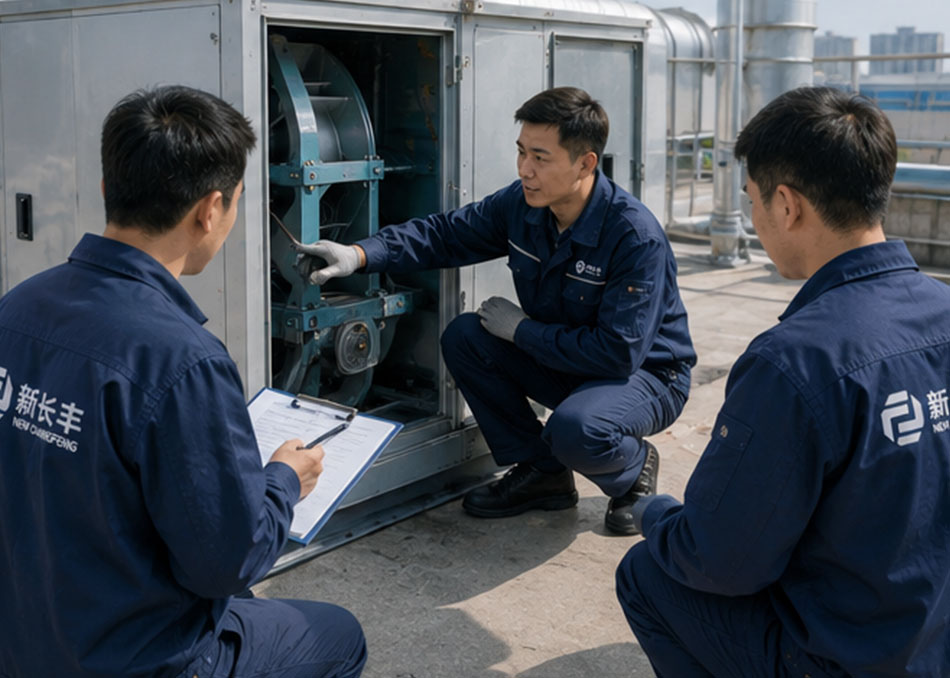
A water-cooled fresh air unit is a self-contained ventilation system that draws outdoor air, filters it, cools it using evaporative cooling or chilled water, and supplies it into the indoor space. Unlike traditional exhaust fans, it actively introduces fresh air, creating positive pressure that helps push stale air out through designated exhaust points. In a mahjong parlor, this positive pressure prevents infiltration of unfiltered air and back-drafting of odors, while also reducing the load on the air conditioning system.
Key advantages for mahjong parlors include:
- Balanced ventilation: By supplying fresh air, it alleviates negative pressure, allowing existing exhaust fans to work more efficiently.
- Cooling effect: The water-cooled design provides evaporative cooling, lowering the temperature of incoming air without the high energy consumption of traditional AC, making it suitable for summer use.
- Filtration: Built-in filters remove dust and particles, improving indoor air quality and protecting patrons from smoke and allergens.
- Energy efficiency: Compared to running exhaust fans and AC simultaneously, a water-cooled fresh air unit can reduce overall energy consumption by minimizing conditioned air loss.
- Easy installation: Many models are compact and can be mounted on walls or windows, requiring minimal ductwork, which is ideal for retrofit projects in existing parlors.
Selection and Sizing Considerations
Choosing the right water-cooled fresh air unit involves several factors:
- Room size and occupancy: Calculate the required air changes per hour. For a mahjong parlor with heavy smoking, a higher ventilation rate (e.g., 10–15 ACH) is recommended to dilute smoke and maintain acceptable CO₂ levels.
- Cooling capacity: The unit should be capable of handling the sensible heat load, especially in summer. Consider the local climate and the heat generated by occupants and equipment.
- Airflow and static pressure: Ensure the unit's airflow (CFM or m³/h) matches the exhaust rate to maintain a slight positive pressure. Static pressure must be sufficient to overcome duct resistance if any.
- Noise levels: Mahjong parlors require a relatively quiet environment. Look for units with low noise ratings (e.g., below 55 dB(A) at low speed).
- Water quality and supply: For evaporative cooling units, a reliable water supply and drainage are necessary. Consider water hardness and maintenance requirements.
- Compliance: Verify that the unit meets relevant standards, such as GB/T 1236 for fan performance testing and GB 19761 for fan energy efficiency.
It is advisable to consult with a ventilation specialist who can perform a load calculation and recommend the appropriate model and configuration. Many manufacturers, including XCFFJ, offer a range of water-cooled fresh air units designed for commercial spaces like mahjong parlors, with varying airflow and cooling capacities to suit different room sizes.
Implementation and Maintenance Best Practices
To maximize the benefits of a water-cooled fresh air unit, proper installation and maintenance are crucial:
- Positioning: Place the unit to supply fresh air near seating areas, while exhaust fans should be located near smoking zones or the ceiling to remove rising smoke.
- Integration with existing HVAC: Coordinate the fresh air unit with the air conditioning system to avoid conflicts. In some cases, it can supplement the AC, reducing its load.
- Regular cleaning: Clean or replace filters monthly, and check the water system for scale buildup and algae growth to maintain efficiency and hygiene.
- Monitor indoor air quality: Use CO₂ and PM2.5 sensors to adjust ventilation rates dynamically, ensuring a healthy environment without unnecessary energy use.
Frequently Asked Questions
Q: Can a water-cooled fresh air unit completely eliminate smoke in a mahjong parlor?
A: While it significantly improves air quality by supplying fresh air and reducing negative pressure, complete smoke elimination may require a combination of exhaust fans, air purifiers, and possibly a ban on smoking indoors. The unit helps dilute and remove smoke, but it is not a substitute for source control.
Q: How does a water-cooled fresh air unit compare to a traditional exhaust fan in terms of energy consumption?
A: A water-cooled fresh air unit consumes energy to run the fan and pump water for cooling, but it reduces the load on the air conditioning system by preventing conditioned air loss and providing pre-cooling. In many cases, the overall energy consumption is lower than running exhaust fans and AC separately. However, the exact comparison depends on the specific models and usage patterns.
Q: Is a water-cooled fresh air unit suitable for cold climates?
A: In colder months, the cooling function may not be needed, and the unit can operate in ventilation-only mode, supplying fresh air without cooling. Some models have adjustable settings to disable the cooling feature, making them usable year-round. However, in very cold regions, additional heating may be required to temper the incoming air to avoid drafts.
Conclusion
Mahjong parlors face unique ventilation challenges due to high occupancy, smoking, and reliance on sealed air conditioning. The common practice of exhaust-only ventilation exacerbates negative pressure, leading to energy waste, odor back-drafting, and poor air quality. A water-cooled fresh air unit offers a balanced solution by supplying filtered, cooled fresh air, reducing negative pressure, and improving comfort and health for patrons and staff. When selecting a unit, consider room size, occupancy, climate, and noise levels, and ensure proper installation and maintenance. By investing in a quality ventilation system, parlor owners can create a more pleasant and healthy environment, ultimately enhancing customer satisfaction and loyalty.
For more information on water-cooled fresh air units and other ventilation solutions, visit www.xcffj.com or contact XCFFJ for expert guidance tailored to your specific needs.