
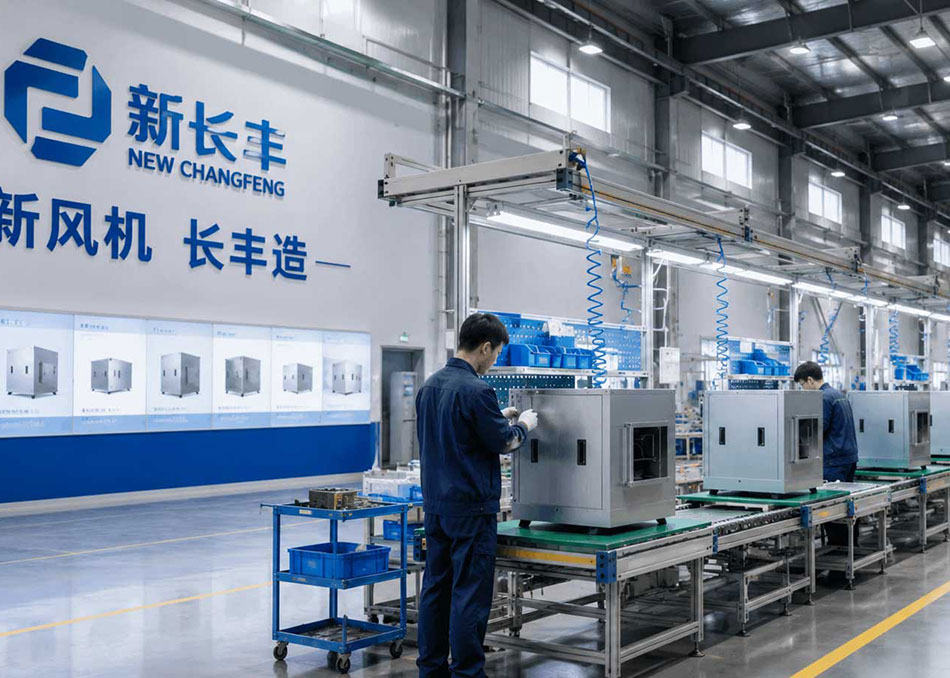
Mahjong parlors and card rooms share a set of stubborn traits: high occupant density, long dwell times, doors and windows kept shut, and a steady stream of smoke and odors. The instinctive fix for many operators is to bolt in exhaust fans and pull air out harder. The result is usually the opposite of what was intended — the room feels stuffier, and air whistles through door gaps. The problem is rarely insufficient exhaust capacity. It is missing make-up air. Once a room goes negative, exhaust performance drops, odors back-draft from neighboring spaces, and conditioned air leaks away. A water-cooled fresh air unit is built to solve exactly this link in the chain: organized make-up air and air exchange. This article walks through the make-up air logic for mahjong rooms, equipment selection, and common pitfalls.
Why Mahjong Rooms Get Stuffier the Harder You Exhaust
Pollution in a mahjong room comes mainly from human respiration, tobacco smoke, and general odor — low concentration but high volume. Basic ventilation engineering says supply and exhaust must be designed as a pair, with exhaust slightly exceeding supply to hold a mild negative pressure. That keeps odors from spilling into corridors and neighboring shops. In practice, many venues install exhaust only. Static pressure inside keeps falling, the fan's actual delivered airflow decays as the pressure differential rises, and you end up with the classic symptom: the fan is spinning, but the smoke will not leave.
The most visible symptom is the door. Under excessive negative pressure, sliding doors get sucked shut, automatic doors cycle open and closed, and customers struggle to get in or out. That is a textbook signal of insufficient make-up air. Meanwhile, restroom odors and kitchen fumes get drawn back into the main hall along the pressure gradient, creating secondary contamination. The core of mahjong room ventilation is therefore not simply more exhaust — it is an organized make-up air path.
What a Water-Cooled Fresh Air Unit Actually Does
A water-cooled fresh air unit draws in outdoor air, passes it through a cooling coil fed by chilled water, and delivers filtered, temperature-controlled fresh air into the space. Because it supplies air rather than only removing it, it restores the supply-exhaust balance that exhaust-only systems break. The unit works alongside the exhaust system: exhaust removes smoke and odors, the fresh air unit replaces the displaced volume, and a slight negative pressure is maintained without the door-slam effect.
Cooling the incoming air matters in mahjong rooms because supply air that arrives hot and humid gets rejected by occupants and staff alike — and rejected fresh air is often switched off. By tempering the supply air, the unit keeps the make-up air path running through the hours when the room is busiest. Filtration upstream of the coil also keeps outdoor dust and particulates from entering the space, which matters in street-facing or ground-floor locations.
Designing the Make-Up Air Path for a Mahjong Room
Good make-up air is organized, not accidental. Supply diffusers should be positioned so fresh air sweeps the occupied zone before reaching exhaust points, avoiding short-circuiting where supply air is pulled straight out again. Exhaust intakes belong near the ceiling and in smoking or restroom zones where contaminants concentrate. The pressure relationship should be verified after commissioning — a simple door-opening test and a handheld differential pressure reading tell you whether the room is behaving as designed.
- Size exhaust and supply as a matched pair, with exhaust modestly higher to hold mild negative pressure.
- Route supply air across the seating zone rather than dumping it at the exhaust grille.
- Keep the make-up air path continuous — units that get switched off defeat the design.
- Check door operation after installation; sticking or whistling doors indicate imbalance.
- Reference fan performance testing per GB/T 1236 and fan energy efficiency per GB 19761 when comparing equipment.
Common Misconceptions and the “Zhongyifeng Water-Cooled” Question
One recurring misconception is that a bigger exhaust fan solves everything. In a sealed room, a larger fan mostly increases the pressure differential and delivers diminishing returns. Another is treating fresh air as a luxury for comfort rather than a requirement for air quality. A third is assuming an air conditioner alone can handle it — split systems recirculate indoor air and do nothing for smoke or carbon dioxide buildup.
Operators sometimes ask about “Zhongyifeng water-cooled” equipment. In practice, the term is used loosely in the market to describe water-cooled fresh air units generally, and buyers should focus on verifiable specifications rather than brand shorthand: coil construction, filtration grade, fan performance data, and documented testing. Ask suppliers for performance information consistent with national standards rather than unverified claims.
Selection and Maintenance Checklist
Selection starts with the room, not the catalog. Occupancy, ceiling height, smoking policy, and the existing exhaust layout determine the required supply airflow. Because specific figures depend on the site survey, insist on a calculation rather than a rule of thumb. Confirm the chilled water source and its temperature range, the condensate drainage path, and service access for coil cleaning.
Maintenance is where most installations quietly fail. Clogged filters reduce airflow, fouled coils lose cooling capacity, and neglected drain pans become a contamination source. A simple schedule — filter inspection monthly, coil cleaning seasonally, drain check with every service — keeps the unit performing as designed.
FAQ
Q: Can I just add a stronger exhaust fan instead of a fresh air unit?
A: In a closed room, a stronger fan mostly increases negative pressure. Actual delivered airflow falls as the pressure differential rises, so smoke lingers while doors stick. You need a matched make-up air path.
Q: Does a water-cooled fresh air unit replace the air conditioner?
A: No. It tempers and filters incoming outdoor air; it does not provide the full cooling load of the space. The two work together — the fresh air unit handles air quality and make-up volume, the air conditioner handles sensible cooling.
Q: How do I know if my mahjong room has a negative pressure problem?
A: Watch the doors. If sliding doors are pulled shut, automatic doors cycle, or air whistles through gaps, the room is under-supplied. Odors drawn in from restrooms or neighboring kitchens confirm it.
Q: What standards should I reference when specifying equipment?
A: Fan performance testing per GB/T 1236 and fan energy efficiency per GB 19761 are the relevant references for airflow and efficiency claims. Ask suppliers for documented performance data rather than headline numbers.
For mahjong parlors and card rooms, the fix for persistent smoke and stuffiness is rarely a bigger fan — it is a balanced, organized make-up air path built around a water-cooled fresh air unit. Get the supply-exhaust relationship right, keep the unit maintained, and the room stays comfortable through the busiest hours. To discuss sizing for your venue, contact XCFFJ for a site-based ventilation assessment.