
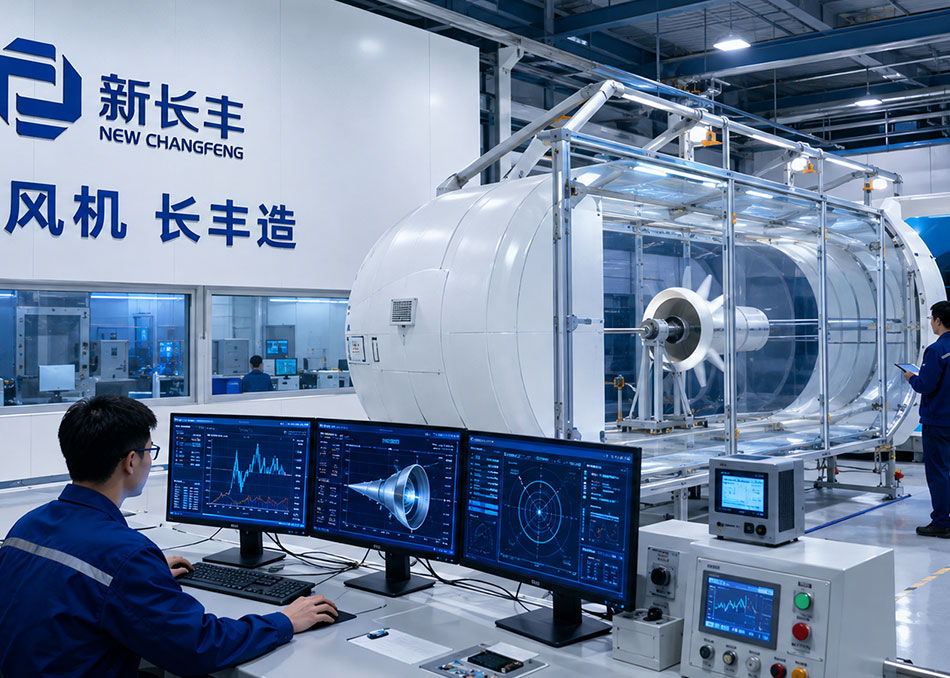
Commercial kitchen exhaust is one of the most failure-prone and complaint-heavy parts of any restaurant ventilation system. Grease spillover, oil-laden ductwork, noisy fans, complaints from neighboring apartments, and failed fire inspections rarely stem from a single piece of equipment. More often, the problem lies in a mismatch between exhaust and make-up air, or between purification and transport. The cabinet centrifugal fan has become a common choice for kitchen exhaust because it integrates the fan and a sound-attenuating enclosure into one unit, offering inherent advantages in noise control, grease protection, and system layout.
From a standards perspective, kitchen exhaust must satisfy two sets of requirements simultaneously. First, emission requirements: GB 18483, the Emission Standard of Cooking Fume, sets limits for oil fume concentration and purification efficiency. Second, fire safety and smoke exhaust requirements: GB 51251, the Technical Standard for Smoke Management Systems in Buildings, imposes constraints on exhaust ductwork, fan selection, and system reliability. The working principle of a cabinet centrifugal fan must be understood within these two regulatory boundaries—otherwise it is easily dismissed as just “a machine that sucks air.”
The core challenges of kitchen exhaust can be summarized in three conflicts:
- Airflow vs. resistance: Fume purifiers, long duct runs, elbows, and fire dampers all add resistance. The fan needs sufficient total pressure to push exhaust to the roof.
- Exhaust vs. make-up air: Exhausting without supplying make-up air creates negative pressure in the kitchen, which weakens burner performance, makes doors hard to open, and can cause fume backdraft.
- Transport vs. contamination: Cooking fume contains grease and particulate matter. Ordinary fans are prone to grease buildup, which leads to imbalance and premature failure.
How a Cabinet Centrifugal Fan Works
At its core, a cabinet centrifugal fan is a centrifugal fan mounted inside a protective cabinet. Air enters the impeller axially and is accelerated radially outward by the rotating blades. The scroll-shaped casing converts this kinetic energy into static pressure, forcing air through the discharge outlet. This centrifugal action generates higher pressure than axial fans, making it suitable for ducted systems with significant resistance—exactly the condition found in kitchen exhaust.
The cabinet itself is not merely a box. It serves multiple functions: structural support, noise attenuation, weather protection for outdoor installation, and containment of grease and debris. Many models include acoustic insulation, access doors for cleaning, and drainage points for grease removal. This integrated design simplifies installation and helps meet both noise ordinances and fire safety requirements.
Because the fan operates under negative pressure relative to the kitchen, it draws fume from the hood through ductwork, then pushes it through a purifier and out to the roof. The cabinet design also allows for belt-drive or direct-drive configurations, giving flexibility in matching airflow and pressure to the specific system resistance.
Key Selection Considerations for Kitchen Exhaust
Selecting a cabinet centrifugal fan for kitchen exhaust is not simply a matter of picking a model with the highest airflow. The fan must be matched to the system’s total pressure loss, which includes the hood, ductwork, elbows, fire damper, and purifier. Undersizing leads to insufficient capture; oversizing wastes energy and increases noise.
- Total pressure requirement: Calculate the sum of all resistances in the exhaust path. The fan’s rated total pressure must exceed this sum to ensure proper exhaust.
- Airflow balance: Exhaust airflow must be balanced with make-up air. A properly designed make-up air system reduces negative pressure and improves capture efficiency.
- Grease resistance: Look for fans with accessible cleaning features and grease drainage. Regular maintenance is essential to prevent imbalance and fire hazards.
- Noise control: Cabinet construction with acoustic insulation helps meet noise limits, especially in urban areas where rooftop equipment is near residential buildings.
- Fire safety: Ensure the fan and ductwork comply with GB 51251. Fire dampers and proper duct construction are mandatory.
Additionally, the fan should be selected based on the actual operating point, not just the free-air delivery. Performance curves from the manufacturer, tested in accordance with GB/T 1236, provide the necessary data. Energy efficiency should also be considered, with reference to GB 19761 for fan energy efficiency grades.
Integrating Purification and Make-Up Air
A cabinet centrifugal fan does not operate in isolation. It is part of a system that includes grease filters, electrostatic precipitators or other purifiers, and make-up air units. The fan must overcome the resistance of these components while maintaining the required airflow. If the purifier is bypassed or poorly maintained, grease can accumulate in the ductwork and fan, reducing performance and creating a fire risk.
Make-up air is equally important. Without it, the kitchen becomes negatively pressurized, which can cause doors to be difficult to open, reduce burner efficiency, and draw odors from other areas. Dedicated make-up air units—such as water-cooled fresh air units or evaporative coolers—can supply filtered, tempered air to balance the exhaust. This not only improves comfort but also helps the exhaust system perform as designed.
In many successful installations, the cabinet centrifugal fan is paired with a high-efficiency purifier and a make-up air unit. The fan’s ability to handle high resistance ensures that air is pulled through the purifier and pushed out, while the make-up air unit maintains pressure balance. This integrated approach addresses all three conflicts: airflow vs. resistance, exhaust vs. make-up, and transport vs. contamination.
Maintenance and Long-Term Reliability
Even the best-designed system requires maintenance. Kitchen exhaust fans operate in a harsh environment of grease, moisture, and heat. Regular cleaning of the impeller and cabinet interior is essential to prevent imbalance, vibration, and reduced performance. Access doors and drain points make this easier, but a schedule must be followed.
Bearings should be lubricated according to the manufacturer’s instructions, and belts (in belt-drive models) should be checked for tension and wear. Any unusual noise or vibration should be investigated promptly, as it may indicate grease buildup or mechanical failure. Fire dampers and purifiers also need periodic inspection to ensure they function correctly.
From a regulatory standpoint, maintaining the system helps ensure compliance with GB 18483 for emissions and GB 51251 for fire safety. Regular maintenance also extends equipment life and reduces energy consumption, as a clean fan operates more efficiently.
FAQ
Q: What is the main difference between a cabinet centrifugal fan and a regular centrifugal fan for kitchen exhaust?
A: The cabinet centrifugal fan integrates the fan into an acoustic, weatherproof enclosure. This reduces noise, protects the fan from grease and weather, and simplifies outdoor installation. It also often includes access doors and drainage for easier cleaning.
Q: Can I use a cabinet centrifugal fan without a make-up air system?
A: It is not recommended. Without make-up air, the kitchen will be under negative pressure, which can cause backdraft, reduce cooking performance, and make doors hard to open. A balanced system with make-up air ensures proper exhaust and comfort.
Q: How do I know what size cabinet centrifugal fan I need?
A: Sizing depends on the total pressure loss of your exhaust system (hood, ductwork, purifier, dampers) and the required airflow. Consult a ventilation engineer and use fan performance curves tested to GB/T 1236 to select a model that operates efficiently at your system’s operating point.
Q: What maintenance does a cabinet centrifugal fan require?
A: Regular cleaning of the impeller and cabinet interior to remove grease, lubrication of bearings, and inspection of belts (if applicable). Also check fire dampers and purifiers. A maintenance schedule is critical for safety and performance.
In summary, the cabinet centrifugal fan is a key component in commercial kitchen exhaust systems, effectively addressing the challenges of resistance, noise, and contamination. When paired with proper purification and make-up air, it ensures a safe, efficient, and compliant kitchen environment. For expert guidance on selecting the right fan for your kitchen exhaust project, contact XCFFJ—we specialize in industrial and commercial ventilation solutions.