
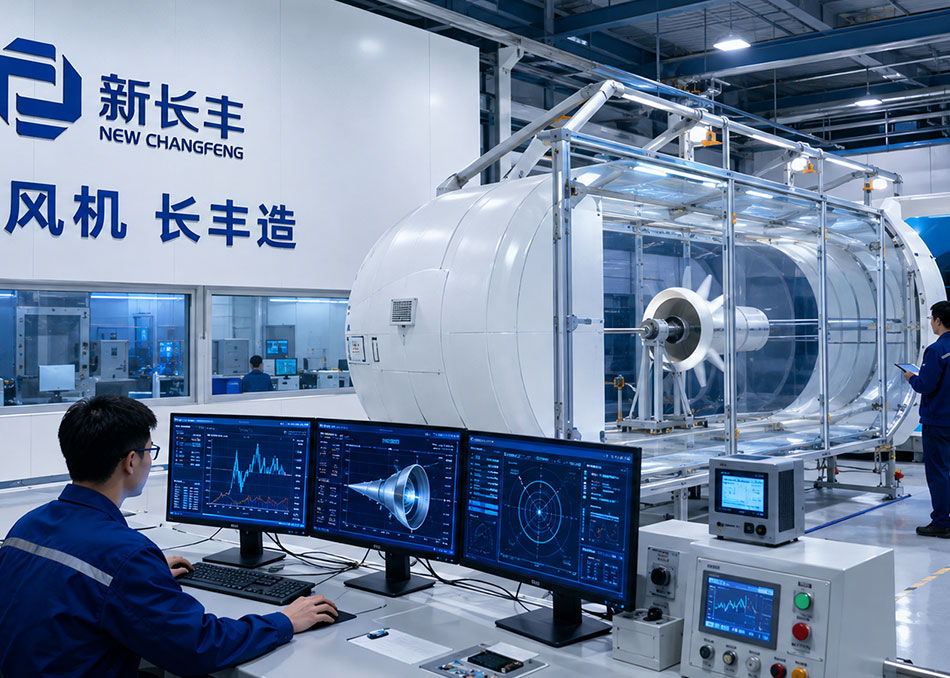
School cafeteria kitchens face intense cooking periods, high oil fume concentrations, and strict environmental regulations. If the exhaust system is poorly designed, it can degrade the kitchen environment, disrupt classroom activities, and even trigger complaints from the community. Among the various exhaust equipment options, cabinet centrifugal fans have become the preferred choice for school cafeteria fume extraction and purification, thanks to their high static pressure, low noise, and heat resistance. But with so many brands and models available, how do you select the right one based on the actual working conditions of your cafeteria? This article walks through the design logic behind exhaust systems and offers practical selection criteria.
Why Cabinet Centrifugal Fans Are the Go-To for School Cafeteria Exhaust
School cafeteria kitchens are typically located within the building, meaning the exhaust ductwork is long, contains multiple bends, and terminates at a rooftop discharge point. Additionally, the system must integrate fume purifiers, which add to the overall resistance. Axial fans, with their lower pressure capabilities, struggle to overcome such high system resistance. In contrast, cabinet centrifugal fans use a centrifugal impeller that directs airflow radially, generating higher static pressure—ideal for long-distance duct runs and centralized exhaust points.
Moreover, cabinet centrifugal fans are often designed with belt drive or direct drive options, and they come with vibration-isolating bases and acoustically insulated casings. This results in significantly lower noise levels compared to axial fans of similar capacity, ensuring that nearby classrooms and offices remain undisturbed. Their modular box construction also facilitates the integration of silencer sections and access doors, meeting the strict hygiene and maintenance requirements of educational institutions.
Four Critical Questions to Answer Before Selecting Your Fan
1. Exhaust and Make-Up Air Volumes Cannot Be Guessed
The required exhaust volume must be calculated based on the number of cooking stations, hood dimensions, and the type of cooking processes. Equally important is the make-up air requirement. A tightly sealed kitchen that only exhausts air without replenishing it will develop a high negative pressure, which can significantly reduce exhaust efficiency and even cause doors to stick or odors to be drawn into other areas. A balanced ventilation design is essential.
2. Static Pressure Must Match the Actual System Resistance
Static pressure is the fan's ability to overcome resistance. The total system resistance is the sum of losses from duct friction, elbows, transitions, the fume purifier, and the exhaust stack. Undersizing the static pressure leads to poor capture efficiency, while oversizing wastes energy and increases noise. A thorough ductwork analysis is crucial before specifying the fan.
3. Noise Control Is Non-Negotiable in a School Environment
Schools demand low noise levels to avoid interfering with teaching activities. Cabinet centrifugal fans, especially those with belt drives, allow for speed adjustment to fine-tune performance and reduce noise. Additionally, selecting a fan with a lower specific speed and incorporating flexible connections and vibration isolators can further minimize transmitted vibration and sound.
4. Material and Construction Must Withstand Grease and Heat
Kitchen exhaust air is laden with grease particles and can reach high temperatures. Fan components, especially the impeller and casing, should be constructed from corrosion-resistant materials, such as galvanized steel or stainless steel, and the motor must be suitable for the ambient temperature. For added safety, consider explosion-proof motors if the kitchen uses gas appliances.
How to Determine the Right Fan Size and Configuration
Once you have calculated the required exhaust volume (in cubic meters per hour or CFM) and the total static pressure (in pascals or inches of water gauge), you can refer to the fan performance curves provided by manufacturers. These curves show the relationship between airflow and static pressure for each fan size and speed. Select a fan that operates at its peak efficiency point, typically around 60-80% of its maximum airflow, to ensure reliable performance and energy savings.
For school cafeterias, a belt-driven cabinet centrifugal fan is often recommended because it allows for field-adjustable speed settings. This flexibility is valuable when actual system resistance differs from initial estimates. Direct-drive fans, while lower in maintenance, offer less adjustability. Also, consider whether the fan will be installed indoors or outdoors. Indoor installations may require additional silencing, while outdoor units need weatherproofing.
Integration with Fume Purifiers and Make-Up Air Systems
In many regions, school kitchens are required to meet specific fume emission standards (e.g., GB 18483 in China). This means the exhaust fan must work in tandem with an electrostatic fume purifier or similar device. The purifier adds pressure drop to the system, which must be accounted for in the fan selection. Ideally, the purifier should be placed between the hood and the fan to protect the fan from grease buildup, but the fan must be powerful enough to draw air through the purifier's resistance.
Make-up air is equally critical. A dedicated make-up air unit (MAU) can supply filtered, tempered air to the kitchen, preventing negative pressure and ensuring the exhaust system operates efficiently. The MAU should be interlocked with the exhaust fan to balance airflow, especially during peak cooking periods.
Installation, Maintenance, and Long-Term Reliability
Proper installation is key to achieving the fan's rated performance. The fan should be mounted on a sturdy, vibration-isolated base, with flexible connections to the ductwork to prevent vibration transmission. Access doors should be provided for cleaning and inspection. Regular maintenance includes checking belt tension, lubricating bearings, and cleaning the impeller to prevent grease accumulation, which can unbalance the rotor and reduce efficiency.
For school facilities, ease of maintenance is paramount. Choose a fan with removable panels and a design that allows for easy access to the motor and bearings. Some manufacturers offer hinged access doors and slide-out motor mounts, which simplify servicing. Additionally, consider spare parts availability and technical support from the manufacturer.
FAQ
Q: How do I calculate the required exhaust volume for a school cafeteria kitchen?
A: The exhaust volume depends on the number and type of cooking appliances, the dimensions of the exhaust hood, and the cooking load. A common guideline is to size the hood to capture rising heat and fumes, and the exhaust rate should be sufficient to achieve capture velocity at the hood face. For heavy-duty cooking (e.g., wok stations), higher airflow per unit area is needed. It's best to consult a ventilation engineer who can perform a detailed load calculation based on your specific kitchen layout.
Q: Can I use an axial fan instead of a cabinet centrifugal fan for a school cafeteria?
A: Generally, axial fans are not recommended for long duct runs with high resistance, as they produce lower static pressure. They may be suitable for short, direct exhaust paths (e.g., wall-mounted fans), but for school cafeterias with extensive ductwork, fume purifiers, and rooftop discharge, a cabinet centrifugal fan is the more reliable choice.
Q: What maintenance is required for a cabinet centrifugal fan in a kitchen exhaust system?
A: Routine maintenance includes inspecting and adjusting belt tension (if belt-driven), lubricating bearings according to the manufacturer's schedule, cleaning the impeller and housing to remove grease deposits, and checking for unusual noise or vibration. It's also important to regularly clean or replace the fume purifier filters to maintain system performance and reduce fire risk.
Q: How do I reduce noise from the exhaust fan to avoid disturbing classrooms?
A: Choose a fan with a low noise rating, install it on a vibration-isolating base, and use flexible duct connectors. Incorporate silencers (also called sound attenuators) in the ductwork, both on the inlet and discharge sides. Additionally, ensure the fan operates at its most efficient speed—overspeeding increases noise disproportionately.
Selecting the right cabinet centrifugal fan for a school cafeteria is a decision that impacts indoor air quality, energy consumption, and the learning environment. By carefully assessing your kitchen's exhaust and make-up air needs, understanding static pressure requirements, and prioritizing low-noise construction, you can ensure a system that operates efficiently and quietly for years to come. For expert guidance and a wide range of compliant fans, consider consulting with XCFFJ, a trusted manufacturer of industrial and commercial ventilation solutions.