
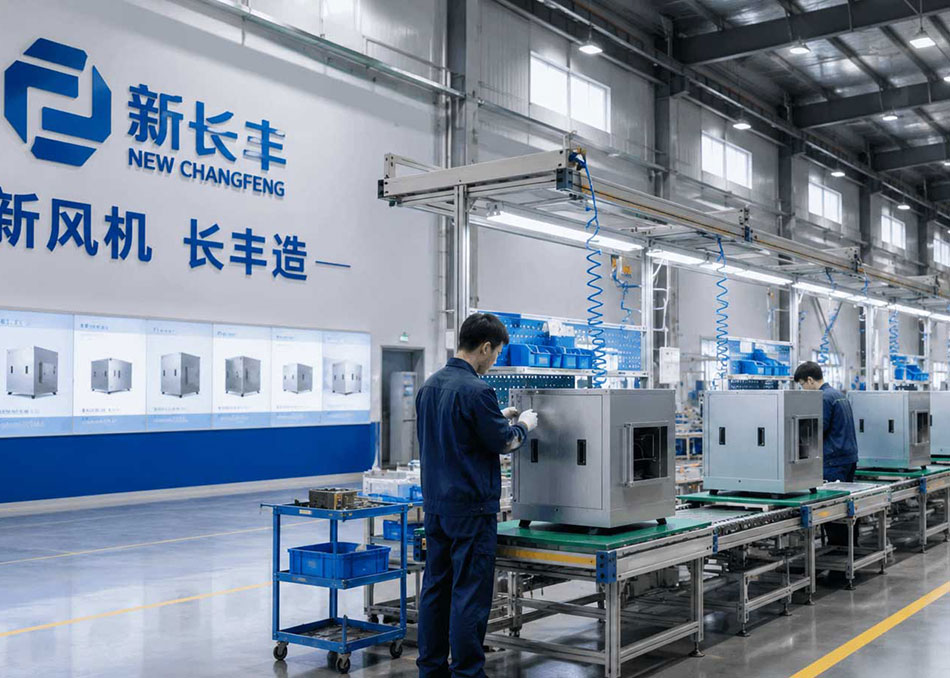
In factories, warehouses, and commercial kitchens, the efficiency of ventilation and fume extraction systems directly impacts workplace safety, air quality, and operational comfort. At the heart of these systems lies the centrifugal fan, a critical component that determines how effectively smoke, dust, and heat are removed. Selecting the right centrifugal fan is not merely a matter of price—it requires a thorough understanding of your specific application, airflow needs, and system design. This guide walks you through the essential factors to consider, ensuring your investment delivers reliable performance and long-term energy savings.
The Role of Centrifugal Fans in Factory Ventilation
Centrifugal fans operate by using a high-speed rotating impeller to generate centrifugal force, which propels air radially outward, creating a steady and controlled airflow. Unlike axial fans, which move air parallel to the fan axis, centrifugal fans produce higher static pressure and are better suited for systems with significant duct resistance, long duct runs, or the need to overcome the pressure drop caused by filtration and purification equipment.
In industrial environments, centrifugal fans are indispensable for several critical functions:
- Removing airborne contaminants such as welding fumes, paint mist, and plastic processing vapors from the workspace.
- Extracting and treating kitchen exhaust from commercial cooking areas or food processing facilities, often in conjunction with electrostatic or mechanical filters.
- Providing consistent suction for local exhaust hoods, fume hoods, and source-capture systems to protect worker health.
- Maintaining negative pressure in warehouses or enclosed spaces to prevent the accumulation of odors, moisture, or hazardous gases.
Given these varied roles, the selection of a centrifugal fan must go beyond basic specifications. It requires a holistic evaluation of airflow (CFM), static pressure (inches of water gauge), noise levels, energy efficiency, and material compatibility with the substances being handled.
Key Selection Criteria for Factory Ventilation Fans
To ensure the fan meets your operational needs, consider the following factors:
1. Airflow and Static Pressure Requirements
The first step is to calculate the required airflow and static pressure for your system. Airflow determines the volume of air moved per minute, while static pressure indicates the resistance the fan must overcome. These values are influenced by duct length, diameter, number of bends, and the presence of filters or scrubbers. A fan that is undersized will fail to move enough air, while an oversized fan wastes energy and may cause excessive noise. Use industry-standard calculation methods, such as those outlined in GB/T 1236, to determine your system's operating point.
2. Fan Type and Impeller Design
Centrifugal fans come in various configurations, including forward-curved, backward-curved, and radial blade designs. Forward-curved fans are compact and ideal for low-pressure, high-volume applications, while backward-curved fans offer higher efficiency and are better for moderate to high-pressure systems. Radial blade fans are robust and handle particulate-laden air well, making them suitable for dust extraction. Choose the impeller type that aligns with your system's pressure and air quality characteristics.
3. Material and Corrosion Resistance
The fan's construction material must be compatible with the air being handled. For applications involving corrosive chemicals, acidic fumes, or moisture, stainless steel or coated finishes are essential to prevent premature degradation. For general factory dust and smoke, carbon steel with a protective coating may suffice. Always verify the fan's material specifications against your workplace environment.
4. Noise and Vibration Levels
Excessive noise can be a safety hazard and reduce worker comfort. Check the fan's sound power levels (dBA) and consider installing vibration isolators or acoustic enclosures if necessary. High-quality fans are designed to minimize noise through balanced impellers and precision bearings, but the overall noise level also depends on ductwork design and installation.
5. Energy Efficiency and Operating Costs
Industrial ventilation fans often run continuously, making energy efficiency a significant cost factor. Look for fans that meet or exceed energy efficiency standards, such as GB 19761 in China or similar international benchmarks. High-efficiency motors, such as IE3 or IE4, and adjustable-speed drives can further reduce energy consumption by matching fan output to real-time demand.
Integrating Fume Extraction and Purification
In many factory settings, centrifugal fans are paired with air purification equipment, such as electrostatic precipitators, activated carbon filters, or wet scrubbers, to remove contaminants before discharge. The fan must be selected to handle the pressure drop introduced by these devices. For kitchen exhaust applications, compliance with emission standards, such as GB 18483, is mandatory. The combined performance of the fan and purification system must ensure that outlet concentrations are within legal limits. When designing such systems, consider the fan's placement relative to the purifier—ideally, the fan should be positioned downstream of the purification unit to protect it from grease and particulate buildup, unless the fan is specifically designed to handle such loads.
Installation and Maintenance Best Practices
Proper installation and routine maintenance are essential for maximizing fan lifespan and performance. Ensure that the fan is mounted on a stable foundation, with adequate clearance for airflow and service access. Ductwork should be correctly sized and sealed to minimize leakage and pressure losses. Schedule regular inspections of the impeller, bearings, and motor, and clean the fan and ductwork to prevent buildup that can reduce efficiency and cause imbalance. For fans handling corrosive or sticky materials, more frequent maintenance may be required.
Frequently Asked Questions
Q: How do I determine the required airflow and static pressure for my factory ventilation system?
A: Calculate the total volume of air that must be exchanged per hour based on the room size and contaminant generation rate. Then sum the pressure losses from ductwork, elbows, filters, and discharge stacks. Use these figures to select a fan whose performance curve provides the necessary airflow at the calculated static pressure. Consulting a ventilation engineer or using fan selection software can simplify this process.
Q: What is the difference between forward-curved and backward-curved centrifugal fans?
A: Forward-curved fans have blades that curve in the direction of rotation, offering high airflow at low pressure in a compact design, but they are less efficient and more prone to overload. Backward-curved fans have blades that curve away from the direction of rotation, providing higher efficiency, lower noise, and better resistance to overload, making them suitable for most industrial applications.
Q: Can a standard centrifugal fan be used for kitchen exhaust with high grease content?
A: Standard centrifugal fans are not recommended for direct handling of grease-laden air, as grease can accumulate on the impeller and reduce performance. Instead, use a fan specifically designed for kitchen exhaust, or install a high-efficiency grease filter upstream. For best results, position the fan after the purification unit to minimize contamination.
Conclusion
Selecting the right centrifugal fan for your factory ventilation and fume extraction needs is a decision that impacts not only air quality but also operational costs and safety. By carefully evaluating airflow, static pressure, fan type, materials, and efficiency, you can ensure a system that performs reliably and economically. At XCFFJ, we offer a range of industrial centrifugal fans engineered for durability and performance, backed by expert support to help you make the right choice. For more information, visit www.xcffj.com or contact our team for personalized guidance.