
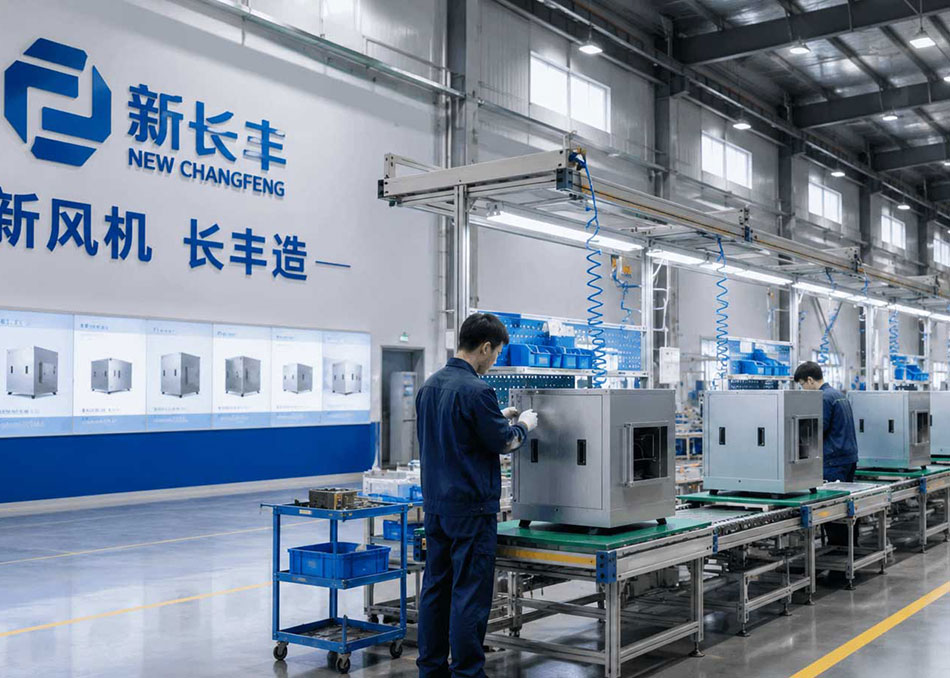
Commercial kitchens are among the most challenging environments for any cooling system. With open flames, steam, and heavy oil fumes, temperatures near the cooking line can become unbearable, affecting both staff well-being and operational efficiency. Traditional fans and exhaust fans only circulate hot air and can disperse smoke, making conditions worse. That's why targeted cooling with a dedicated commercial kitchen air conditioner is becoming the standard solution for modern restaurant kitchens.
Why Standard Air Conditioners Fail in Commercial Kitchens
Residential air conditioners are designed for enclosed, insulated spaces with stable heat loads. A commercial kitchen, however, is semi-open, heavily ventilated, and generates intense heat from cooking equipment. Cold air from a standard AC is quickly carried away by rising thermal currents, so the cooling effect is negligible. More critically, standard evaporator coils have tightly spaced fins that clog with grease, leading to reduced performance, dripping water or oil, and even fire hazards.
Commercial kitchen air conditioners are specifically engineered to overcome these issues. They feature grease-resistant coatings, wider fin spacing, and independent return air paths. Instead of trying to cool the entire space, they deliver a focused stream of cool air to the chef's workstation, creating a localized “cooling curtain” around the cooking area. This approach—known as targeted or spot cooling—dramatically improves comfort while reducing energy waste, aligning with the principles of GB 50736 for indoor environmental quality.
Key Technical Parameters for Spot Cooling in Kitchen Environments
When selecting a commercial kitchen air conditioner for spot cooling, several technical parameters matter most:
- Cooling Capacity (kW/BTU): The unit must match the heat load of the cooking line. A typical wok station can produce 5–10 kW of sensible heat, so the AC should be sized to offset that specific load, not the whole room.
- Airflow Distribution: Look for adjustable louvers or dual-discharge designs that can direct air horizontally or vertically to cover the chef's head and torso area without blowing directly on flames.
- Oil Resistance: The evaporator and filter should be easy to clean and resist grease buildup. Some models use hydrophobic coatings or washable mesh filters that can be removed daily.
- Drainage and Condensate Management: In kitchens, condensate can carry grease. A robust drainage system with a trap and slope prevents water from pooling on the floor.
- Compressor Protection: High ambient temperatures and voltage fluctuations require a compressor with thermal overload protection and a wide operating envelope.
Equally important is the installation height and distance from the cooking line. A unit mounted too high loses cooling efficiency, while one too close may be exposed to direct splatter. Most manufacturers recommend a mounting height of 2.5–3 meters and a horizontal distance of 1.5–2 meters from the heat source.
Energy Efficiency and Operational Costs
Spot cooling is inherently more energy-efficient than whole-room cooling. By cooling only the immediate work zone, you can reduce cooling load by 30–50% compared to a conventional ducted system. However, the efficiency of the unit itself matters. Look for a high Energy Efficiency Ratio (EER) or COP, especially for units that run continuously during peak hours.
Inverter compressors are now common in commercial kitchen ACs, allowing the unit to modulate its output rather than cycling on/off. This saves energy and maintains a more stable temperature. Additionally, some models offer programmable timers and temperature sensors that can be integrated with kitchen ventilation controls, ensuring the AC runs only when cooking is active.
For kitchens with high ambient temperatures (above 40°C), consider units with a wider operating range or those that can use evaporative pre-cooling. These features prevent performance degradation and extend the compressor's lifespan.
Installation and Maintenance Best Practices
Proper installation is as critical as equipment selection. The AC should be mounted on a vibration-absorbing bracket to reduce noise and structural transmission. The power supply must be dedicated and properly grounded, with a residual current device (RCD) for safety. Drain lines should have a minimum slope of 1/50 and include a U-trap to prevent odors from entering the room.
Maintenance schedules should be strictly followed. Clean or replace the return air filter every 2–4 weeks, depending on cooking intensity. Inspect the evaporator coil monthly for grease accumulation and clean it with a degreaser and low-pressure water. Check the condensate pan and drain line for blockages. A well-maintained commercial kitchen AC can last 10–15 years, but neglect can halve its life and increase energy bills.
Finally, always ensure the AC is compatible with your kitchen's exhaust and make-up air systems. Positive pressure from exhaust fans can interfere with the AC's air throw. A balanced ventilation design ensures the cooling curtain remains effective.
Frequently Asked Questions
Q: Can a commercial kitchen air conditioner be used in a small restaurant or food truck?
A: Yes, but sizing is critical. For compact spaces, look for a unit with a cooling capacity of 3–5 kW and a slim design that can be mounted on a wall or ceiling. Ensure the electrical supply matches the unit's requirements, and consider portable or split systems if installation space is limited.
Q: How does spot cooling affect the kitchen's smoke and odor control?
A: Properly designed spot cooling does not interfere with exhaust systems. The cool air is directed downward and away from the hood, so it does not disrupt the capture velocity of the exhaust. In fact, by reducing the ambient temperature, it can help condensation of grease vapors, making the exhaust system more efficient.
Q: What is the typical lifespan of a commercial kitchen air conditioner, and when should it be replaced?
A: With regular maintenance, a high-quality unit can last 10–15 years. Signs that replacement is needed include frequent breakdowns, rising energy bills, poor cooling performance, or refrigerant leaks that can no longer be repaired economically. Upgrading to a more efficient model often pays for itself within a few years.
Conclusion
Targeted cooling for commercial kitchen workstations is a smart investment that improves staff comfort, safety, and productivity. By understanding the key technical parameters—cooling capacity, airflow control, oil resistance, and efficiency—you can select a unit that delivers effective spot cooling without wasting energy. At XCFFJ, we offer a range of commercial kitchen air conditioners designed for the demanding conditions of professional kitchens. Contact us today to discuss your specific spot cooling needs and get a tailored solution.