
School and institutional canteen kitchens often face two intertwined challenges: high temperatures and heavy fumes around cooking stations, making staff feel hot and uncomfortable; and when exhaust systems run at full capacity, a strong negative pressure builds up, causing doors to be sucked shut, reducing hood capture efficiency, and allowing fumes to escape into dining areas. Many managers try adding exhaust fans or opening windows for makeup air, but these measures often fall short—either the makeup air volume is insufficient, or untreated hot outdoor air is drawn directly into the kitchen, providing little cooling. The key to resolving this conflict is to design exhaust and makeup air as a single system, and water-cooled fresh air units offer a viable path for negative pressure control and ventilation makeup air in kitchens.
How Negative Pressure Forms in Kitchens and Why Exhaust Alone Is Not Enough
Kitchen exhaust hoods and fans continuously extract large volumes of air from the room. According to the basic balance of ventilation systems, the extracted air must be replaced by an equal amount of fresh air; otherwise, indoor static pressure drops, creating negative pressure. The consequences are direct: hood capture efficiency decreases, fumes spread around cooking stations; makeup air rushes in disorderly through door gaps, window cracks, and floor drains, bringing in hot air in summer and cold air in winter, along with odors and pest issues.
Standards such as GB 51251 "Technical Standard for Smoke Control and Exhaust Systems in Buildings" set clear requirements for air volume balance in supply and exhaust systems. Kitchen ventilation design should also follow the principle of "exhaust requires makeup, and exhaust and makeup must match." In other words, negative pressure in kitchens cannot be solved by simply adding another exhaust fan; it requires organized, treated makeup air.
The Role of Water-Cooled Fresh Air Units in Negative Pressure Control and Ventilation Makeup
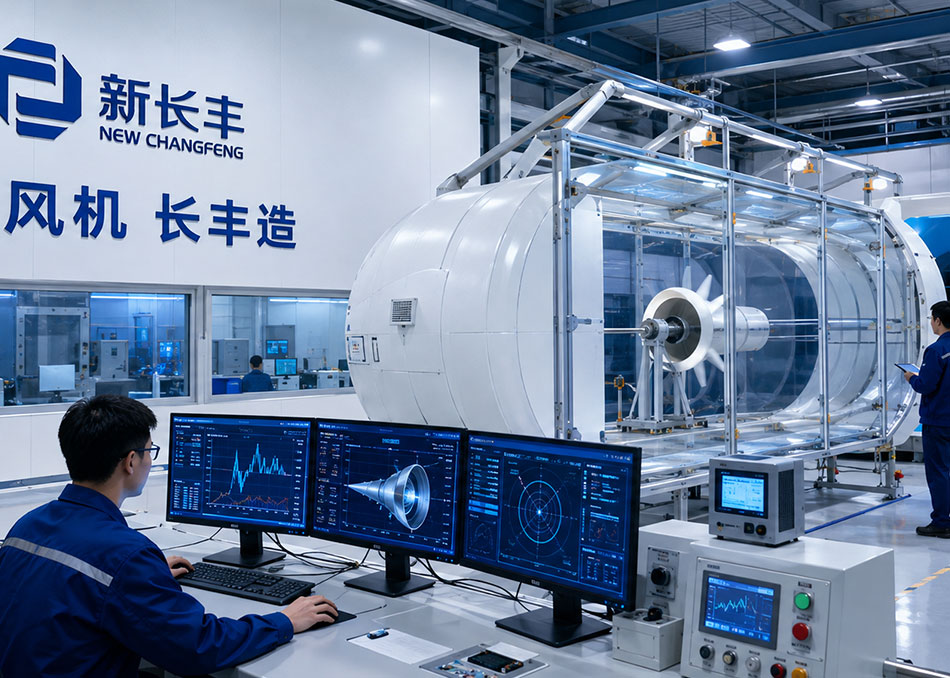
A water-cooled fresh air unit is a dedicated outdoor air handling unit that cools incoming fresh air via a water-cooled coil or evaporative cooling, and supplies it to the kitchen. Unlike ordinary supply fans, it not only provides the required makeup air volume but also reduces the temperature of the supply air, avoiding the introduction of hot outdoor air in summer.
In kitchen negative pressure control, the unit works in conjunction with the exhaust system: the exhaust fan extracts fumes, and the water-cooled fresh air unit supplies an equal or slightly greater volume of cooled fresh air, maintaining the kitchen at a slight negative pressure relative to the dining area (typically around -5 Pa to -10 Pa) to prevent fumes from escaping, while ensuring sufficient makeup air for the exhaust hoods. This organized makeup air improves hood capture efficiency, reduces disorderly infiltration, and enhances staff comfort.
Additionally, water-cooled fresh air units can be equipped with filters to remove dust and pollutants from outdoor air, improving indoor air quality. Some models also offer heating or humidification functions for use in winter or dry climates.
Key Design Considerations for Kitchen Ventilation and Cooling
- Air volume balance: Calculate exhaust volume based on the number and type of cooking appliances, and select a water-cooled fresh air unit with a matching air volume. Typically, makeup air volume should be 80%–90% of exhaust volume to maintain slight negative pressure.
- Organized makeup air: Supply air should be directed to areas with high cooling demand, such as near cooking stations, and avoid disrupting the capture performance of exhaust hoods.
- Cooling capacity: Select the cooling capacity based on local summer design outdoor conditions and required supply air temperature. Water-cooled units are generally more energy-efficient than direct-expansion units in hot climates.
- Filtration and maintenance: Choose appropriate filter grades and design for easy access for cleaning and maintenance.
- Noise control: Select low-noise models and incorporate sound attenuation measures to prevent disturbance in dining areas.
Practical Benefits for School and Institutional Canteens
Implementing water-cooled fresh air units for negative pressure control and cooling brings multiple benefits:
- Improved working environment: Lower temperatures and better air quality increase staff comfort and productivity.
- Enhanced fume capture: Stable negative pressure ensures fumes are effectively captured and exhausted, preventing escape into dining areas and complying with GB 18483 emission standards.
- Energy savings: Organized makeup air reduces uncontrolled infiltration, lowering the load on kitchen air conditioning and exhaust systems.
- Compliance and safety: Meets ventilation and fire safety requirements, contributing to a healthier and safer kitchen environment.
FAQ
Q: Can I just use an exhaust fan to solve negative pressure?
A: No. Adding an exhaust fan increases exhaust volume but does not provide makeup air, which can worsen negative pressure. Proper makeup air is essential to balance the system.
Q: What is the difference between a water-cooled fresh air unit and a regular fresh air unit?
A: A water-cooled fresh air unit cools the supply air using a water-cooled coil or evaporative cooling, which is more effective in hot climates and can reduce the supply air temperature, whereas a regular fresh air unit only supplies outdoor air without cooling.
Q: How do I determine the right size of water-cooled fresh air unit for my kitchen?
A: The unit should be sized based on the exhaust air volume of your kitchen hoods, typically 80%–90% of the exhaust volume. It is recommended to consult a ventilation engineer to perform a detailed calculation considering local climate and kitchen layout.
In summary, water-cooled fresh air units provide an effective solution for negative pressure control and ventilation makeup in school and institutional canteen kitchens. By integrating exhaust and makeup air, they improve fume capture, enhance staff comfort, and ensure compliance with relevant standards. For tailored advice on selecting the right unit for your kitchen, please contact XCFFJ's technical team.