
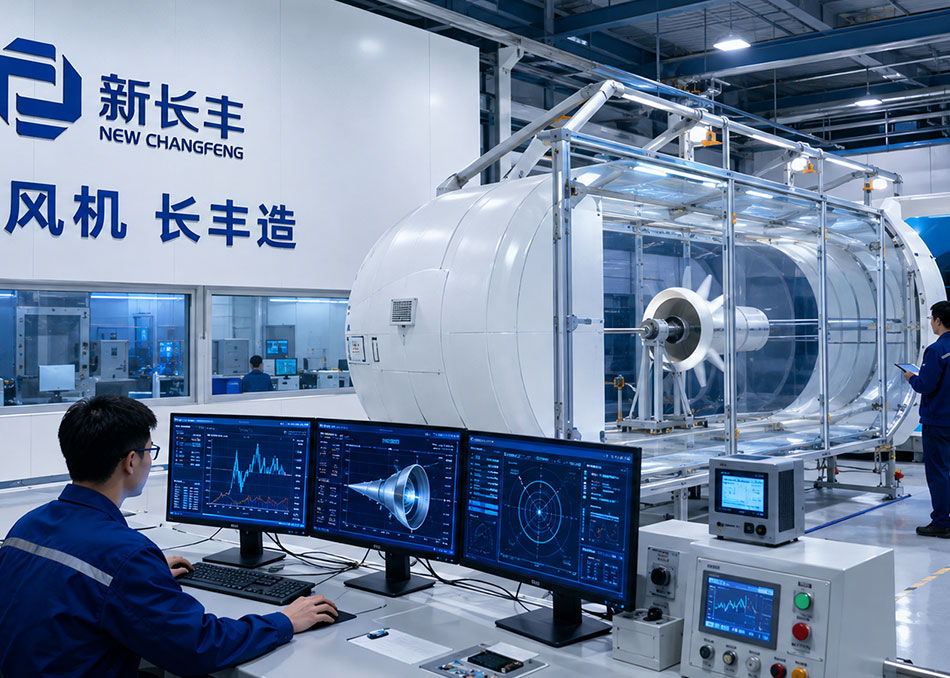
Many commercial kitchens run into a seemingly contradictory problem after their exhaust systems are upgraded: the hood captures fumes with real force, yet the area around the cooking stations stays stiflingly hot. Chefs sweat at the range, and greasy air still slips out from the edges of the hood. The culprit is often not the exhaust side at all, but the makeup air side. The kitchen has been driven into excessive negative pressure, and the air being pulled out is not being replaced in an organized way, so the whole system runs in a strangled, over-strained condition. A water-cooled fresh air unit addresses this by doing two jobs at once: it supplies makeup air and cools it at the same time, combining negative-pressure control with spot cooling for staff.
How Negative Pressure Forms in a Commercial Kitchen — and Why It Must Be Fixed
When a kitchen exhaust system operates, the fume purifier or exhaust fan continuously pulls large volumes of air from above the cooking stations. If the volume of makeup air is insufficient, indoor pressure drops below outdoor pressure and the kitchen enters a negative-pressure state. The consequences cascade quickly: hood capture is effectively undermined and fumes spill into dining areas or corridors; doors and windows are pulled so hard they are difficult to open, obstructing staff movement; untreated hot outdoor air, dust and insects are drawn in through door gaps, floor drains and other openings; and conditioned air from the dining room is siphoned away, throwing the pressure balance between front-of-house and back-of-house out of alignment.
From a ventilation engineering standpoint, a well-designed kitchen should establish a balance of organized exhaust and organized makeup air. Under GB 51251, the Chinese standard for smoke control and ventilation systems in buildings, and conventional design practice for commercial kitchen ventilation, exhaust systems need corresponding makeup air provisions. Makeup air inlets should be positioned so they do not blow directly onto burner flames, while still delivering air where it is needed. When makeup air is simply omitted, the exhaust fan works against a vacuum, wasting energy and failing to deliver the capture velocity the hood was designed for.
In practice, the negative-pressure problem is often worsened by a piecemeal approach: the hood and purifier are specified carefully, but makeup air is treated as an afterthought, or handled by opening a door or installing a bare wall fan. Neither provides controlled, filtered, conditioned air. The result is a kitchen that is simultaneously hot, smoky and energy-inefficient — three problems with a single root cause.
Why a Water-Cooled Fresh Air Unit Is the Right Fit for Makeup Air
A water-cooled fresh air unit is designed to bring in outdoor air, filter it, and cool it before delivering it into the space. Unlike a simple supply fan, it conditions the air as it supplies it, so the makeup air does not become a new heat load. In a kitchen context, this dual function is exactly what negative-pressure control requires. The unit draws in fresh outdoor air, passes it through filtration, and cools it via a water-cooled heat exchange process before distributing it to the kitchen work zones.
This approach solves several problems at once. First, it restores pressure balance: the volume of air extracted by the exhaust system is replaced in a controlled, measured way, so the hood can capture fumes as intended. Second, it delivers cooled air to the positions where staff actually stand, improving working conditions at the range without relying on the dining room's air conditioning. Third, because the supply is filtered, it keeps dust and insects out rather than pulling them in through gaps.
Water-cooled designs are particularly suited to kitchens where space on the roof or facade for air-cooled condensing units is limited, or where outdoor ambient temperatures are high. The water-cooled approach moves heat rejection to a water loop, which can be more compact and less sensitive to outdoor air temperature than an air-cooled equivalent. For a kitchen already under pressure to fit equipment into a tight back-of-house footprint, this matters.
Designing the Makeup Air Strategy: Key Points
Getting negative-pressure control right is a matter of design discipline rather than a single product choice. The water-cooled fresh air unit is the core of the solution, but its placement, air volume and control logic determine whether the kitchen actually reaches balance.
- Match makeup air to exhaust volume. The supply air volume should be engineered in relation to the exhaust volume, accounting for natural infiltration and any transfer air from adjacent spaces. Under-sizing leaves residual negative pressure; over-sizing can pressurize the kitchen and push odors outward.
- Position supply outlets away from hoods and burners. Makeup air should not short-circuit directly into the exhaust hood, and should not blow onto flames. Deliver air to the occupied zone — near the cooking line but at a height and direction that supports staff comfort.
- Filter and condition the supply. Unfiltered outdoor air introduces dust and insects; unconditioned air adds heat. A water-cooled fresh air unit handles both in one step.
- Coordinate with the exhaust controls. Ideally, makeup air volume should track exhaust operation so the pressure balance holds across part-load conditions, not just at full fire.
- Verify performance after commissioning. Measure the pressure differential between kitchen and adjacent spaces and confirm hood capture under real cooking conditions. Fan performance testing per GB/T 1236 and energy efficiency considerations under GB 19761 provide a useful reference framework for verifying that equipment performs as specified.
Complementary Equipment and Integration
The water-cooled fresh air unit does not work in isolation. It sits within a system that typically includes a kitchen exhaust hood, a fume purifier meeting GB 18483 emission requirements, and an exhaust fan. The makeup air unit should be selected and balanced alongside these components. In many projects, the same ventilation strategy also incorporates evaporative air coolers for general workshop or back-of-house cooling, or cabinet centrifugal fans where ducted supply is needed.
For kitchens in hotels, school canteens and restaurant chains, the integration point is often the building's fresh air and exhaust balance. A kitchen that is properly balanced will show measurable improvements: better hood capture, less fume migration into dining areas, more stable temperatures at the cooking line, and lower energy waste from fans fighting a vacuum. The water-cooled fresh air unit is the component that makes organized makeup air practical in a hot, greasy, space-constrained environment.
Frequently Asked Questions
Q: Can I just open a door or install a wall fan instead of a makeup air unit?
A: An open door or bare wall fan provides uncontrolled air. It does not filter or cool the incoming air, and it cannot be balanced against the exhaust volume. In hot climates it introduces outdoor heat and humidity directly into the kitchen, and it may draw in dust and insects. A water-cooled fresh air unit provides filtered, cooled, measured makeup air, which is what negative-pressure control actually requires.
Q: How do I know whether my kitchen has a negative-pressure problem?
A: Common signs include doors that are hard to pull open, fumes escaping from the edges of the hood, odors drifting into the dining area, and a kitchen that feels hot and stuffy even when the exhaust fan is running. A pressure differential measurement between the kitchen and adjacent spaces, combined with a hood capture check under cooking conditions, will confirm it.
Q: Does a water-cooled fresh air unit replace the kitchen's air conditioning?
A: No. It is a dedicated makeup air and spot-cooling device for the kitchen ventilation system. It improves conditions at the cooking line and helps restore pressure balance, but it is not a substitute for a full comfort air-conditioning design for the dining area. The two serve different purposes and should be designed together.
Q: What standards should the ventilation design follow?
A: Kitchen exhaust and makeup air design commonly references GB 51251 for smoke control and ventilation, GB 18483 for kitchen fume emission limits, and GB/T 1236 and GB 19761 for fan performance testing and energy efficiency. Local codes in your market may impose additional requirements, so confirm with a qualified ventilation engineer.
Negative pressure in a commercial kitchen is a system-balance problem, and it is solved at the makeup air end. A water-cooled fresh air unit combines organized supply, filtration and cooling in one component, restoring hood capture while making the cooking line more comfortable for staff. If your kitchen shows the classic signs — stubborn heat, escaping fumes, hard-to-open doors — the next step is a proper pressure and airflow assessment. XCFFJ manufactures water-cooled fresh air units and a full range of commercial ventilation equipment; contact our team to discuss a balanced makeup air solution for your kitchen.