
In commercial kitchen ventilation design, exhaust often takes priority while makeup air is overlooked. As fume purifiers and exhaust fans grow more powerful, kitchens can become stuffier, doors harder to open, and odors more likely to escape. In most cases the root cause lies not in the exhaust side but in the makeup air side: when exhaust volume exceeds makeup air volume, negative pressure forms inside the kitchen. Combustion air becomes insufficient, fumes escape, and staff feel uncomfortably hot—a vicious cycle. This article explains how kitchen negative pressure forms, why a water-cooled fresh air unit is well suited to handle both makeup air and cooling, and offers practical guidance for choosing kitchen cooling equipment.
How Negative Pressure Forms in Commercial Kitchens—and Why It Must Be Addressed
Once a kitchen exhaust system starts, the fume purifier and exhaust fan continuously draw air out of the space. If the makeup air path is restricted or the makeup air volume is insufficient, indoor pressure drops below outdoor pressure and negative pressure develops. Following the basic principles of standards such as GB 51251 (Technical Standard for Smoke Control and Exhaust Systems in Buildings), supply and exhaust air should be balanced. In kitchens—where pollution sources are concentrated—orderly airflow organization matters even more: air should move from clean zones toward contaminated zones, rather than outdoor air rushing in chaotically through door gaps, floor drains, and sewer openings.
The problems caused by negative pressure go beyond stuffiness. First, burners require adequate fresh air; under negative pressure, insufficient makeup air can disturb combustion, producing unstable flames and more flue gas. Second, the capture efficiency of an exhaust hood depends on well-organized airflow—when indoor negative pressure is excessive, fumes tend to escape from the hood and spread into the dining area. Third, doors that are hard to open, odors backing up from floor drains, and cross-contamination in adjacent areas are all typical symptoms.
In practice, many kitchens respond by adding more exhaust capacity, which only worsens the imbalance. The more effective approach is to establish a deliberate makeup air strategy: introduce treated outdoor air close to the pollution source, keep the kitchen slightly negative relative to the dining area, and avoid excessive negative pressure relative to the outdoors.
Why a Water-Cooled Fresh Air Unit Fits Kitchen Makeup Air and Cooling
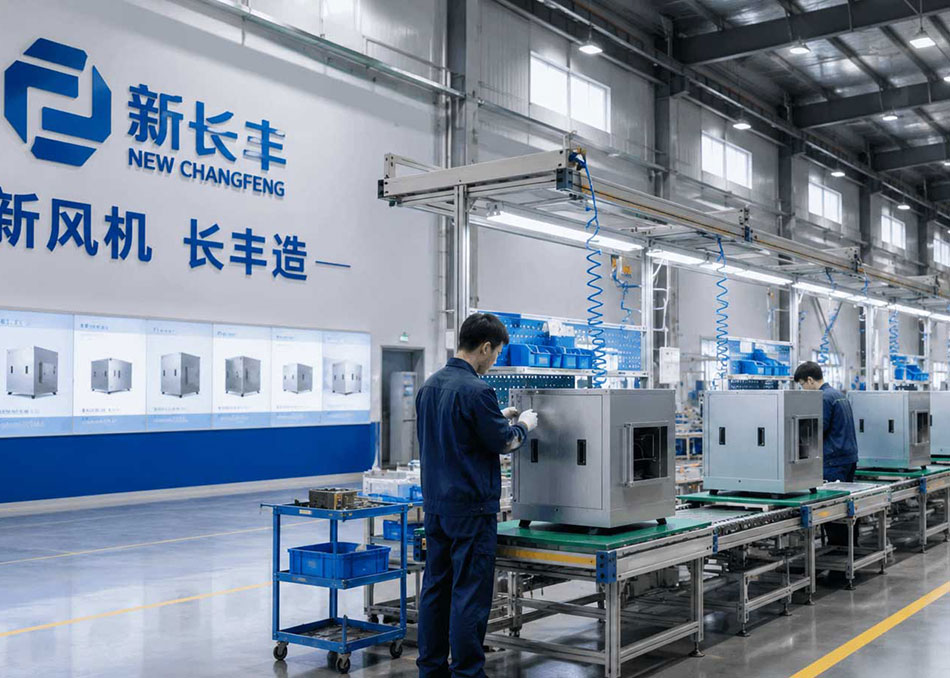
A water-cooled fresh air unit is designed to deliver filtered outdoor air while removing heat through a water-cooled heat exchange process. Unlike simply opening a window or installing a plain supply fan, it treats the incoming air—filtering it and lowering its temperature—before it enters the kitchen. This matters in commercial kitchens, where makeup air drawn in during hot weather can raise indoor temperatures and add to staff discomfort.
Because the unit supplies air rather than extracting it, it directly counteracts negative pressure. Positioned to deliver air near the cooking line or the exhaust hood's replacement air zone, it supports a more balanced supply-exhaust relationship. The cooling function addresses a second common complaint: even with strong exhaust, kitchens can remain hot because the replacement air itself is hot. By cooling the makeup air, the unit improves the working environment without fighting the exhaust system.
- Balanced airflow: supplies treated outdoor air to offset exhaust volume and reduce excessive negative pressure.
- Cooling at the source of entry: lowers makeup air temperature before it reaches the cooking area.
- Filtration: reduces dust and airborne particles entering the kitchen.
- Organized airflow: supports a clean-to-dirty air path from dining areas toward the kitchen.
Practical Selection Points for Kitchen Cooling Equipment
Choosing kitchen cooling equipment starts with the exhaust side. Estimate the total exhaust volume of hoods and fans, then plan makeup air to cover a substantial share of it—commonly designed so the kitchen remains slightly negative relative to the dining area but not excessively negative relative to outdoors. The exact balance should be confirmed by a qualified ventilation engineer based on the specific layout, hood type, and cooking load.
Next, consider the cooling method. Water-cooled fresh air units suit sites with access to cooling water and where incoming air temperatures are high. Evaluate the unit's filtration stage, ease of maintenance, and noise level—especially if the kitchen is near dining or residential areas. Fan performance should be verified against GB/T 1236 (Fan Performance Testing) and energy efficiency considered in line with GB 19761 (Fan Energy Efficiency Grades and Evaluation). Fume purification on the exhaust side should comply with GB 18483 (Emission Standard of Cooking Fume), while the supply side focuses on balance and comfort.
Finally, plan the air distribution. Supply outlets should avoid blowing directly onto burners or disrupting hood capture. Commissioning should include measuring pressure differentials and adjusting dampers so that supply and exhaust work together rather than against each other.
FAQ
Q: Can a water-cooled fresh air unit replace a kitchen exhaust system?
A: No. It handles the makeup air and cooling side. Exhaust and fume purification remain necessary and should be designed together with the supply system to maintain balanced airflow.
Q: How do I know if my kitchen has a negative pressure problem?
A: Common signs include doors that are hard to open, odors escaping into the dining area, floor drain backdrafts, unstable burner flames, and persistent stuffiness despite strong exhaust. A pressure differential measurement can confirm the diagnosis.
Q: Is cooling the makeup air more effective than adding air conditioning to the kitchen?
A: They serve different purposes. Cooling the makeup air addresses the heat introduced by ventilation itself and supports airflow balance, while air conditioning handles internal heat loads. In many kitchens, treating the makeup air is a practical first step.
Q: What standards should I reference when specifying equipment?
A: Refer to GB/T 1236 for fan performance testing, GB 19761 for fan energy efficiency, GB 51251 for smoke control and exhaust principles, and GB 18483 for cooking fume emission. Local codes may also apply.
Negative pressure in commercial kitchens is a supply-side problem that is often mistaken for an exhaust-side one. A water-cooled fresh air unit addresses both makeup air and cooling, helping restore balanced airflow and a more comfortable working environment. To discuss the right configuration for your kitchen project, contact XCFFJ for product information and application guidance.