
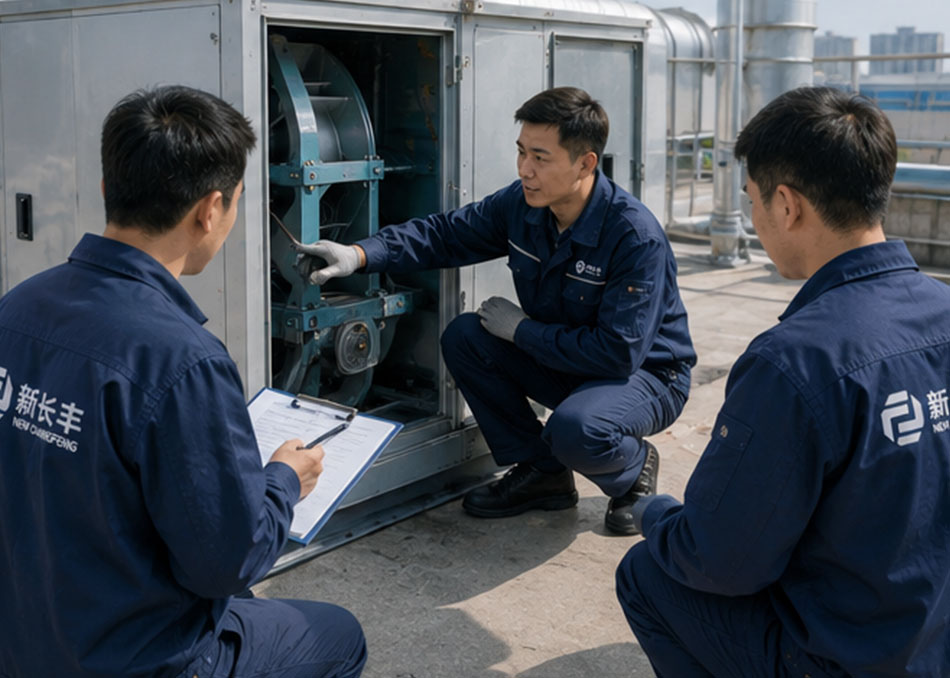
Step into any commercial kitchen, and beyond the aroma of food, you're often hit with a pungent, acrid smell of cooking fumes. These fumes don't just irritate chefs' eyes and lungs—they also leave stubborn grease deposits on walls and equipment, and can lead to hefty fines if your emissions don't meet local environmental regulations. The kitchen exhaust purifier is the heart of any commercial kitchen fume control system, and choosing the right one directly impacts exhaust efficiency, operating costs, and regulatory compliance. This guide walks you through the core principles, selection criteria, installation and maintenance best practices, and common pitfalls—so you can make an informed decision for your kitchen.
The Core Role and Working Principles of Kitchen Exhaust Purifiers
The primary job of a kitchen exhaust purifier is to separate and filter grease, particulate matter, and odors from the cooking fumes before they enter the exhaust ductwork, ensuring that the discharged air complies with standards such as China's GB 18483 (Emission Standard of Cooking Fume) or similar international regulations. Today's market offers three main purification technologies: mechanical filtration, electrostatic precipitation, and hybrid (mechanical + electrostatic) systems.
- Mechanical filtration uses multi-layer metal mesh or fiber pads to trap larger oil droplets. It's cost-effective but offers limited efficiency, especially for fine particulates.
- Electrostatic precipitation employs a high-voltage electric field to ionize oil mist particles, which are then captured on collector plates. This method delivers high purification efficiency, making it ideal for heavy Chinese-style stir-frying that generates large volumes of fine oil smoke.
- Hybrid systems combine both approaches: first, mechanical filters remove large particles, then electrostatic cells fine-tune the remaining aerosols. This is the preferred choice for most commercial kitchens.
When selecting a purifier, you must first assess your cooking type and smoke intensity. Heavy-oil cuisines like Sichuan or Hunan stir-fry, or open-flame grilling, require higher efficiency ratings and larger processing capacities. Lighter cooking—such as steaming or boiling—may be served well by simpler mechanical filters.
Key Selection Criteria: Airflow, Efficiency, and Compliance
Choosing the right purifier isn't just about picking the most expensive model. You need to match the unit to your kitchen's exhaust airflow (measured in cubic meters per hour or CFM). An undersized unit will struggle to keep up, leading to poor capture and grease buildup in ducts. An oversized unit wastes energy and money. Work with a ventilation engineer to calculate your required airflow based on the number of cooking appliances, their heat output, and the hood dimensions.
Next, verify the purification efficiency. Electrostatic and hybrid units typically offer 90%–95%+ efficiency, whereas mechanical filters may only reach 60%–80%. Check that the unit meets local emission limits—sometimes that means looking for a certification mark or test report. Also consider the pressure drop across the purifier; a higher drop means your exhaust fan must work harder, increasing energy costs. Finally, think about space: some purifiers are compact and can be mounted on walls or ceilings, while others require floor-standing installation.
Installation and Maintenance: The Key to Long-Term Performance
Even the best purifier will fail if installed incorrectly. The purifier should be placed between the exhaust hood and the fan, preferably as close to the hood as possible to reduce the length of ductwork that accumulates grease. Ensure adequate access for cleaning—many fire codes require a certain clearance. Also, make sure the unit is grounded properly, especially for electrostatic models, to avoid electrical hazards.
Maintenance is where most kitchens drop the ball. Electrostatic collector plates need regular washing—typically every 1 to 3 weeks depending on usage—to maintain efficiency and prevent fire risk. Mechanical filters should be cleaned or replaced periodically. A clogged purifier not only reduces airflow but can also cause the exhaust fan to overheat, increasing energy use and noise. Set a maintenance schedule and stick to it. Many manufacturers offer service contracts that handle cleaning and parts replacement.
Common Mistakes and Misconceptions in Fume Purifier Selection
One frequent error is selecting a purifier based solely on price. Cheap units may have low efficiency, leading to frequent breakdowns and higher long-term costs. Another is ignoring the need for a proper exhaust fan match—if the fan is too weak, the purifier can't operate effectively. Conversely, a fan that's too strong can pull grease past the purifier before it's captured. Also, don't assume that a purifier eliminates the need for regular duct cleaning; grease can still accumulate in horizontal runs and elbows. Finally, some operators forget to check local codes that may require specific efficiency levels or fire-rated ductwork. Always consult with a knowledgeable supplier or engineer.
FAQ
Q: How do I know what size purifier I need for my kitchen?
A: Calculate your required exhaust airflow based on the total heat load of your cooking equipment and the hood size. A rule of thumb is to aim for 40–60 air changes per hour in the kitchen, but a professional ventilation audit will give you a precise number. Most suppliers can help you size the unit if you provide your kitchen dimensions and appliance list.
Q: How often should I clean my electrostatic purifier?
A: It depends on your cooking volume. For heavy-use kitchens (e.g., fast-food or Chinese wok cooking), clean the collector plates every 1–2 weeks. For lighter use, monthly cleaning may suffice. Check the pressure drop across the unit—if it increases significantly, it's time to clean. Always follow the manufacturer's recommendations.
Q: Can I use a mechanical filter only for a small cafe?
A: Yes, if your emissions are light and local regulations allow it. However, even small cafes can produce fine grease aerosols that escape mechanical filters, leading to odor complaints and duct buildup. Upgrading to a hybrid or electrostatic unit is often worth the investment for better air quality and compliance.
Choosing the right kitchen exhaust purifier is a balance of technology, sizing, and maintenance. By understanding your cooking profile, matching airflow and efficiency requirements, and committing to regular cleaning, you can keep your kitchen safe, compliant, and odor-free. For professional guidance and high-quality purifiers, contact XCFFJ—we specialize in commercial kitchen exhaust purification solutions that meet the toughest standards.