
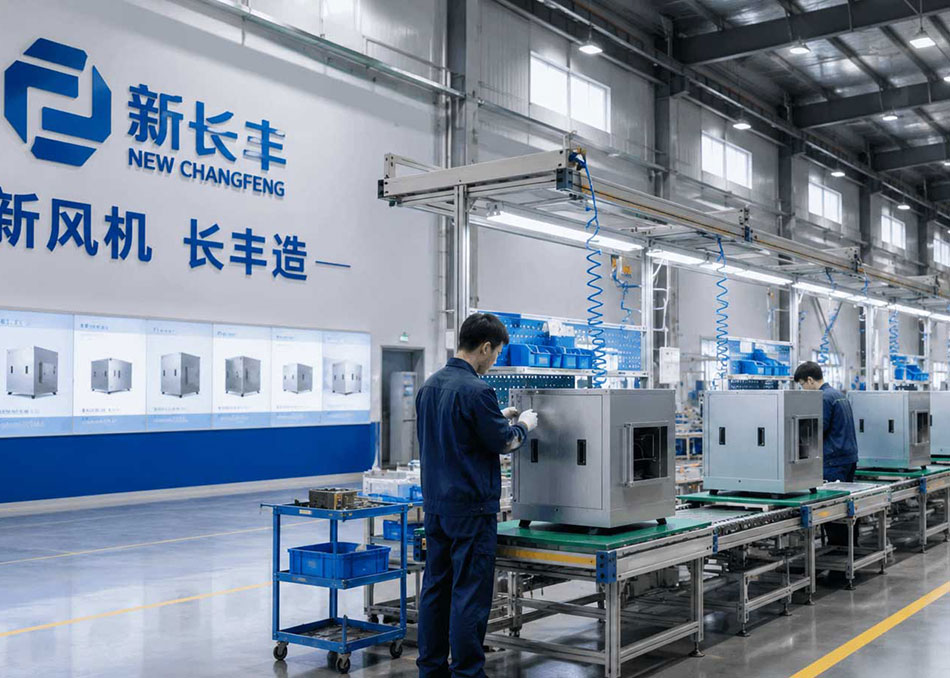
Commercial kitchens often struggle with stubborn smoke and heat even when exhaust hoods and fans run at full power. The missing piece is frequently not the exhaust system itself, but the makeup air supply. When exhaust volume exceeds makeup air, the kitchen becomes negatively pressurized, and air is drawn in through every crack and doorway—carrying grease-laden fumes back into the dining area and leaving staff sweltering. A water-cooled fresh air unit tackles both problems: it supplies makeup air and pre-cools it through evaporative water cooling, making the incoming air more comfortable while restoring pressure balance.
Why Negative Pressure Builds in Commercial Kitchens—and What It Costs
Negative pressure is not inherently bad; a slight negative pressure relative to adjacent spaces helps contain odors. But when it becomes excessive, a cascade of issues follows: reduced exhaust efficiency, flames disturbed by strong drafts, doors that are hard to open, and air-conditioned air being sucked out. The root cause is a mismatch between exhaust and makeup air volumes. Kitchens that add more exhaust capacity without corresponding makeup air will see diminishing returns and rising discomfort.
Standards such as GB 18483 for kitchen fume emission focus on purification and discharge, but they also imply the need for a balanced ventilation strategy. Exhaust and makeup air are partners. Overpowering one without the other leads to the very problems operators try to eliminate.
How a Water-Cooled Fresh Air Unit Solves Negative Pressure and Heat
A water-cooled fresh air unit is designed to deliver filtered, tempered outdoor air directly into the kitchen. As the name suggests, it uses water evaporation to cool the incoming air, which means the makeup air is not just a volume of hot outdoor air but a cooler, more comfortable stream. This dual function addresses both the pressure imbalance and the thermal discomfort common in kitchens.
By providing a dedicated, controlled makeup air path, the unit reduces the reliance on infiltration through random openings. The result is a more stable pressure relationship: exhaust hoods capture fumes more effectively, doors operate normally, and the overall kitchen environment becomes more bearable. In many cases, the unit can be integrated with existing exhaust systems and building management controls to maintain a slight negative pressure without the extremes.
Maintenance Essentials for Water-Cooled Fresh Air Units
To keep a water-cooled fresh air unit performing reliably, a routine maintenance schedule is essential. Neglecting upkeep can lead to reduced cooling efficiency, water leaks, and even motor failure. The following practices help ensure long service life and consistent operation.
Regularly clean or replace air filters: Clogged filters restrict airflow and force the fan to work harder, reducing both cooling and ventilation effectiveness. Check filters monthly in heavy-use kitchens and clean or replace as needed.
Inspect the water distribution system: For evaporative cooling models, ensure water nozzles, pads, or media are free of scale and debris. Mineral buildup can block water flow and diminish cooling performance. Descaling may be required periodically, depending on water hardness.
Check the water tank and drainage: Stagnant water can become a breeding ground for bacteria. Drain and clean the tank regularly, and verify that overflow and drain lines are clear.
Lubricate fan bearings and check belts: If the unit uses a belt-driven fan, inspect belt tension and wear. Lubricate bearings according to the manufacturer's instructions to prevent premature failure.
Verify electrical connections and controls: Loose terminals or corroded contacts can cause intermittent operation. A qualified technician should inspect electrical components annually.
Clean the heat exchange surfaces: Dust and grease can coat coils or media, reducing heat transfer. Use appropriate cleaning agents and follow safety guidelines.
Beyond scheduled maintenance, pay attention to unusual noises, vibrations, or water leaks. Addressing small issues early prevents costly downtime and maintains indoor air quality.
Integrating Makeup Air with Exhaust for Optimal Balance
A water-cooled fresh air unit works best when its airflow is balanced with the kitchen exhaust system. Over-supplying makeup air can pressurize the kitchen and push odors into other areas; under-supplying leaves negative pressure unresolved. The goal is a slight negative pressure—typically a few pascals—to contain fumes without causing operational problems.
Adjusting fan speeds, installing variable frequency drives (VFDs), or using pressure sensors can help maintain this balance automatically. In some cases, a building automation system can modulate the fresh air unit based on exhaust demand. Consulting a ventilation professional to commission the system ensures that both exhaust and makeup air are properly matched.
Frequently Asked Questions
Q: How do I know if my kitchen has excessive negative pressure?
A: Common signs include doors that are difficult to open, strong drafts at gaps, persistent cooking odors in the dining area, and exhaust hoods that fail to capture smoke effectively. A simple test is to crack open an exterior door—if it slams shut or is hard to pull, negative pressure is likely too high.
Q: Can a water-cooled fresh air unit replace a traditional makeup air fan?
A: Yes, it can serve as the primary makeup air source while also providing cooling. However, the unit must be sized correctly to match exhaust volumes and kitchen layout. In some cases, a combination of cooling and non-cooling makeup air units may be more cost-effective.
Q: How often should I service the water-cooled fresh air unit?
A: At minimum, perform filter checks monthly and a thorough inspection quarterly. Water system cleaning may be needed more frequently in areas with hard water. Always refer to the manufacturer's manual for specific intervals.
Q: Does the unit require a dedicated water supply?
A: Most evaporative water-cooled units need a continuous water connection for the cooling process. Some models have a water tank that requires manual filling, but for commercial kitchens, a plumbed supply is typical. Ensure proper drainage is also available.
Conclusion
Balancing exhaust and makeup air is critical for a comfortable, safe, and compliant commercial kitchen. A water-cooled fresh air unit not only helps resolve negative pressure but also improves working conditions by delivering cooler, fresher air. With regular maintenance and proper integration, it becomes a reliable asset for any foodservice operation. For tailored advice on selecting and maintaining water-cooled fresh air units, consult a ventilation specialist who can assess your kitchen's specific needs.