
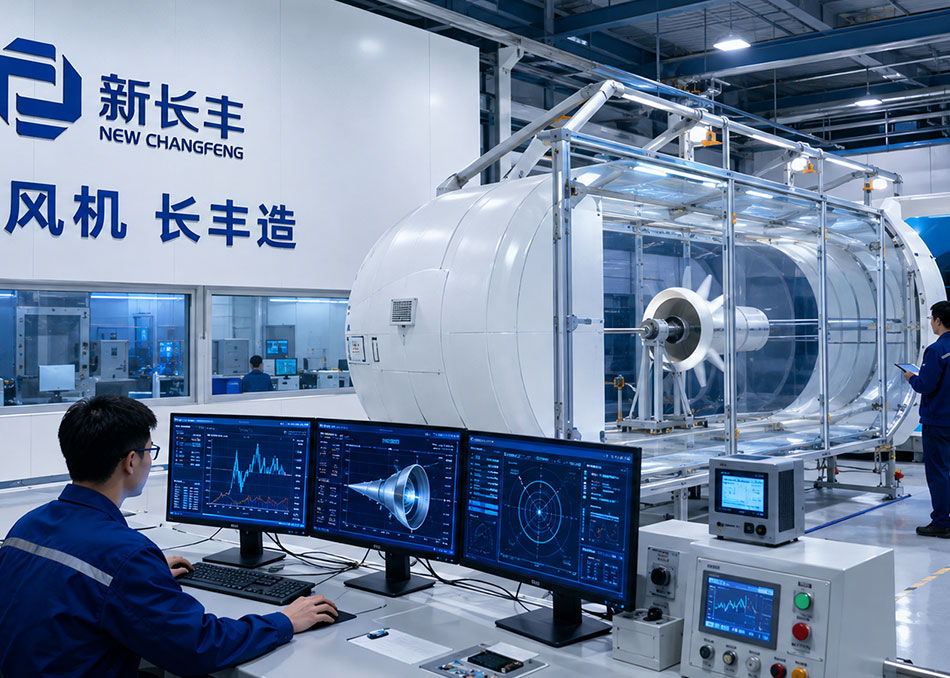
For restaurant owners and kitchen managers, the challenge of managing cooking fumes is all too familiar. The oily smoke, steam, and intense heat generated during cooking—if not properly exhausted—can turn a kitchen into an unbearable environment. Grease condenses on walls, ceilings, and equipment, creating fire hazards and degrading both the dining experience for customers and the working conditions for staff. A reliable, high-performance exhaust system is essential, and at its core lies the DT cabinet centrifugal fan—the true "heart" of the entire ventilation setup. This article explains the working principles of DT cabinet centrifugal fans and how they enable efficient smoke extraction and purification in commercial kitchens.
1. Basic Structure and Working Principle of DT Cabinet Centrifugal Fans
As the name suggests, a DT cabinet centrifugal fan is a centrifugal ventilator housed in a compact, cabinet-style enclosure. Its operation is based on centrifugal force: when the motor drives the impeller at high speed, the air between the blades is set into rotation. Centrifugal force flings the air outward toward the impeller's periphery, imparting both kinetic energy and static pressure. The air is then collected by the volute casing and directed to the outlet, producing a steady, controlled airflow. Simultaneously, a negative pressure zone forms at the impeller's center, drawing in external air—along with cooking fumes—ensuring continuous exhaust and supply.
Unlike axial fans, centrifugal fans generate higher static pressure, enabling them to overcome the resistance of ductwork, elbows, and purification equipment. This makes them particularly suitable for commercial kitchens, where long duct runs and multiple bends create significant pressure drops. The DT cabinet design integrates the fan body, motor, and drive assembly into a single, space-saving unit, simplifying installation and maintenance while reducing noise levels compared to traditional exposed fan setups.
2. Why DT Cabinet Centrifugal Fans Are Ideal for Kitchen Exhaust
Commercial kitchen exhaust systems must handle a demanding combination of grease-laden air, high humidity, and elevated temperatures. DT cabinet centrifugal fans excel in this environment due to several key features:
- High static pressure capability: Their design delivers the pressure needed to push air through long ducts, multiple elbows, and the resistance of grease filters or electrostatic precipitators.
- Durable construction: The cabinet housing protects internal components from grease buildup and incidental impacts, extending service life in harsh kitchen conditions.
- Compact footprint: The integrated design allows installation in tight spaces, such as above ceilings or on rooftops, without compromising performance.
- Reduced noise: The enclosed cabinet dampens operational noise, which is crucial for open-kitchen designs and dining areas adjacent to the kitchen.
When paired with a properly sized exhaust hood, duct system, and purification device—such as an electrostatic precipitator or UV light system—the DT fan ensures that fumes are captured at the source, transported efficiently, and cleaned before release, meeting both local regulations and indoor air quality goals.
3. Integration with Purification Equipment for Compliant Discharge
Effective smoke extraction is only half the battle; purification is equally important. In many regions, commercial kitchens must adhere to emission standards (e.g., GB 18483 in China) that limit the concentration of oil fume particles and volatile organic compounds. DT cabinet centrifugal fans are designed to work seamlessly with a range of purification devices:
- Grease filters (baffle or mesh): Installed at the hood, these capture large grease particles before they enter the ductwork, reducing fire risk and downstream maintenance.
- Electrostatic precipitators: These use high-voltage ionization to charge particles, which are then collected on oppositely charged plates. The fan must provide sufficient pressure to draw air through the tight spacing of these units.
- UV-C light systems: These use ultraviolet light to break down oil molecules into water vapor and carbon dioxide, further reducing odor and grease. The fan ensures adequate airflow through the UV chamber.
By selecting a DT cabinet centrifugal fan with the correct airflow and static pressure ratings—based on system resistance calculations—designers ensure that the entire exhaust chain operates at peak efficiency, minimizing energy use and maximizing capture and purification performance.
4. Sizing and Installation Considerations
Proper sizing is critical for achieving optimal performance. Undersized fans lead to poor capture and lingering odors; oversized fans waste energy and create excessive noise. Key factors include:
- Hood dimensions and capture distance: The hood's size and height above cooking equipment determine the required airflow rate to effectively capture rising fumes.
- Duct length and layout: Each elbow, transition, and straight run adds resistance. These must be accounted for in the total static pressure requirement.
- Purification equipment pressure drop: Each filter or precipitator contributes to the total system resistance. Manufacturer data sheets provide these values.
- Make-up air: For every cubic meter of air exhausted, an equivalent volume of replacement air must be supplied to maintain balanced ventilation and avoid negative pressure that can hinder exhaust performance.
During installation, ensure the fan is securely mounted on a vibration-isolated base to reduce noise transmission. Duct connections should be airtight, and access panels should be provided for cleaning and maintenance. Regular inspection and cleaning of the fan blades, motor, and bearings are essential to maintain performance and prevent grease accumulation, which can unbalance the impeller and shorten lifespan.
5. Energy Efficiency and Maintenance Best Practices
Energy efficiency is a growing concern for commercial kitchens, where ventilation can account for a significant portion of utility costs. DT cabinet centrifugal fans can be paired with variable frequency drives (VFDs) to adjust fan speed based on real-time cooking activity, reducing energy consumption during off-peak hours. Additionally, selecting a fan that meets or exceeds efficiency standards, such as those outlined in GB 19761, ensures lower lifecycle costs.
Maintenance should follow a schedule that includes:
- Monthly: Visual inspection of belts, pulleys, and motor; check for unusual noise or vibration.
- Quarterly: Clean fan blades and interior surfaces to remove grease buildup; inspect and tighten electrical connections.
- Annually: Lubricate bearings, replace worn belts, and verify airflow and static pressure against original specifications.
By adhering to these practices, operators can extend the fan's service life, maintain consistent performance, and avoid costly downtime.
Frequently Asked Questions
Q: What is the difference between a DT cabinet centrifugal fan and an axial fan for kitchen exhaust?
A: The primary difference is pressure capability. Axial fans move large volumes of air at low pressure, making them suitable for short, low-resistance duct runs. DT cabinet centrifugal fans generate higher static pressure, allowing them to overcome the resistance of long duct runs, multiple elbows, and purification equipment. For most commercial kitchens, centrifugal fans are the recommended choice due to their ability to maintain consistent airflow under varying system loads.
Q: How do I determine the correct size of DT cabinet centrifugal fan for my kitchen?
A: Sizing requires calculating the total airflow needed (based on hood size, cooking equipment, and capture velocity) and the total static pressure (sum of duct friction, fittings, and equipment pressure drops). It's advisable to consult with a ventilation engineer or use a professional design service to ensure accurate calculations. Oversizing or undersizing can lead to poor performance or wasted energy.
Q: Can a DT cabinet centrifugal fan be used with an electrostatic precipitator?
A: Yes, absolutely. In fact, pairing a DT fan with an electrostatic precipitator is a common and effective solution for meeting emission standards. The fan must provide sufficient static pressure to overcome the precipitator's pressure drop, so it's important to include this in your system design. Proper airflow ensures the precipitator operates at its designed efficiency, reducing oil fume emissions to compliant levels.
Conclusion
DT cabinet centrifugal fans are the workhorses of commercial kitchen exhaust systems, delivering the pressure and reliability needed to extract smoke, steam, and heat while integrating seamlessly with purification technologies. By understanding their working principles, sizing requirements, and maintenance needs, you can design a system that ensures a comfortable kitchen environment, meets regulatory standards, and protects your investment. For expert guidance and high-quality equipment, consider consulting with XCFFJ—a trusted name in industrial and commercial ventilation—to find the perfect solution for your kitchen exhaust needs.