
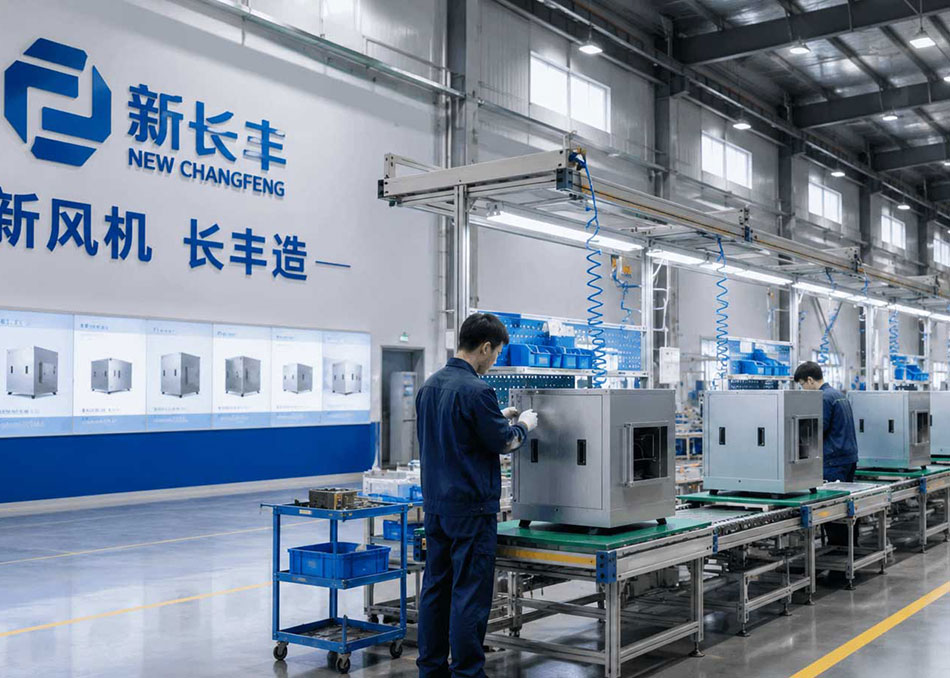
Hotel kitchens are among the most demanding indoor environments for temperature control. Open flames, steaming ovens, deep fryers, and continuous cooking operations push the perceived temperature at chef stations far above the outdoor air temperature. The traditional response has been to rely on powerful exhaust systems to pull heat away, but exhaust alone only addresses air circulation—it does nothing to lower the temperature of the air reaching the people who work in the heat. This is why commercial kitchen air conditioners have become a core solution for hotel kitchen cooling retrofits. This guide walks through the practical selection logic and common pitfalls when choosing a commercial kitchen air conditioner for hotel kitchen cooling, with a focus on targeted station cooling.
Why Standard Comfort Air Conditioners Fall Short in Hotel Kitchens
Standard comfort air conditioners are designed to lower the air temperature of an entire room. In a hotel kitchen, however, heat sources are concentrated and continuous, and the air contains high levels of grease, moisture, and dust. If a standard air conditioner is installed in this environment, the evaporator fins quickly become coated with grease, cooling capacity drops, and the compressor runs under prolonged high load—leading to a rising failure rate. A commercial kitchen air conditioner is therefore engineered from the start for station cooling, not whole-room cooling.
The right approach for kitchen station cooling is a coordinated exhaust and supply air strategy. First, exhaust hoods and exhaust fans remove hot smoke and steam directly from the cooking area. Then, the commercial kitchen air conditioner delivers treated cool air directly to the chef's operating position, creating a localized comfort zone. This avoids wasting cooling capacity on a large volume of air and reduces the chance of the air conditioner coming into direct contact with grease and fumes.
Before selecting equipment, clarify three things:
- Number and distribution of stations: how many cooking positions exist, whether they are centralized or dispersed.
- Heat source intensity: open flames, steam ovens, fryers, and other equipment each contribute differently to the heat load.
- Exhaust and makeup air balance: whether the existing exhaust system can maintain negative pressure and how makeup air will be supplied.
Key Selection Factors for Commercial Kitchen Air Conditioners
When evaluating a commercial kitchen air conditioner for hotel kitchen cooling, the first consideration is cooling method and how the unit handles grease. Units designed specifically for kitchen environments often use a separated or remote condenser arrangement, keeping the part exposed to the kitchen air minimal and easy to clean. Some models use water-cooled or remote condensing to avoid discharging heat back into the kitchen.
Air delivery method is equally important. Spot cooling or directional air supply allows cool air to be aimed at specific workstations rather than cooling the entire room. This approach is more energy-efficient and delivers faster comfort improvement where it matters most. Look for adjustable louvers or flexible air outlets that can be positioned as kitchen layouts change.
Filtration and maintenance access are critical for long-term reliability. Grease-resistant filters, easy-access panels, and removable drain pans reduce cleaning downtime. In a hotel kitchen that operates multiple shifts, equipment that can be serviced quickly without specialized tools helps maintain continuous operation.
Noise level also deserves attention. Kitchen staff work in close proximity to equipment, and excessive noise adds to fatigue and communication difficulties. Choose units with sound levels appropriate for the workspace and consider mounting locations that direct noise away from workstations.
Finally, verify that the unit complies with relevant standards. In China, fan performance is tested according to GB/T 1236, fan energy efficiency is classified under GB 19761, and kitchen fume emission must meet GB 18483. For smoke and heat exhaust systems, GB 51251 provides the design framework. While specific performance figures depend on the model and application, selecting equipment from manufacturers who design to these standards provides a baseline of reliability and safety.
Integrating the Air Conditioner with Exhaust and Ventilation
A commercial kitchen air conditioner does not replace exhaust and ventilation—it works with them. The exhaust system removes heat, smoke, and moisture at the source, while the air conditioner supplies cool, filtered air to the workstation. If the exhaust system is undersized or the makeup air path is poorly designed, the air conditioner's cooling effect will be diluted or the kitchen will experience negative pressure problems.
For hotel kitchens, a common configuration includes:
- Exhaust hoods and ducting sized to capture cooking fumes at the source.
- A negative pressure fan or make-up air unit to balance air volume and prevent grease-laden air from migrating to dining areas.
- A commercial kitchen air conditioner positioned to deliver cool air directly to chef stations without interfering with cooking operations.
- Optional air purification modules where odor and fine grease particles must be controlled before discharge.
Coordination between these components should be planned at the design stage. Retrofitting an air conditioner into an existing kitchen without reviewing exhaust capacity often leads to disappointing results—either the cool air is immediately pulled out by the exhaust, or the kitchen becomes uncomfortably pressurized.
Common Mistakes in Hotel Kitchen Cooling Projects
One frequent mistake is treating the commercial kitchen air conditioner as a whole-room cooling solution. In a large hotel kitchen with multiple heat sources, cooling the entire space to comfort levels is neither practical nor energy-efficient. Station cooling concentrates resources where people actually work.
Another mistake is neglecting maintenance access. A unit installed in a hard-to-reach location may save installation cost but will cost far more in cleaning and service downtime. Grease accumulation is inevitable in any kitchen; design for easy cleaning from day one.
A third pitfall is specifying equipment based only on nominal cooling capacity without considering the actual heat load and air distribution. A unit with adequate capacity but poor air delivery may leave chefs still feeling hot. Conversely, an oversized unit may short-cycle and fail to dehumidify properly.
Finally, some projects overlook the importance of professional installation and commissioning. Airflow balancing, refrigerant piping, drainage, and electrical connections all affect performance and longevity. Working with experienced contractors who understand kitchen environments reduces the risk of post-installation problems.
Frequently Asked Questions
Q: Can I use a residential split air conditioner for hotel kitchen cooling?
A: It is not recommended. Residential units are not designed for high grease, moisture, and continuous heat loads. The evaporator coils will clog quickly, cooling capacity will drop, and the compressor may fail prematurely. A commercial kitchen air conditioner designed for station cooling is a more reliable choice.
Q: How does spot cooling differ from whole-room cooling in a kitchen?
A: Spot cooling delivers conditioned air directly to specific workstations, creating a localized comfort zone. Whole-room cooling attempts to lower the temperature of the entire kitchen volume, which is inefficient when heat sources are concentrated and exhaust is continuously removing air. Spot cooling uses less energy and provides faster comfort improvement for chefs.
Q: What maintenance does a commercial kitchen air conditioner require?
A: Regular cleaning of filters, evaporator coils, and drain pans is essential. Grease and dust accumulate quickly in kitchen environments, so maintenance intervals may be shorter than for comfort air conditioning. Choose units with easy-access panels and washable filters to simplify routine service.
Q: Does a commercial kitchen air conditioner replace the need for exhaust hoods?
A: No. Exhaust hoods capture heat, smoke, and moisture at the source and are required for kitchen fume control and fire safety. The air conditioner complements the exhaust system by cooling the air supplied to workstations. Both are necessary for a comfortable and compliant kitchen environment.
Conclusion
Cooling a hotel kitchen effectively requires a targeted approach. By focusing on station cooling, integrating the commercial kitchen air conditioner with proper exhaust and ventilation, and selecting equipment designed for the unique challenges of grease, moisture, and continuous heat, hotels can create a more comfortable and productive environment for kitchen staff. XCFFJ offers a range of commercial kitchen air conditioners and ventilation equipment engineered for these demanding conditions. To discuss your hotel kitchen cooling project, visit www.xcffj.com or contact our team for application guidance.