
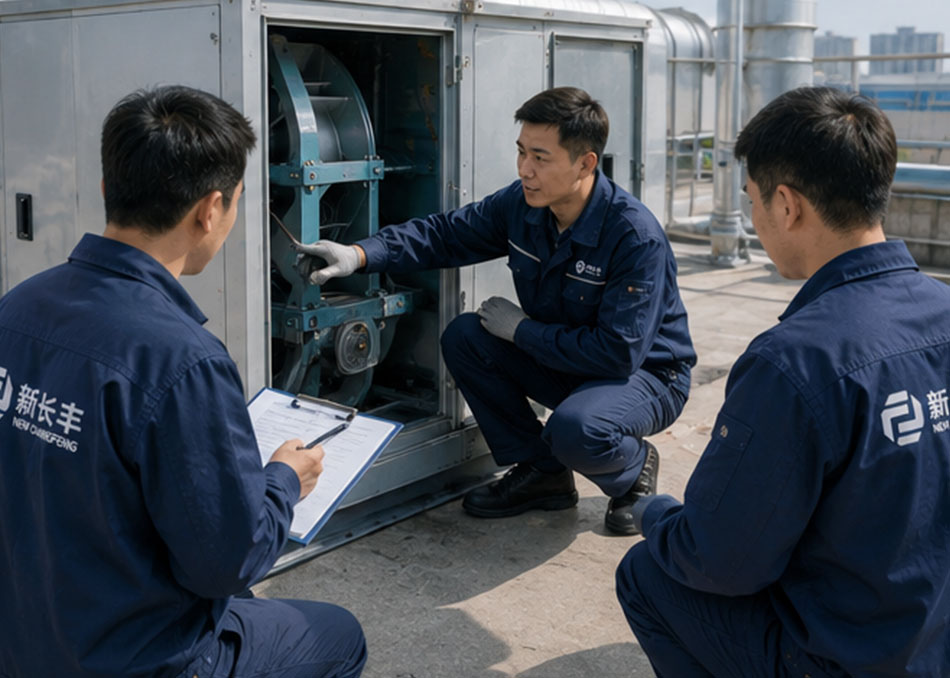
In commercial kitchens and industrial workshops, one of the most overlooked yet impactful issues during ventilation retrofits is the negative pressure effect. When exhaust systems pull air out aggressively but makeup air is insufficient, the space becomes negatively pressurized. This leads to doors that are hard to open, smoke and odor backflow, ineffective air conditioning, and even unsafe combustion in gas appliances. Traditional fixes—like installing simple axial fans or opening windows—often introduce hot or dirty outdoor air, failing to address both temperature and air quality. Water-cooled fresh air units, which combine cooling, filtration, and makeup air supply, are emerging as a critical component in solving negative pressure in commercial kitchens and improving workshop ventilation and cooling.
The Real Danger of Negative Pressure in Kitchens: Why Makeup Air Matters More Than Exhaust
Many kitchen renovation projects focus solely on the power of exhaust fans, overlooking the fact that exhaust must be balanced by makeup air. According to the ventilation balance principle in the Chinese standard GB 51251 for building smoke control and exhaust systems, exhaust volume should match makeup air volume. When kitchen exhaust exceeds makeup air, indoor pressure drops below outdoor pressure, creating negative pressure.
The chain reaction of negative pressure includes: kitchen doors being sucked shut, making them difficult to open and slowing service; fumes that cannot be fully extracted, spilling back from gaps around the hood into the cooking area; untreated air infiltrating through door and window cracks, bringing in dust, insects, and odors; gas water heaters and stoves receiving insufficient oxygen, leading to incomplete combustion and increased carbon monoxide risk; and air conditioning cooling being drawn out, drastically reducing efficiency and skyrocketing energy costs.
Therefore, a well-designed ventilation retrofit for workshops or kitchens must prioritize balanced makeup air. A water-cooled fresh air unit delivers filtered, cooled outdoor air to offset the air removed by exhaust systems, stabilizing pressure while improving comfort.
Why Water-Cooled Fresh Air Units Are Ideal for Kitchen Makeup Air
Water-cooled fresh air units differ from standard makeup air solutions by integrating evaporative cooling with fresh air delivery. They draw in outdoor air, pass it through a water-soaked cooling pad, and then supply it into the space. This process lowers the air temperature while adding humidity, which is particularly beneficial in hot kitchen environments. Unlike direct expansion or compressor-based cooling, water-cooled units consume significantly less energy, making them a cost-effective choice for continuous operation.
Key advantages include:
- Pressure balancing: They supply a controlled volume of air to match exhaust rates, reducing negative pressure and its associated problems.
- Cooling effect: Evaporative cooling can lower incoming air temperatures by several degrees, improving worker comfort without the high energy cost of refrigeration.
- Filtration: Many units include basic filters to remove dust and particulates, preventing contamination of the kitchen environment.
- Energy efficiency: Water evaporation consumes much less electricity than compressor-based cooling, lowering operational expenses.
- Easy installation: They can be mounted on walls or roofs and require only a water supply and electrical connection, making retrofits straightforward.
In kitchens where exhaust systems run at high capacity, a water-cooled fresh air unit can be sized to provide 80–100% of the exhaust volume, depending on the specific layout and local climate. This approach not only resolves negative pressure but also improves air quality and thermal comfort.
Designing a Balanced Ventilation System for Kitchens and Workshops
A successful ventilation retrofit involves more than just adding a fresh air unit. It requires a holistic design that considers the kitchen's heat load, exhaust rate, and workflow. The first step is to measure the actual exhaust volume of existing hoods and fans. This data determines the required makeup air capacity. According to GB 51251, the makeup air volume should generally be at least 80% of the exhaust volume for kitchens, though this can vary based on local codes and specific cooking processes.
Next, the placement of fresh air outlets is critical. Supply air should be directed toward workstations and away from exhaust hoods to avoid short-circuiting and ensure effective air distribution. Water-cooled fresh air units can be positioned to deliver cool, clean air to chefs and staff, enhancing comfort and productivity. Additionally, the system should be interlocked with the exhaust system so that when exhaust fans turn on, the fresh air unit activates automatically, maintaining pressure balance at all times.
Finally, regular maintenance is essential. Water-cooled units require periodic cleaning of the cooling pads, water reservoirs, and filters to prevent mold growth and maintain efficiency. With proper upkeep, these systems can provide years of reliable service, reducing downtime and repair costs.
Case Application: Transforming a Busy Commercial Kitchen
Consider a mid-sized restaurant kitchen that experienced severe negative pressure. The kitchen's exhaust system pulled 20,000 cubic meters per hour, but makeup air was only 5,000, leading to doors stuck shut and heat buildup. After installing a water-cooled fresh air unit with a capacity matching the exhaust volume, the kitchen saw immediate improvements: doors opened easily, smoke and odors were eliminated, and the ambient temperature dropped by several degrees, significantly improving working conditions for the staff.
The unit's energy consumption was a fraction of what a traditional air conditioning system would have used, saving the restaurant thousands of dollars annually in utility costs. Moreover, the filtered air reduced the accumulation of grease and dust on equipment, lowering cleaning frequency and extending equipment life. This example illustrates how a well-designed water-cooled fresh air system can solve negative pressure while delivering tangible operational benefits.
Frequently Asked Questions
Q: Can a water-cooled fresh air unit completely eliminate negative pressure in a kitchen?
A: Yes, if the unit is properly sized to supply at least 80% of the exhaust volume, it can effectively balance pressure. However, other factors like door openings and natural infiltration also play a role, so a thorough assessment is recommended.
Q: Are water-cooled fresh air units suitable for all climates?
A: They are most effective in hot, dry climates where evaporative cooling is efficient. In humid regions, the cooling effect is reduced, but they can still provide adequate makeup air and some temperature reduction.
Q: How often should a water-cooled fresh air unit be maintained?
A: Cooling pads should be checked monthly and replaced annually or as needed. Water reservoirs and filters should be cleaned every 1–2 months to prevent mineral buildup and microbial growth.
In summary, addressing negative pressure in commercial kitchens and workshops is not just about adding more exhaust—it's about balanced ventilation. Water-cooled fresh air units offer an energy-efficient, practical solution that combines makeup air, cooling, and filtration. By integrating these units into a comprehensive ventilation strategy, facility managers can improve air quality, enhance worker comfort, and reduce energy costs. For more information on selecting and installing water-cooled fresh air units for your facility, consult with XCFFJ's ventilation specialists at www.xcffj.com.