
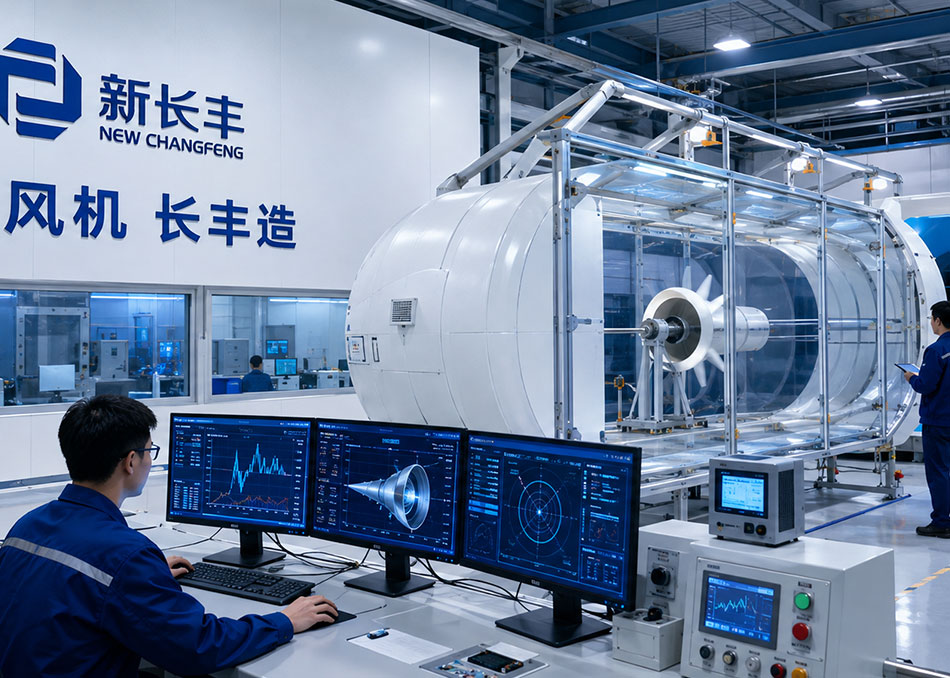
Workshop heat, lingering odors, and unexhausted fumes are common headaches for factory managers, especially in summer. Adding a few floor fans only stirs local air—it neither cools the space nor truly removes stale air. To fundamentally improve workshop ventilation, negative pressure fans are an essential equipment category. However, with manufacturers varying widely in quality, procurement staff often face a dilemma: low prices raise quality concerns, while high quotes risk overpaying. This article starts from the technical principles of negative pressure ventilation, explains key selection points and methods for vetting manufacturers, and helps workshop managers and HVAC engineering companies make more reliable decisions.
Why Negative Pressure Fans Suit Workshop Ventilation
The core logic of negative pressure ventilation is straightforward: install negative pressure fans on one side of the workshop to exhaust air outward, creating an indoor pressure lower than outdoor. Fresh outdoor air is then naturally drawn in through opposite doors, windows, or air inlets, forming a continuous overall airflow cycle. Compared with simply using fans to stir air, this method carries heat, dust, and odors out of the workshop together—it is "air exchange" rather than "air blowing."
Technically, negative pressure fans typically use axial-flow impellers with large-diameter blades, providing high exhaust volume per unit time—suitable for industrial plants with high ceilings, dense personnel, and concentrated heat sources. According to GB/T 1236 Fan Performance Testing, reputable manufacturers should provide third-party test data for airflow and pressure, not just nameplate ratings. Focusing on measured performance during procurement is more reliable than marketing parameters alone.
It is important to note that the effectiveness of negative pressure fans depends on workshop airtightness and inlet area. If the workshop is not reasonably sealed, or inlet area is insufficient, the pressure difference cannot be established, and exhaust efficiency drops significantly. Therefore, before selecting fans, assess the building's leakage and plan inlet openings—this is more important than merely choosing a larger fan.
Key Selection Points for Negative Pressure Fans
When selecting negative pressure fans, buyers should focus on several core aspects: airflow and pressure matching, energy efficiency, noise, and structural durability. First, calculate the required exhaust volume based on workshop volume and required air changes per hour. For general industrial workshops, 6–10 air changes per hour are common, but adjust according to heat load, personnel density, and process emissions. Do not blindly pursue maximum airflow—excessive airflow may cause negative pressure imbalance, affecting adjacent areas or increasing energy consumption.
Second, check energy efficiency. GB 19761 Minimum Allowable Values of Energy Efficiency and Energy Efficiency Grades for Fans sets clear requirements for fan energy efficiency. Choosing fans that meet or exceed these standards reduces long-term operating costs. Additionally, pay attention to motor protection level (e.g., IP54 or higher) and insulation class, especially in dusty or humid environments.
Noise is another often-overlooked factor. Negative pressure fans operate continuously, and excessive noise affects employee comfort and may violate workplace noise regulations. Choose fans with reasonable blade design and dynamic balancing, and consider adding mufflers or flexible connections if needed. Structural durability includes housing material (e.g., galvanized steel with anti-corrosion coating), bearing type, and belt drive reliability (if applicable).
How to Vet Negative Pressure Fan Manufacturers
With many manufacturers on the market, how can buyers identify reliable suppliers? First, check qualifications and testing capabilities. A professional manufacturer should have its own testing facility and be able to provide performance test reports in accordance with GB/T 1236. Second, examine production processes and quality control—on-site visits or video tours can reveal sheet metal processing, welding, and assembly standards.
Third, evaluate industry experience and case studies. Manufacturers with extensive experience in factory ventilation, commercial kitchen exhaust, and warehouse logistics are more likely to understand actual needs and provide suitable solutions. Ask for references from similar projects and, if possible, visit installed sites to check operation. Fourth, assess after-sales service: whether installation guidance, commissioning, and spare parts supply are available. A responsible manufacturer will provide clear technical support rather than just selling equipment.
Finally, be wary of extremely low prices. Negative pressure fans involve costs in motors, blades, housings, and testing—prices significantly below market average often indicate cut corners. It is advisable to compare several qualified suppliers, focusing on overall value rather than initial price alone.
Installation and Maintenance Tips
Proper installation is critical to performance. Negative pressure fans should be installed on an exterior wall or roof, with sufficient inlet area on the opposite side. Avoid obstructions near the fan outlet to prevent backflow. For large workshops, multiple fans may be needed, distributed evenly to avoid dead zones. Use flexible connections to reduce vibration transmission and ensure electrical safety with proper grounding and protection.
Regular maintenance extends fan life: clean blades and housing periodically to prevent dust accumulation affecting balance; check belt tension and bearing lubrication (for belt-driven models); inspect motor current and temperature. Establish a maintenance schedule and keep records. During seasonal shifts, check airtightness of doors and windows to maintain negative pressure efficiency.
FAQ
Q: How do I calculate the required airflow for my workshop?
A: Multiply workshop volume (length × width × height) by the required air changes per hour. For general industrial workshops, 6–10 air changes per hour are typical. Adjust based on heat load, personnel, and process emissions. For precise calculations, consult a ventilation engineer or fan manufacturer.
Q: Can negative pressure fans be used in workshops with explosive atmospheres?
A: Standard negative pressure fans are not suitable for explosive atmospheres. In such cases, explosion-proof motors and fans with appropriate certification are required. Always assess the hazardous area classification and select equipment accordingly.
Q: What is the difference between negative pressure fans and evaporative air coolers?
A: Negative pressure fans exhaust air to create negative pressure and draw in fresh air, primarily for ventilation and heat removal. Evaporative air coolers cool air through water evaporation and supply cooled air. They can be combined: negative pressure fans for exhaust, evaporative coolers for supply, achieving both ventilation and cooling.
Q: How often should I maintain negative pressure fans?
A: Inspect and clean at least every 3–6 months, depending on dust levels. Check belts, bearings, and electrical connections monthly. Follow the manufacturer's maintenance manual for specific intervals.
In summary, negative pressure fans are an effective solution for workshop ventilation and heat removal. By understanding technical principles, selecting based on airflow, energy efficiency, and noise, and carefully vetting manufacturers, you can build a reliable ventilation system. For tailored advice on negative pressure fans for your workshop, contact XCFFJ—our team can help you choose the right model and provide professional support.