
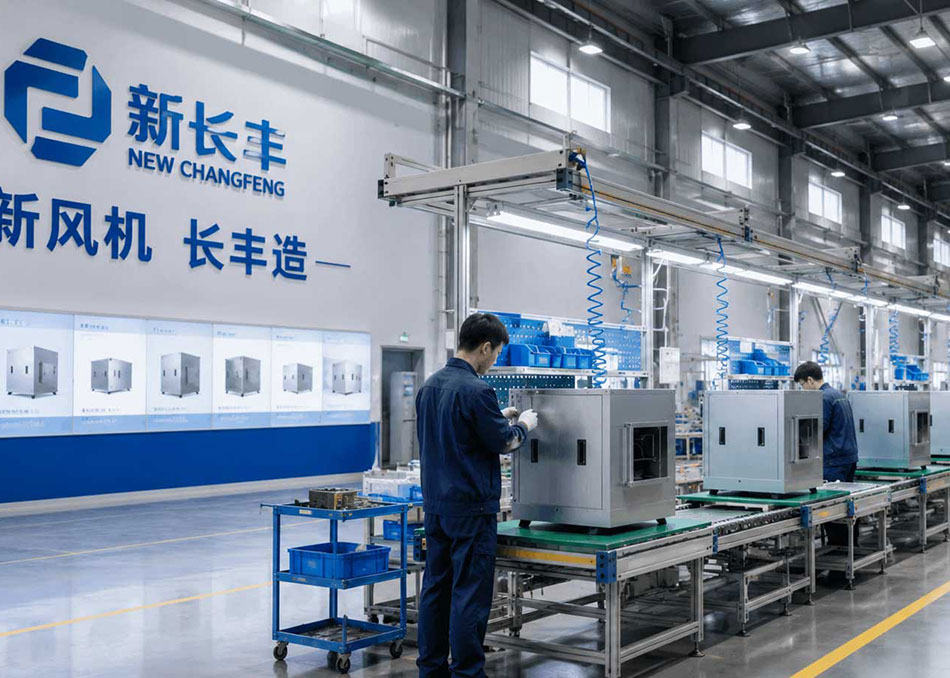
Internet cafés and restaurant kitchens may seem worlds apart, but they share a common ventilation challenge: maintaining comfortable, healthy air in spaces with high heat loads and limited natural airflow. In internet cafés, densely packed users and continuously running computers create a stuffy, overheated environment. In commercial kitchens, high temperatures, humidity, and cooking fumes require effective exhaust and make-up air to prevent odors and smoke from spreading. Both scenarios demand a well-designed supply and exhaust strategy—and water-cooled fresh air units offer a practical solution for cooling and fresh air supply in cafés, while also supporting negative pressure control in kitchens.
Why Water-Cooled Fresh Air Units Suit Internet Cafés
Internet cafés are typical high-density commercial spaces. Computers, monitors, lighting, and occupants all generate heat, and with doors and windows often closed, carbon dioxide levels rise and odors accumulate. Customers feel stuffy and uncomfortable, which directly affects their experience and likelihood to return. While split air conditioners can lower temperatures, they often provide insufficient fresh air, leaving air quality poor and energy costs high.
Water-cooled fresh air units operate on the principle of evaporative cooling combined with mechanical ventilation. Hot outdoor air passes through a wet cooling pad (or heat exchanger), where water evaporation absorbs heat and lowers the air temperature. Simultaneously, filtered fresh air is continuously supplied indoors, creating a slight positive pressure that pushes stale air out through gaps and exhaust openings. Compared with conventional compressor-based cooling, this approach can significantly reduce energy consumption while improving air quality.
- Energy efficiency: Evaporative cooling consumes less electricity than traditional air conditioning, especially in dry climates.
- Improved air quality: Continuous fresh air supply dilutes CO₂ and odors, creating a healthier environment.
- Temperature reduction: Supply air is cooled by several degrees, enhancing comfort without overburdening the electrical system.
- Low maintenance: Units have few moving parts and no refrigerant, simplifying upkeep.
Kitchen Exhaust and Negative Pressure: The Role of Make-Up Air
Commercial kitchens face intense heat, humidity, and high concentrations of cooking fumes. Effective exhaust systems are essential to remove smoke and odors, but without proper make-up air, exhaust performance suffers. When air is exhausted without replacement, negative pressure builds up, causing doors to be hard to open, exhaust fans to lose efficiency, and fumes to leak into dining areas.
Water-cooled fresh air units can serve as an effective make-up air solution. By supplying cooled, filtered outdoor air into the kitchen, they help maintain a stable negative pressure relative to the dining area, ensuring that exhaust hoods capture fumes efficiently. This balance is critical: too little make-up air leads to insufficient exhaust; too much can disrupt the negative pressure and allow odors to escape.
Proper design involves calculating exhaust volumes based on hood specifications and then sizing make-up air units to replace a portion of that air—typically 80–90%—while the remaining air infiltrates through openings. Water-cooled fresh air units are particularly suitable because they cool the supply air, reducing the heat load on the kitchen and improving working conditions.
- Negative pressure control: Maintains a slight negative pressure in the kitchen to contain fumes.
- Temperature relief: Cools incoming air, mitigating kitchen heat.
- Filtration: Removes particulates, improving indoor air quality.
- Energy savings: Evaporative cooling reduces the need for separate air conditioning.
Selection and System Design Tips
When selecting water-cooled fresh air units for either application, consider the following factors to ensure optimal performance and compliance with standards such as GB/T 1236 for fan performance testing and GB 19761 for fan energy efficiency.
- Cooling capacity: Match the unit’s cooling output to the space’s heat load, considering occupancy and equipment.
- Airflow volume: Ensure sufficient fresh air supply based on room volume and occupancy (refer to local ventilation codes).
- Static pressure: Account for ductwork resistance to select a fan with adequate pressure.
- Filtration: Choose appropriate filters for the environment (e.g., higher efficiency for kitchens).
- Noise levels: Select low-noise models, especially for cafés where background noise affects customer experience.
- Maintenance access: Design for easy cleaning and replacement of cooling pads and filters.
For kitchens, it’s also important to coordinate make-up air with exhaust hood operation. Variable frequency drives (VFDs) on fans can help modulate airflow based on demand, saving energy and maintaining balance.
Frequently Asked Questions
Q: Can water-cooled fresh air units replace traditional air conditioning in internet cafés?
A: They can significantly reduce cooling loads and improve air quality, but in extremely hot and humid climates, they may need to be supplemented by conventional AC to maintain desired temperatures. They are most effective as part of a hybrid system.
Q: How do I determine the right make-up air volume for my kitchen?
A: Start with the exhaust hood specifications—typically, make-up air should be about 80–90% of exhaust volume. Consult a ventilation engineer to calculate based on hood capture velocity and local codes. Over- or under-supplying can disrupt negative pressure.
Q: What maintenance do water-cooled fresh air units require?
A: Regular cleaning of cooling pads and filters is essential to prevent mold and maintain efficiency. Check water supply and drainage, and inspect fans and belts periodically. Frequency depends on usage and air quality.
Q: Are these units suitable for other commercial spaces?
A: Yes, they are also used in factories, warehouses, and schools for ventilation and cooling, especially where energy efficiency and fresh air are priorities.
In summary, water-cooled fresh air units provide an energy-efficient way to improve indoor air quality and thermal comfort in internet cafés, while also playing a crucial role in kitchen ventilation by balancing exhaust and make-up air. For tailored solutions that meet your specific needs, consult with XCFFJ’s ventilation experts to design a system that enhances comfort and compliance.