
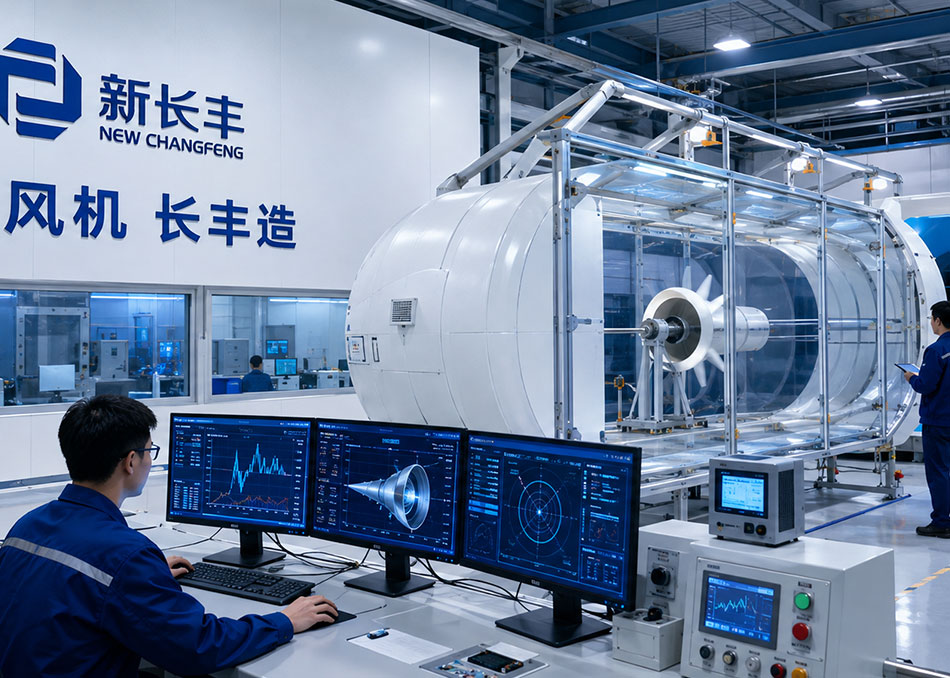
In school and institutional canteens, kitchen staff often face a frustrating paradox: the more powerful the exhaust system, the hotter and more stifling the kitchen feels, doors become hard to open, and odors backdraft into dining areas. The root cause is not the exhaust fan itself, but an imbalance in make-up air that creates negative pressure. When exhaust volume far exceeds make-up air volume, a strong negative pressure forms, preventing hot air from escaping, drawing in hot outdoor air through door gaps, and causing cooking fumes to leak into dining spaces—undermining both cooling and exhaust efficiency. This article examines the causes of negative pressure and discusses the proper application of water-cooled fresh air units for make-up air and cooling in commercial kitchens.
How Negative Pressure Forms: The Imbalance Between Exhaust and Make-Up Air
According to GB 18483 (Emission Standard of Cooking Fume) and general kitchen ventilation design principles, exhaust systems must be designed in conjunction with make-up air systems. In practice, many canteen kitchens have exhaust systems but no dedicated make-up air, or rely solely on natural infiltration through doors and windows. When exhaust fans run at full capacity, indoor air is rapidly extracted, causing indoor static pressure to drop below outdoor pressure and creating a negative pressure environment.
The cascading problems are concrete and disruptive:
- Doors become hard to open and fail to close properly: The greater the negative pressure, the stronger the resistance holding doors shut, hindering staff movement and causing long-term deformation of door frames.
- Odors and fumes backdraft: Air from dining areas and corridors is drawn back into the kitchen, and cooking fumes may leak from poorly exhausted branches, affecting the overall environment.
- Stove heat cannot be removed: Staff working near cooking stations face radiant heat combined with stagnant air, significantly raising perceived temperature—especially in summer.
- Combustion and exhaust efficiency decline: Insufficient make-up air can starve gas burners of oxygen, reducing combustion efficiency and potentially causing incomplete combustion.
These issues not only compromise comfort and safety but also increase energy consumption as exhaust fans work harder to compensate.
The Role of Water-Cooled Fresh Air Units in Kitchen Make-Up Air
A water-cooled fresh air unit is designed to supply tempered fresh air while cooling it through an evaporative or water-cooled process. Unlike simple fans that bring in hot outdoor air, these units reduce the temperature of incoming air, making them ideal for kitchens where make-up air must not add to the heat load.
In a canteen kitchen, the unit should be integrated into the make-up air strategy to balance exhaust volumes. By supplying cooled fresh air directly to the kitchen, it helps maintain a slight negative pressure relative to the dining area (to contain odors) while preventing excessive negative pressure that causes operational issues. Proper placement—typically near cooking zones or at low level—ensures effective displacement of hot air and improves staff comfort.
Key benefits include:
- Balanced ventilation: Maintains pressure differentials that keep fumes contained without making doors hard to open.
- Temperature reduction: Cools incoming air, reducing the heat load and improving working conditions.
- Energy efficiency: Reduces the need for excessive exhaust fan power, lowering overall energy consumption.
- Compliance: Helps meet ventilation requirements outlined in GB 18483 and GB 51251 (Technical Standard for Smoke Control Systems) by ensuring proper air balance.
Design and Installation Considerations
To effectively solve negative pressure, the make-up air volume should typically be designed as a percentage of exhaust volume—commonly around 80–90% for kitchens, with the remainder allowing slight negative pressure. However, exact figures must be determined by a qualified engineer based on the specific exhaust capacity, kitchen layout, and local codes.
Installation should account for:
- Air distribution: Supply air should be directed towards hot spots (stoves, ovens) without creating drafts that affect burners or food safety.
- Filtration: Water-cooled units should include appropriate filters to maintain indoor air quality.
- Maintenance access: Regular cleaning of cooling pads and water systems is essential to prevent scale and ensure performance.
- Controls: Variable frequency drives (VFDs) on both exhaust and supply fans can modulate airflow based on cooking activity, optimizing energy use and pressure balance.
By carefully sizing and positioning water-cooled fresh air units, canteens can achieve a comfortable, safe, and efficient kitchen environment.
Frequently Asked Questions
Q: Can a water-cooled fresh air unit replace a traditional exhaust system?
A: No. It is a make-up air solution and must be used alongside an exhaust system. It supplies cooled fresh air to balance exhaust and prevent negative pressure, but it does not remove fumes or heat on its own.
Q: How do I know if my kitchen has a negative pressure problem?
A: Common signs include doors that are hard to open, odors backdrafting from dining areas, persistent stuffiness despite exhaust running, and flames on gas stoves burning poorly. A simple pressure gauge test can confirm negative pressure.
Q: What maintenance does a water-cooled fresh air unit require?
A: Regular cleaning of the cooling pads or coils, checking water quality and levels, and replacing filters as needed. Schedule maintenance at least quarterly, or more frequently in dusty environments.
Q: Is a water-cooled fresh air unit suitable for all climates?
A: It is most effective in hot and dry climates where evaporative cooling is efficient. In humid regions, its cooling capacity may be reduced, but it still provides ventilation and make-up air benefits. Consider a desiccant or chilled water system in very humid areas.
In summary, addressing negative pressure in canteen kitchens requires a balanced approach to exhaust and make-up air. Water-cooled fresh air units offer an effective way to supply cooled fresh air, improve comfort, and ensure proper ventilation. For tailored solutions that meet your kitchen's specific needs, consult with ventilation professionals to design a system that integrates seamlessly with your exhaust setup.