
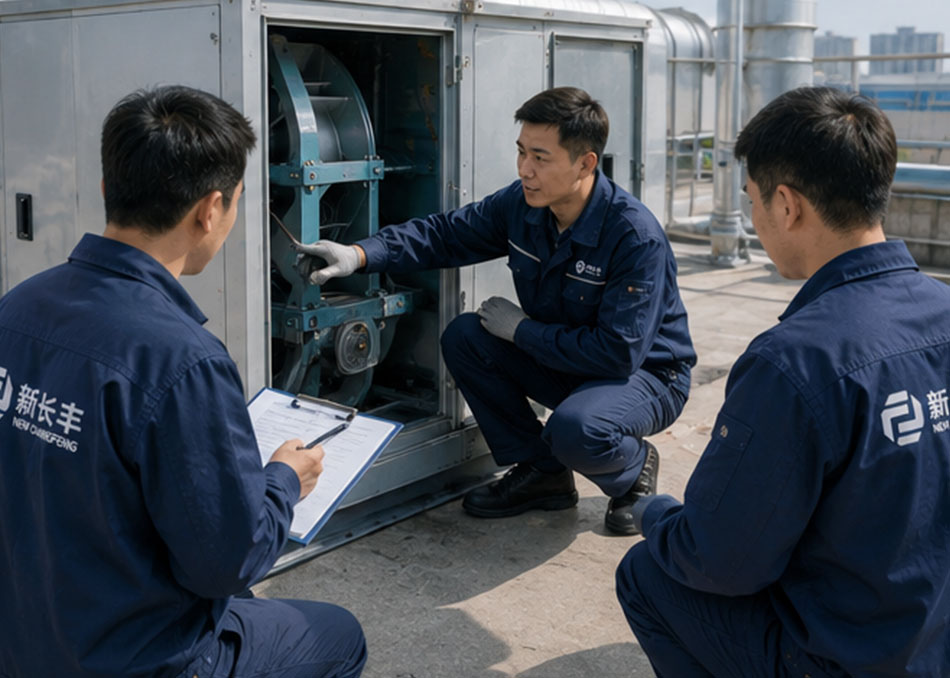
Internet cafes and gaming centers present a ventilation challenge that few HVAC designs anticipate: high occupant density, dozens of continuously running PCs, sealed windows, and near round-the-clock operation. Air conditioning handles the temperature, but it does nothing for air quality. The same pattern shows up in factory workshops and commercial kitchens, where heat concentrates, air stagnates, and makeup air is chronically undersupplied. Water-cooled fresh air units have become a practical answer to this gap. This article looks at how these units work in internet cafe environments, what to consider when selecting one, and which factors typically drive factory ventilation equipment pricing — written for facility managers, kitchen operators, HVAC contractors, and procurement teams.
Why Internet Cafes Need More Than Just Air Conditioning
The cooling load profile of an internet cafe differs fundamentally from an office. Occupant density is far higher, each gaming station emits continuous heat, and doors and windows stay closed for long stretches. Air conditioning can hold the setpoint, but it recirculates the same air. Carbon dioxide climbs, odors accumulate, and the space feels stuffy. Customers notice — fatigue sets in faster, and the experience suffers.
Simply adding more cooling capacity is an expensive dead end. Electricity costs scale up sharply while air quality stays unchanged. A water-cooled fresh air unit takes a different approach: it draws in outdoor air and reduces the supply air temperature through evaporative cooling, simultaneously introducing fresh air and removing a portion of the sensible heat load.
The relationship between the two systems is complementary, not competitive:
- The air conditioner controls indoor temperature
- The water-cooled fresh air unit improves air quality, dilutes pollutants, and offsets part of the cooling load
- Continuous fresh air introduction lowers CO₂ concentration and prevents odor buildup
- Evaporative cooling reduces supply air temperature without the energy penalty of mechanical refrigeration
How a Water-Cooled Fresh Air Unit Works
A water-cooled fresh air unit combines two functions in one cabinet: ventilation and evaporative cooling. Outdoor air is drawn through a filter, then passes across a wetted cooling pad or heat exchange surface. As water evaporates, it absorbs heat from the air stream, lowering the supply air temperature. The conditioned fresh air is then delivered into the space, creating a slight positive pressure that helps push stale air toward exhaust points.
This principle differs from refrigerant-based air conditioning. There is no compressor, no refrigerant circuit, and no condenser rejecting heat outdoors. The cooling effect depends on the wet-bulb temperature of the incoming air, which makes the technology particularly effective in hot, dry climates and still useful in humid regions when paired with adequate exhaust.
In an internet cafe, the unit is typically ducted to distribute fresh air across the seating area. Because it introduces outdoor air rather than recirculating indoor air, it directly addresses the CO₂ and odor problems that air conditioning alone cannot solve. Fan performance in these units should be verified against GB/T 1236 (industrial fan performance testing), and energy efficiency can be evaluated using GB 19761 (fan energy efficiency limits and grades).
Selection Points for Internet Cafe Applications
Choosing the right unit requires matching airflow and cooling capacity to the actual space, not simply picking the largest model available. Oversizing wastes energy and can create uncomfortable drafts; undersizing leaves the space under-ventilated during peak hours.
Key factors to evaluate:
- Occupant and equipment load: Estimate the number of seats and the heat output of the PC fleet. This determines the minimum fresh air volume needed per person, typically guided by indoor air quality standards.
- Space volume and layout: Ceiling height, partition arrangement, and dead zones affect how fresh air distributes. Ducted delivery with adjustable diffusers works better than a single point source in larger venues.
- Local climate: Evaporative cooling performance depends on outdoor wet-bulb temperature. In humid regions, the unit still provides ventilation benefits but with a smaller temperature drop.
- Noise level: Internet cafes are quiet environments. Fan and water circulation noise should be checked against the expected background level, especially for units installed near seating.
- Water quality and maintenance: Scale buildup on cooling pads reduces efficiency. Filtration and water treatment requirements should be planned from the start.
- Exhaust coordination: Fresh air supply only works if stale air has a path out. Negative-pressure exhaust fans or dedicated exhaust routes should be part of the design.
For venues that also operate a kitchen or food service area, exhaust and makeup air must be balanced carefully. Kitchen exhaust systems should comply with GB 18483 (emission limits for cooking fume), and where the building requires smoke control, GB 51251 (smoke and heat exhaust ventilation systems) sets the applicable requirements. A water-cooled fresh air unit can serve as part of the makeup air strategy, helping to prevent negative pressure from starving the kitchen exhaust hoods.
What Affects Factory Ventilation Equipment Pricing
When procurement teams ask about factory ventilation equipment pricing, the honest answer is that cost depends on several variables rather than a single list price. Understanding these factors helps buyers compare quotes on equal footing and avoid surprises during installation.
Factors that typically influence price:
- Airflow and static pressure requirements: Higher airflow and greater duct resistance demand larger fans and more robust motors, which increases cost.
- Unit type and construction: A water-cooled fresh air unit, a cabinet centrifugal fan, a negative pressure fan, and an evaporative air cooler each serve different roles and carry different price structures.
- Material and finish: Standard coated steel versus corrosion-resistant or hygienic construction for kitchen and food-processing environments.
- Control and automation: Variable frequency drives, sensors, and building management system integration add cost but improve energy performance.
- Ductwork and installation: The equipment itself is only part of the project. Ducting, supports, electrical connections, and commissioning can represent a significant share of total investment.
- Compliance requirements: Projects subject to smoke exhaust, fume emission, or energy efficiency regulations may require additional components or documentation.
- Quantity and customization: Volume orders reduce unit cost; non-standard dimensions or special coatings increase it.
A reputable supplier will ask about the space, the heat load, and the exhaust strategy before quoting. If a vendor provides a price without understanding the application, the number is unlikely to be meaningful.
Integrating Ventilation and Cooling in Commercial Kitchens
Commercial kitchens face a related but distinct challenge. Cooking generates intense heat, grease-laden vapor, and odors. Exhaust hoods capture much of this, but they also remove large volumes of air from the building. Without adequate makeup air, the kitchen goes into negative pressure, doors become hard to open, exhaust performance drops, and grease and smoke can migrate into dining areas.
A water-cooled fresh air unit can supply tempered makeup air to the kitchen, reducing the load on the main HVAC system while keeping the space under slight negative pressure relative to the dining room — which is exactly what you want to contain odors. The key is to balance exhaust and supply so that the kitchen remains negative relative to adjacent spaces, but not so negative that exhaust hoods lose capture efficiency.
For school canteens, hotel kitchens, and warehouse logistics facilities, the same principle applies: ventilation and cooling should be designed as a system, not as separate equipment purchases. Roof turbo ventilators and axial fans can handle general exhaust, while water-cooled fresh air units and cabinet centrifugal fans manage supply and distribution.
Frequently Asked Questions
Q: Can a water-cooled fresh air unit replace air conditioning in an internet cafe?
A: No. It is designed to introduce fresh air and reduce supply air temperature through evaporative cooling, but it does not provide the same temperature control as a refrigerant-based air conditioning system. The two work best together: air conditioning manages indoor temperature, while the water-cooled fresh air unit improves air quality and offsets part of the cooling load.
Q: How much fresh air does an internet cafe need?
A: The required fresh air volume depends on occupant density, space volume, and applicable indoor air quality standards. As a starting point, calculate based on the number of seats and the expected CO₂ generation rate, then verify that the selected unit can deliver that airflow against the actual duct resistance. A qualified HVAC engineer should confirm the design values for your specific venue.
Q: Why does my kitchen exhaust hood perform poorly even though the fan is running?
A: The most common cause is insufficient makeup air. When a kitchen exhausts more air than it supplies, negative pressure builds up and the hood loses capture efficiency. Adding a water-cooled fresh air unit or another makeup air source can restore the balance and improve exhaust performance without increasing fan size.
Q: What standards should I reference when specifying ventilation equipment?
A: For fan performance, reference GB/T 1236. For energy efficiency, GB 19761. For kitchen fume emission, GB 18483. For smoke and heat exhaust systems, GB 51251. These standards provide the testing methods and limits that help ensure equipment performs as specified and meets regulatory requirements.
Q: How do I compare quotes from different ventilation equipment suppliers?
A: Ask each supplier to specify airflow, static pressure, power consumption, noise level, and applicable standards for the proposed model. A quote that lists only a price without performance data is difficult to evaluate. Also confirm what is included — equipment only, or equipment plus ductwork, installation, and commissioning.
Summary
Internet cafes, factory workshops, and commercial kitchens all share a common ventilation problem: heat and pollutants accumulate because fresh air supply is inadequate. A water-cooled fresh air unit addresses this by introducing outdoor air and reducing its temperature through evaporative cooling, complementing rather than replacing air conditioning. Selecting the right unit requires attention to occupant load, space layout, climate, noise, and exhaust coordination. Factory ventilation equipment pricing varies with airflow requirements, construction, controls, and installation scope, so buyers should compare quotes on performance data rather than price alone.
For projects involving internet cafe ventilation, kitchen makeup air, or factory cooling, working with a manufacturer that understands both the equipment and the system design makes the difference between a specification that works and one that merely looks good on paper. XCFFJ supplies water-cooled fresh air units, cabinet centrifugal fans, negative pressure fans, evaporative air coolers, and related ventilation equipment for commercial and industrial applications. Contact us to discuss your project requirements and request a configuration suited to your space.