
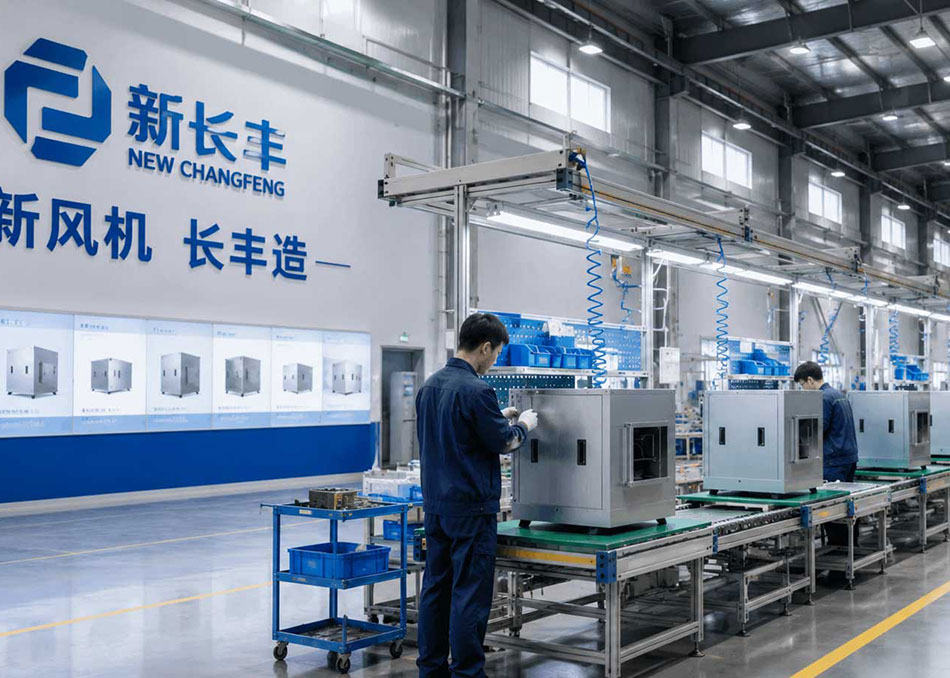
Internet cafes and commercial kitchens may seem like unrelated environments, but they share a common ventilation challenge: enclosed spaces with concentrated heat loads, where natural ventilation alone cannot remove heat and odors. In internet cafes, long hours of full occupancy in computer areas lead to stuffiness, rising CO₂ levels, and a sharp decline in customer experience. In kitchens, high-output burners run continuously, filling the air with cooking fumes, driving temperatures up, and causing insufficient make-up air that hampers exhaust efficiency. The solution converges on one approach: use water-cooled fresh air units to establish organized supply and make-up air, getting both cooling and ventilation right.
Why Internet Cafes Need Water-Cooled Fresh Air Units, Not Just Air Conditioning
The core pain point in internet cafes is "many people, many machines, few doors and windows." Computer hosts and monitors generate continuous heat, occupancy is dense, and air circulation in private rooms and booth areas is poor. Conventional split air conditioners only cool the air; they do not exchange it. After prolonged operation, the air becomes stale and stuffy, significantly degrading the customer experience.
Water-cooled fresh air units work by drawing in outdoor fresh air, cooling it through evaporative media, and supplying it indoors. This creates a slight positive pressure that pushes stale air out through designated exhaust openings or door gaps, achieving both cooling and air exchange. From a technical standpoint, evaporative cooling is an isenthalpic process: in dry, hot climates the temperature drop is pronounced, while in humid regions the unit primarily provides ventilation with supplementary cooling. Compared to traditional fresh air handling units, water-cooled fresh air units are compact and have relatively controllable energy consumption, making them suitable for internet cafes that require long, continuous operation.
It is important to note that supply air in internet cafes should not blow directly onto customers' heads. Instead, use localized spot cooling or overhead diffusers, keeping air velocity within a comfortable range.
Kitchen Ventilation and Make-Up Air: The Negative Pressure Trap
Commercial kitchens—whether in schools, corporate canteens, or restaurants—face a more complex ventilation problem. High-output burners consume large amounts of oxygen and generate significant heat and fumes. Range hoods must exhaust these pollutants, but without adequate make-up air, the kitchen develops negative pressure. This leads to poor exhaust efficiency, fumes leaking into dining areas, doors that are hard to open, and even back-drafting of combustion gases—a serious safety hazard.
The solution is to establish a balanced ventilation system: while the exhaust hood removes fumes, a water-cooled fresh air unit supplies cooled, fresh outdoor air directly to the kitchen. This make-up air reduces the negative pressure, allowing the exhaust system to function at its designed capacity. The evaporative cooling effect also lowers the kitchen temperature, improving working conditions for staff. Unlike conventional make-up air units that merely bring in hot outdoor air, water-cooled units provide sensible cooling, making the kitchen more comfortable without overloading the air conditioning system.
For school and institutional canteens, where kitchens often operate during peak summer heat, this combination of exhaust and cooled make-up air is particularly effective. It addresses both the safety requirement of preventing negative pressure and the comfort need of reducing heat stress.
How Water-Cooled Fresh Air Units Work: Principles and Components
A water-cooled fresh air unit is essentially an evaporative cooling air handler. Outdoor air is drawn through a wet evaporative pad (often made of cellulose or rigid media). As water evaporates, it absorbs heat from the air, lowering its dry-bulb temperature. The cooled air is then supplied to the space by a fan. The unit typically includes a fan section, evaporative media, a water distribution system, and controls. Some models incorporate a heat recovery section or filters to improve indoor air quality.
From an airflow perspective, these units are available with centrifugal or axial fans to match different static pressure requirements. For ducted installations in internet cafes or kitchens, centrifugal fans are often preferred for their higher pressure capability. The units can be configured for outdoor or indoor installation, with ducting to distribute air to multiple zones.
It is important to size the unit correctly. Undersized units will not achieve the desired cooling or ventilation, while oversized units may cause excessive air velocity and noise. A professional assessment of the space's heat load, occupancy, and exhaust requirements is essential.
Application Scenarios: Internet Cafes and Canteen Kitchens
In internet cafes, water-cooled fresh air units are typically integrated with the existing air conditioning system. The fresh air unit handles ventilation and provides a portion of the cooling load, while the air conditioners handle the sensible cooling. This hybrid approach reduces the load on air conditioning and ensures adequate fresh air. The units can be ducted to deliver air to specific zones, such as gaming areas or private rooms, avoiding direct drafts on customers.
In school and corporate canteen kitchens, the units are used to provide make-up air for the exhaust hoods. The cooled make-up air is ducted to the kitchen, often near the cooking lines, to replace the air being exhausted. This balances the pressure and improves the capture efficiency of the hoods. In some cases, the units can also provide spot cooling for kitchen staff, improving productivity and comfort.
For both applications, it is crucial to consider the local climate. In humid regions, the cooling effect of evaporative units is limited, but they still provide essential ventilation and make-up air. In dry regions, the cooling benefit is substantial, and the units can significantly reduce indoor temperatures.
Frequently Asked Questions
Q: Can a water-cooled fresh air unit replace an air conditioner in an internet cafe?
A: Not entirely. Water-cooled fresh air units provide cooling through evaporation, but their cooling capacity depends on the outdoor humidity. In humid climates, the cooling effect is modest, and they are primarily used for ventilation. They are best used in conjunction with air conditioning to handle the fresh air load and improve air quality, rather than as a standalone cooling solution.
Q: How does a water-cooled fresh air unit help with kitchen negative pressure?
A: By supplying cooled fresh air into the kitchen, the unit balances the air pressure. When exhaust hoods remove air, the make-up air unit replaces it, preventing negative pressure. This ensures the exhaust system works efficiently and prevents fumes from leaking into other areas. It also reduces the load on the kitchen's air conditioning and improves comfort.
Q: What maintenance is required for water-cooled fresh air units?
A: Regular maintenance includes cleaning or replacing the evaporative media, checking the water distribution system for clogs or leaks, inspecting the fan and motor, and cleaning filters if present. In hard water areas, descaling may be necessary. Proper maintenance ensures efficient operation and longevity of the unit.
In summary, water-cooled fresh air units offer a practical solution for ventilation and cooling in internet cafes and canteen kitchens. They address the specific challenges of enclosed spaces with high heat loads and occupancy, while also solving the negative pressure issues in commercial kitchens. By integrating these units into a well-designed ventilation system, businesses can improve air quality, enhance comfort, and ensure safety. For more information on selecting the right water-cooled fresh air unit for your application, please visit our website or contact our technical team.