
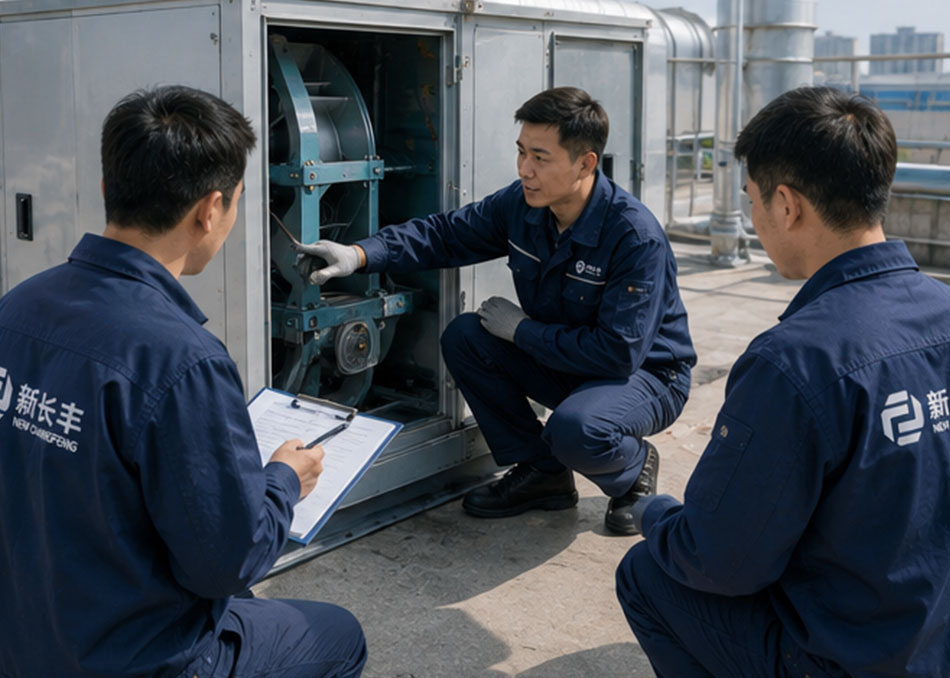
Ventilation problems in commercial kitchens rarely stem from a single faulty component. Even with the exhaust hood running at full capacity, staff still face stifling heat, grease-laden air spilling into dining areas, doors that won't close properly, and exhaust that seems to fight itself. These symptoms usually trace back to one root cause: insufficient make-up air creating negative pressure in the kitchen. Water-cooled fresh air units have emerged as a practical solution for this specific challenge, and this article explains how they work, what to consider when selecting one, and which common mistakes to avoid.
Why Commercial Kitchens Develop Negative Pressure
When a kitchen exhaust system operates, the exhaust fan or integrated fume purifier continuously extracts large volumes of air from above the cooking stations. If no equivalent volume of air is supplied back into the space, the kitchen pressure drops below that of the outdoors—creating negative pressure. The basic principle of airflow organization requires exhaust volume and supply volume to remain in dynamic balance. When they don't, the system pulls air through any available path: door gaps, floor drains, flue connections, and other unintended openings.
The consequences cascade through the entire operation:
- Reduced exhaust efficiency: High-resistance make-up paths weaken the effective exhaust capacity of the fan, degrading grease capture at the hood.
- Fume spillover: Doors between the kitchen and dining area get pulled open or fail to seal, allowing cooking fumes to drift into guest areas and compromising hygiene ratings.
- Unbearable heat at the cooking line: Untreated make-up air drawn in during summer months brings hot outdoor air directly onto staff, worsening working conditions.
- Combustion and sanitation hazards: Excessive negative pressure can affect gas combustion performance, while floor drain odors and pest intrusion become more frequent.
In short, a kitchen cannot exhaust its way out of a negative pressure problem. It needs a deliberate, engineered supply-air strategy.
How Water-Cooled Fresh Air Units Address the Make-Up Air Challenge
A water-cooled fresh air unit is designed to deliver tempered outdoor air into the kitchen while simultaneously relieving negative pressure. Unlike simply opening a window or installing a bare supply fan, these units condition the incoming air. The water-cooled design uses a water-based heat exchange process to reduce the temperature of the supply air before it enters the workspace, which is particularly valuable in hot climates or during summer peaks when untreated make-up air would only add to the heat load.
By supplying a controlled volume of cooler, filtered air directly to the cooking zone, the unit helps restore pressure balance. This allows the exhaust system to operate closer to its rated performance, improves grease capture at the hood, and reduces the tendency for fumes to migrate into front-of-house areas. The result is a more stable kitchen environment where exhaust and supply work together rather than against each other.
It is important to note that unit selection must be based on a proper calculation of exhaust volume, desired pressure differential, and duct layout. Oversizing or undersizing the supply-air system can introduce new problems, such as over-pressurizing the kitchen or creating uncomfortable drafts at workstations.
Selection and Integration Considerations
Choosing the right water-cooled fresh air unit requires more than matching a nominal airflow figure. The unit must be integrated into the overall kitchen ventilation design, which typically involves coordination between the exhaust hood, fume purification equipment, ductwork, and the supply-air system. Several factors deserve careful attention:
- Airflow balance: The supply volume should be calculated to offset the exhaust volume while maintaining a slight negative pressure relative to dining areas—enough to contain odors without starving the exhaust system.
- Supply air distribution: Air should be delivered to the breathing zone and cooking area without blowing directly on flames or creating uncomfortable drafts for staff.
- Filtration and cleanliness: Incoming air should be filtered to prevent dust and contaminants from entering the kitchen, and the unit's water system requires regular maintenance to sustain cooling performance.
- Energy efficiency: Fan energy consumption matters over the life of the equipment. Reference standards such as GB 19761 for fan energy efficiency provide a useful benchmark when comparing options.
- Noise levels: Kitchen staff work long shifts in close proximity to equipment. Selecting units with appropriate acoustic characteristics and isolating vibration helps maintain a tolerable working environment.
- Compliance: Kitchen exhaust and supply systems should align with relevant codes, including GB 18483 for kitchen fume emission and GB 51251 where smoke and heat exhaust considerations apply.
Working with a manufacturer that understands both the exhaust and supply sides of kitchen ventilation can simplify this integration and reduce the risk of mismatched components.
Common Misconceptions About Kitchen Make-Up Air
One frequent misconception is that make-up air is simply about opening a door or installing a basic fan. In practice, uncontrolled make-up air introduces hot, humid, or contaminated air exactly where it is least wanted—at the cooking line during peak service. Another misconception is that a more powerful exhaust fan will solve fume spillover. In a negatively pressurized kitchen, a larger exhaust fan often makes the problem worse by increasing the pressure imbalance and pulling more unconditioned air through unintended paths.
A third common error is treating the water-cooled fresh air unit as a standalone purchase rather than part of a balanced system. The unit performs best when its capacity, duct routing, and control strategy are designed alongside the exhaust and purification equipment. Finally, some operators assume that any supply air is better than none. In reality, poorly directed supply air can disrupt hood capture, create drafts, or introduce unnecessary moisture—undermining the very goals it was meant to serve.
Frequently Asked Questions
Q: Can a water-cooled fresh air unit completely eliminate negative pressure in a commercial kitchen?
A: It can help restore balance when properly sized and integrated with the exhaust system. Complete elimination of negative pressure is neither necessary nor desirable—a slight negative pressure relative to dining areas helps contain odors. The goal is controlled balance, not zero pressure differential.
Q: How is a water-cooled fresh air unit different from a standard supply fan?
A: A standard supply fan moves outdoor air into the kitchen without conditioning it. A water-cooled fresh air unit includes a water-based heat exchange section that reduces supply air temperature, making it more suitable for hot climates and summer operation where untreated make-up air would worsen kitchen heat.
Q: What maintenance does the water system require?
A: The water circuit, heat exchange surfaces, and filters require periodic inspection and cleaning to maintain cooling performance and prevent scale or biological growth. The specific maintenance interval depends on water quality and operating hours, so follow the manufacturer's guidance and establish a documented service schedule.
Q: Does adding make-up air increase overall energy costs?
A: Supply fans do consume energy, but a balanced system often reduces total energy use by allowing the exhaust fan to operate closer to its rated efficiency. The water-cooled feature also reduces the cooling load on the kitchen compared with drawing in hot outdoor air. The net effect depends on the specific design and should be evaluated as part of the overall ventilation strategy.
Conclusion
Negative pressure in commercial kitchens is a system-level problem that demands a system-level solution. A water-cooled fresh air unit, selected and integrated with care, addresses the make-up air side of the equation—delivering tempered, filtered air that relieves pressure imbalance, improves exhaust performance, and creates a more tolerable working environment for kitchen staff. Operators planning a new kitchen or upgrading an existing ventilation system should evaluate supply and exhaust together rather than treating them as separate purchases.
For guidance on matching a water-cooled fresh air unit to your kitchen's exhaust capacity and layout, consult a ventilation equipment specialist who can assess your specific configuration and recommend an appropriate solution.