
In commercial kitchens, poor ventilation is rarely about exhaust capacity—it is almost always about make-up air. Operators often find that even with a properly sized hood and exhaust fan, the cooking line stays hot, smoke spills into the dining area, exhaust performance drops off, and odors back-draft through floor drains. In most cases, the root cause is the same neglected element: make-up air. As the exhaust system removes grease-laden air and heat, it creates negative pressure inside the kitchen. Without a deliberate make-up air path, outdoor air is pulled in through door gaps, drains, and other weak points—air that never reaches the cooking zone and does nothing to improve working conditions. A water-cooled fresh air unit is designed specifically to close this gap, supplying filtered, temperature-controlled make-up air where it is needed.
Why Make-Up Air Is Non-Negotiable in Commercial Kitchens
When a kitchen exhaust system runs, it moves a large volume of air out of the space. If the make-up air volume is clearly insufficient, the kitchen sits under continuous negative pressure. The consequences are direct and compounding: capture efficiency at the hood drops, and grease and smoke escape around the hood edges into the front of house. Doors become heavy and difficult to open. Odors from restrooms and floor drains are drawn back into the prep area. Gas-fired cooking equipment may suffer from insufficient oxygen supply, leading to incomplete combustion—reducing efficiency and raising safety concerns.
From a basic ventilation balance perspective, exhaust and make-up air should be designed as a pair. The practical approach in food service is to supply slightly less make-up air than the exhaust volume, maintaining a slight negative pressure that keeps cooking fumes from migrating into dining areas while still ensuring enough fresh air reaches the cooking zone. The location of supply outlets matters just as much: air should be delivered near the hood and cooking line, not dumped at the far end of the room or above seated diners.
How a Water-Cooled Fresh Air Unit Works
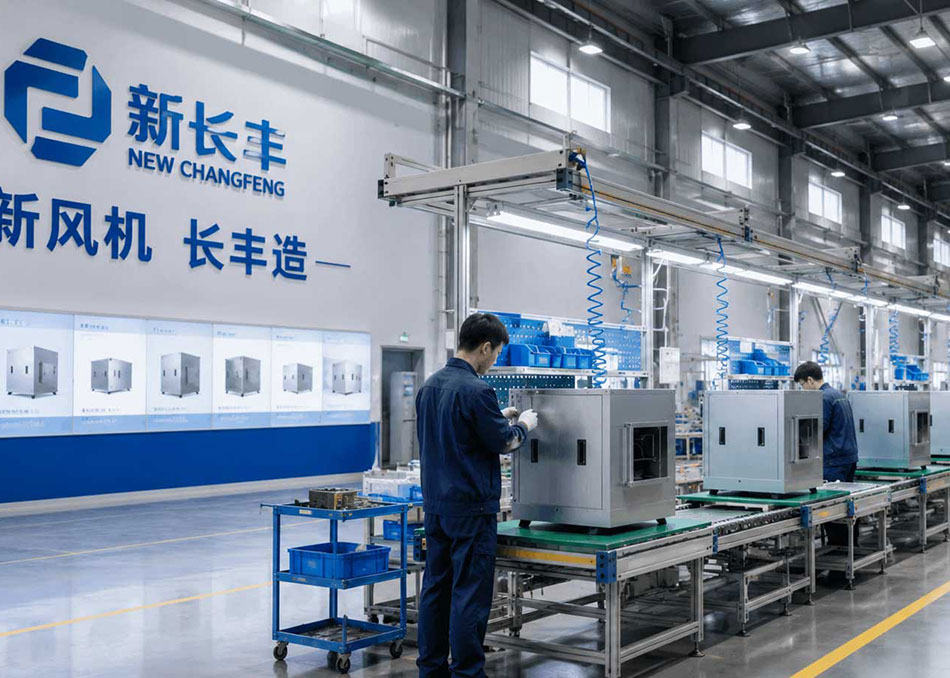
A water-cooled fresh air unit combines filtration, cooling, and controlled delivery of outdoor air in a single packaged unit. Outdoor air is drawn in, filtered to remove dust and particulates, passed through a water-cooled heat exchange section that lowers the supply air temperature, and then delivered through ductwork to targeted locations in the kitchen. Because the cooling medium is water rather than a direct-expansion refrigerant circuit, the unit is well suited to hot, grease-laden kitchen environments where conventional air-conditioning equipment struggles with coil fouling and maintenance access.
The result is make-up air that is not only sufficient in volume but also cooler than ambient outdoor air—improving conditions at the cooking line rather than adding to the heat load. This matters in kitchens where the exhaust system is doing its job but the supply side has been ignored, leaving staff exposed to radiant heat and stagnant air.
Selection and Design Considerations
Getting make-up air right requires more than choosing a unit by airflow alone. Consider the following:
- Balance ratio: Supply volume should be slightly below exhaust volume to maintain mild negative pressure—enough to contain fumes, not so much that doors become hard to open or combustion air is starved.
- Supply outlet placement: Deliver air near the hood and cooking line, avoiding direct drafts on plated food or seated guests. Low-velocity displacement or targeted spot supply often works better than high-velocity diffusers.
- Filtration strategy: Kitchens generate grease and particulates. Specify filtration that is accessible for cleaning and compatible with the local grease load.
- Cooling capacity: Size the water-cooled section to the actual outdoor design conditions and supply air volume, not to a nominal label.
- Standards and testing: Fan performance should be verifiable against recognized test standards such as GB/T 1236, and energy performance should be considered against efficiency benchmarks like GB 19761. Kitchen exhaust and fume treatment should align with emission requirements such as GB 18483, and smoke control design with GB 51251 where applicable.
- Noise and maintenance access: Locate the unit and ductwork to limit noise at the cooking line, and ensure filters, coils, and drain pans can be reached for routine service.
Common Pitfalls to Avoid
Many kitchen ventilation problems persist after equipment upgrades because make-up air is treated as an afterthought. Typical mistakes include supplying air only through door gaps and transfer grilles, placing supply outlets far from the hood, oversizing exhaust without a matching supply strategy, and neglecting filter maintenance until airflow drops noticeably. In retrofit projects, the duct route and available ceiling space often dictate what is feasible—early coordination between the exhaust design and the make-up air design prevents costly compromises later.
It is also worth remembering that make-up air is not just a comfort measure. It supports combustion safety, protects the performance of the exhaust system, and helps contain odors and grease within the kitchen zone. Treating it as part of the ventilation system—rather than an accessory—is what separates a kitchen that works from one that is merely equipped.
FAQ
Q: My exhaust hood seems weak even though the fan runs. Could make-up air be the problem?
A: Yes, this is one of the most common causes. If the kitchen is under strong negative pressure, the exhaust fan has to work against a restricted supply of air, and capture at the hood drops. Adding a properly sized make-up air unit with well-placed supply outlets often restores hood performance without replacing the exhaust system.
Q: Should make-up air be cooled, or is untreated outdoor air enough?
A: Untreated air meets the volume requirement but can add heat to an already hot kitchen, especially in warm climates or during summer. A water-cooled fresh air unit delivers make-up air at a lower temperature, improving conditions at the cooking line while still satisfying the ventilation balance.
Q: How much make-up air does a commercial kitchen need?
A: The supply volume is typically designed slightly below the exhaust volume to maintain mild negative pressure. The exact figure depends on hood design, cooking equipment, and local code requirements, so it should be calculated for each project rather than estimated from a rule of thumb.
Q: Can a water-cooled fresh air unit be retrofitted into an existing kitchen?
A: In many cases, yes. Retrofits depend on available space for the unit, duct routing, water supply and drainage for the cooling section, and electrical capacity. A site survey is the practical first step before specifying equipment.
Make-up air is the quiet half of kitchen ventilation—easy to overlook until negative pressure starts causing visible problems. A water-cooled fresh air unit addresses both sides of the equation: it supplies the air the exhaust system needs and delivers it at a more comfortable temperature. For operators planning a new kitchen or correcting a troublesome retrofit, reviewing the supply strategy alongside the exhaust design is the most effective place to start. To discuss your project's ventilation balance and equipment requirements, contact XCFFJ for application guidance.