
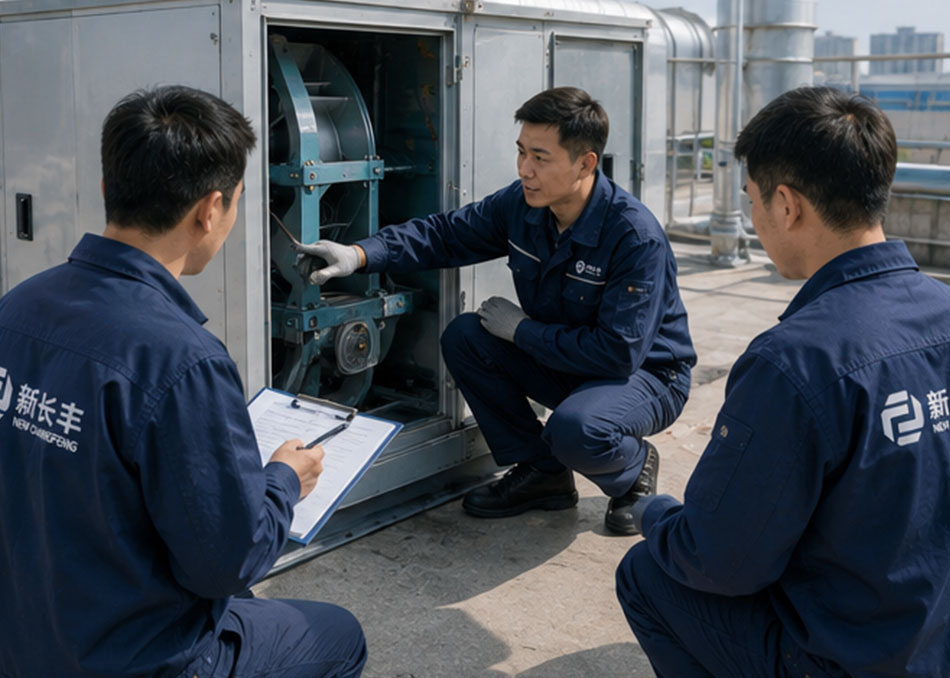
Internet cafes are high-density gathering places: rows of gaming stations, people staying for hours, and computers and monitors constantly generating heat. Many are located on middle floors of commercial buildings or in basements, with limited natural ventilation. In summer, stuffiness, stale air, and lingering odors become common complaints, directly affecting occupancy and repeat business. How to solve cooling, air exchange, and makeup air without major structural changes is a shared concern for operators and HVAC contractors. Water-cooled fresh air units, combining evaporative cooling with directed air supply, are emerging as a viable solution. Among these, the Zhongyifeng water-cooled series is often mentioned, and its application logic deserves a systematic review.
1. Real Pain Points of Internet Cafe Ventilation and Cooling: More Than Just Heat
The heat load structure in internet cafes differs from typical offices. Human and equipment heat gains combine to create continuous internal heat sources. With doors and windows usually closed and many partitions, air mobility is poor, and heat and pollutants accumulate in local areas. Customers often perceive not just high temperature but a combination of stuffiness, staleness, and clamminess—caused by insufficient ventilation volume and poor airflow organization.
From a ventilation engineering perspective, three common problems need separate attention:
- Excess heat accumulation: Heat from equipment and people cannot be discharged in time, leading to vertical temperature stratification and worse comfort near gaming stations.
- Insufficient fresh air: In crowded places, if only internal recirculation cooling is used, carbon dioxide concentration and odors rise, causing discomfort and reduced productivity.
- Unreasonable airflow organization: Even with fresh air, poor placement of supply and exhaust points can lead to short-circuiting, where fresh air does not reach occupied zones effectively.
These issues are interrelated. Solving them requires a systematic approach that balances cooling, ventilation, and air distribution.
2. How Water-Cooled Fresh Air Units Work and Their Advantages
Water-cooled fresh air units use evaporative cooling to cool outdoor air. Hot, dry outdoor air passes through a wet cooling pad; water evaporates and absorbs heat, lowering the air temperature. The cooled air is then supplied to the room by a fan. This process increases humidity, but in many climates, the added moisture is acceptable or even beneficial. Unlike traditional air conditioning, which uses refrigerants and recirculates indoor air, water-cooled fresh air units bring in outdoor air, improving indoor air quality while providing cooling.
Key advantages for internet cafes include:
- Energy efficiency: Evaporative cooling consumes much less energy than vapor-compression systems, reducing operating costs.
- 100% fresh air: Constant supply of outdoor air dilutes CO2 and odors, creating a healthier environment.
- Direct cooling: Cooled air is delivered directly to occupied zones, improving comfort.
- Low maintenance: Fewer mechanical parts compared to traditional AC, though regular water quality management and pad cleaning are necessary.
However, water-cooled fresh air units are not a one-size-fits-all solution. They work best in dry climates and spaces with adequate exhaust paths. In humid regions, the cooling effect diminishes, and additional dehumidification may be needed. Proper sizing and system design are crucial.
3. Application Strategies for Internet Cafes
To effectively use water-cooled fresh air units in internet cafes, consider the following strategies:
- Load calculation: Determine the cooling load based on the number of occupants, equipment power, and lighting. This guides the selection of unit capacity and quantity.
- Airflow organization: Design supply and exhaust to avoid dead zones and short-circuiting. Use directed nozzles or diffusers to deliver cool air to seating areas. Exhaust should be located near heat sources and stale air zones.
- Negative pressure control: Maintain slight negative pressure in restrooms or kitchens to prevent odor migration, but ensure overall balanced ventilation.
- Integration with existing systems: Water-cooled fresh air units can complement existing exhaust fans or air conditioning, providing fresh air and reducing AC load.
For example, in a mid-floor internet cafe, units can be installed on an external wall or roof, with ducting distributing cool air to gaming areas. Exhaust fans remove stale air from the rear. This setup ensures consistent fresh air supply and heat removal.
4. Key Considerations for Selection and Installation
When choosing water-cooled fresh air units, several factors affect performance and longevity:
- Climate suitability: Evaporative cooling is most effective in hot, dry climates. In humid areas, consider hybrid systems or supplemental dehumidification.
- Water quality: Hard water can cause scale buildup on cooling pads, reducing efficiency. Water treatment or regular cleaning is recommended.
- Noise levels: Fans and water pumps generate noise. Select low-noise models and install with vibration isolation, especially in quiet zones.
- Maintenance access: Design for easy access to pads, water tanks, and filters for routine maintenance.
- Controls: Variable speed drives and smart controls can optimize energy use based on occupancy and outdoor conditions.
Compliance with local codes and standards, such as GB/T 1236 for fan performance and GB 19761 for fan energy efficiency, ensures reliable operation. In China, GB 51251 provides guidelines for smoke and heat exhaust, which may be relevant for emergency ventilation.
5. Frequently Asked Questions
Q: Can water-cooled fresh air units replace traditional air conditioning in internet cafes?
A: Not entirely. They are effective for cooling and ventilation in dry climates, but in humid conditions, they may not provide sufficient dehumidification. They can reduce AC load but are often used in conjunction with AC for optimal comfort.
Q: How much maintenance do water-cooled fresh air units require?
A: Regular maintenance includes cleaning or replacing cooling pads, checking water quality, and inspecting fans and pumps. In dusty environments, more frequent cleaning may be needed. Proper maintenance ensures efficiency and longevity.
Q: Are water-cooled fresh air units suitable for basement internet cafes?
A: Yes, but exhaust air must be ducted to the outside. Basements often lack natural ventilation, so mechanical exhaust is essential to maintain air quality and prevent humidity buildup.
Q: What about noise? Will it disturb customers?
A: Modern units are designed for low noise, but installation matters. Use vibration isolators, flexible duct connections, and locate units away from seating areas. In sensitive areas, consider acoustic enclosures.
Conclusion
Water-cooled fresh air units offer an energy-efficient way to improve ventilation and cooling in internet cafes, addressing heat, stuffiness, and poor air quality. By understanding the technology, designing airflow properly, and selecting the right equipment, operators can create a more comfortable environment that attracts and retains customers. For tailored solutions, consult with HVAC professionals to assess your specific needs.
For more information on water-cooled fresh air units and other ventilation solutions, visit www.xcffj.com.