
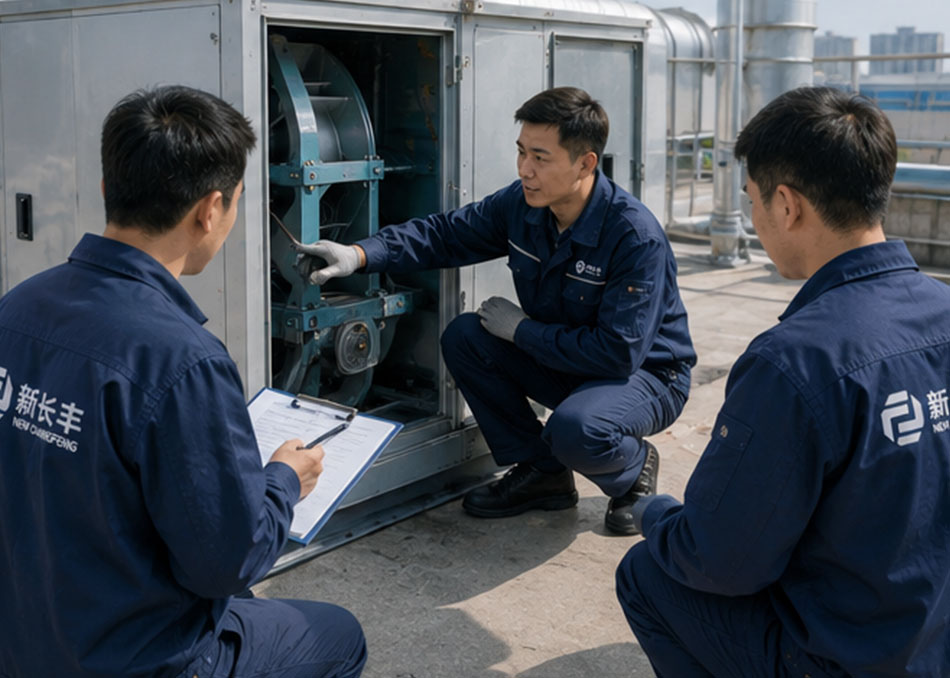
School canteens are high-occupancy, cooking-intensive environments where the exhaust system directly affects kitchen working conditions, the dining experience of students and staff, and fire safety. Among the various exhaust equipment options, the cabinet centrifugal fan stands out as the core power unit for school canteen exhaust systems, thanks to its stable static pressure, relatively controlled noise levels, and flexible installation. However, many school logistics managers or contracted operators tend to focus only on the initial exhaust performance at installation, neglecting routine maintenance. This oversight can lead to performance degradation, increased noise,油烟 spillage, and even safety hazards. This article, grounded in the real-world context of school canteen exhaust, systematically outlines the key maintenance points for cabinet centrifugal fans, helping relevant managers extend equipment life, reduce operating costs, and ensure a stable and efficient exhaust system.
Why Maintenance of Cabinet Centrifugal Fans Is Critical in School Canteens
School canteens present unique challenges to exhaust systems: cooking periods are concentrated (typically three peak meal times), causing frequent fan starts and stops; the cooking fumes are complex, containing grease, water vapor, and food particles that tend to accumulate on the impeller and volute; and because canteens are often located near teaching buildings or dormitories, noise and odor control demands are high. As the "heart" of the exhaust system, a cabinet centrifugal fan that lacks timely maintenance can first reduce exhaust volume, leading to a smoky kitchen, and in severe cases, grease buildup can disturb the dynamic balance of the impeller, overload the motor, and even create a fire risk.
From an industry standards perspective, GB/T 1236 specifies performance testing methods for fans, while GB 19761 addresses energy efficiency limits. Regular maintenance not only keeps the fan operating within these performance parameters but also aligns with fire safety regulations, such as GB 51251, which governs smoke and heat exhaust systems. Ignoring maintenance can lead to non-compliance and increased liability.
Key Maintenance Points for Cabinet Centrifugal Fans in School Canteens
To ensure reliable performance and longevity, school canteen facility managers should adopt a proactive maintenance schedule. Below are the essential maintenance areas, each with actionable steps.
1. Impeller and Volute Cleaning: The Most Frequent Task
Grease and particulate buildup on the impeller blades and volute interior is the most common cause of performance decline. Over time, this accumulation increases the fan's rotating mass, leading to imbalance, vibration, and noise. It also reduces aerodynamic efficiency, meaning the fan must work harder to move the same volume of air.
- Cleaning frequency: For school canteens with heavy frying or wok cooking, inspect the impeller monthly and perform a thorough cleaning at least every quarter. During off-peak seasons, a bi-annual deep clean is acceptable.
- Cleaning method: Disconnect power, open the access panel, and use a non-abrasive brush or cloth with a degreasing agent safe for the fan's coating. Avoid high-pressure water that could damage the motor or bearings.
- Inspect for damage: During cleaning, check the blades for cracks, corrosion, or deformation. Any imbalance should be corrected by a professional to avoid vibration and premature bearing failure.
2. Bearing and Motor Care: Ensuring Smooth Operation
Bearings and the motor are the mechanical core of the fan. In school canteens, frequent start-stop cycles place additional stress on these components.
- Lubrication: Follow the manufacturer's recommendations for bearing type. Sealed bearings may not need re-lubrication, but open bearings require periodic greasing. Over-greasing can cause overheating, so apply the correct amount.
- Motor checks: Inspect the motor for abnormal noise, excessive heat, or vibration. Ensure the motor's cooling fins are clean and that the electrical connections are tight and free from corrosion.
- Vibration analysis: If the fan begins to vibrate noticeably, check for imbalance or loose mounting bolts. Unaddressed vibration can damage ductwork and reduce the life of the entire system.
3. Belt Tension and Alignment (For Belt-Driven Models)
Many cabinet centrifugal fans are belt-driven, allowing for adjustable speed. Proper belt tension is crucial for efficiency and longevity.
- Tension check: A belt that is too loose will slip, reducing fan speed and airflow. Too tight, and it places excessive load on bearings and the motor. Check deflection by pressing midway between pulleys; it should depress about one belt thickness.
- Alignment: Misaligned pulleys cause uneven wear and noise. Use a straightedge to ensure the pulleys are aligned, and adjust as needed.
- Replacement: Replace belts showing cracks, fraying, or glazing. Always replace in matched sets for multiple-belt drives.
4. Airflow and Filter Checks: Maintaining System Balance
The exhaust system includes ductwork, hoods, and often filters or purification units. A blocked filter or duct increases static pressure, forcing the fan to work harder and reducing its efficiency.
- Filter maintenance: Clean or replace grease filters according to the manufacturer's schedule. Baffle filters can be washed in a dishwasher or degreasing tank, while cartridge filters need replacement.
- Duct inspection: Periodically inspect ducts for grease buildup, especially at bends and transitions. Accumulated grease is both a fire hazard and a performance drag.
- Make-up air: Ensure that the kitchen has adequate make-up air to prevent negative pressure, which can reduce exhaust effectiveness. Check that supply fans or fresh air openings are unobstructed.
5. Electrical and Control System Checks
Electrical issues can lead to unexpected shutdowns or motor burnout. Regular checks are essential.
- Connections: Tighten all electrical terminals and inspect for signs of overheating or corrosion.
- Start/stop cycles: Verify that the fan starts smoothly and stops without excessive coasting. If equipped with variable frequency drives (VFDs), ensure that parameters are set correctly for the application.
- Safety interlocks: Test any interlock with fire suppression systems or smoke detectors to ensure they function correctly.
Common Maintenance Mistakes to Avoid
Even well-intentioned maintenance can be counterproductive if not done correctly. Here are common pitfalls:
- Using water to clean the motor: Direct water contact can damage the motor's insulation. Always protect the motor and electrical components during cleaning.
- Over-tightening belts: This leads to premature bearing failure and motor overload. Follow the manufacturer's tension specifications.
- Ignoring vibration: A small vibration can quickly escalate into major damage. Address it immediately.
- Skipping routine inspections during peak seasons: School terms coincide with hot weather and heavy cooking. Increase inspection frequency before and during these periods.
Seasonal Maintenance Planning for School Canteens
Aligning maintenance with the academic calendar helps avoid disruptions. For instance:
- Before the school year starts: Perform a comprehensive inspection and cleaning, including belts, bearings, and electrical checks. This ensures the system is ready for full capacity.
- Mid-year (after winter break): Check for any issues that may have developed during the colder months, such as condensation or rodent damage.
- Before summer peak: Clean filters and ducts thoroughly, as higher temperatures increase cooking loads and fan run times.
FAQ: Cabinet Centrifugal Fan Maintenance in School Canteens
Q: How often should the cabinet centrifugal fan be cleaned in a school canteen?
A: For canteens with daily heavy cooking, inspect the impeller monthly and perform a thorough cleaning every 3–4 months. If the menu is lighter (e.g., only steaming or boiling), a bi-annual cleaning is often sufficient, but always monitor performance and adjust based on visible buildup.
Q: What are the signs that the fan needs immediate maintenance?
A: Look for decreased exhaust airflow (e.g., smoke lingering in the kitchen), increased noise or vibration, visible grease dripping from the fan housing, or the motor running hotter than usual. Any of these signs indicate that cleaning or repair is needed promptly.
Q: Can I clean the fan myself, or should I hire a professional?
A: Basic cleaning of the impeller and housing can be done by trained facility staff, provided they follow safety protocols. However, tasks involving electrical components, motor repair, or dynamic balancing should be left to qualified technicians to avoid injury or further damage.
Q: Does regular maintenance affect energy consumption?
A: Absolutely. A clean fan operates more efficiently, reducing energy consumption. Grease buildup increases friction and reduces airflow, causing the motor to draw more current. Regular maintenance can lower operating costs and extend the fan's lifespan.
Conclusion: Prioritize Maintenance for Safety and Efficiency
In school canteens, the cabinet centrifugal fan is a critical component that demands consistent care. By implementing a structured maintenance program—covering cleaning, mechanical checks, and electrical inspections—facility managers can ensure that the exhaust system performs reliably, maintains good indoor air quality, and upholds fire safety standards. Regular maintenance not only protects the investment in the equipment but also safeguards the health and comfort of students and staff. For expert guidance and high-quality cabinet centrifugal fans designed for demanding environments, consider consulting with XCFFJ, a trusted name in industrial and commercial ventilation solutions.