
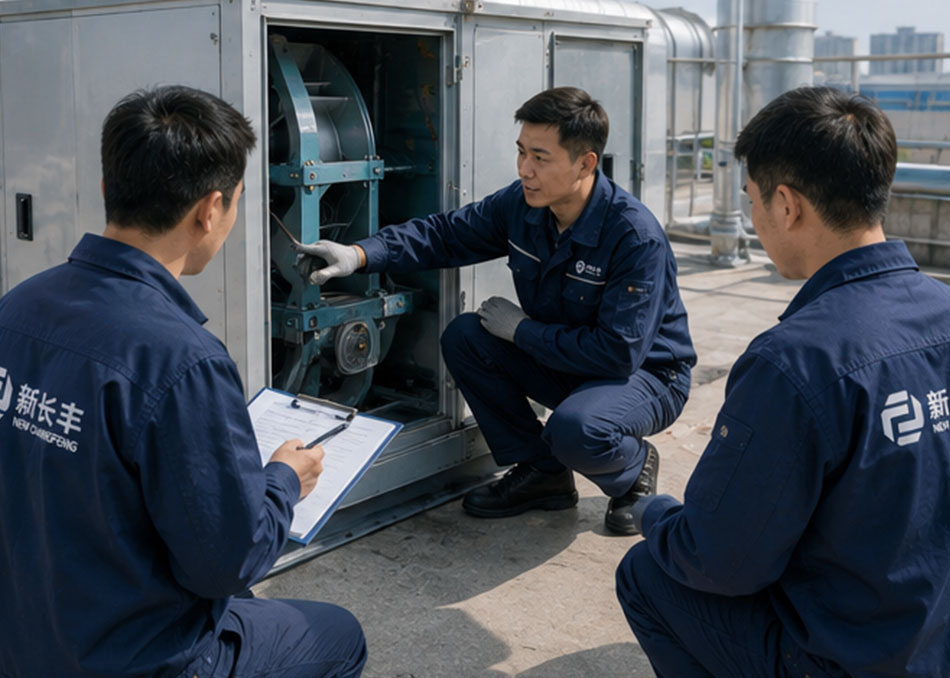
Industrial workshops in hot, humid climates often struggle with heat buildup from machinery, personnel, and processes, creating a stifling environment that reduces productivity and increases health risks. Natural ventilation through open windows is rarely sufficient to establish consistent airflow, especially in sprawling factory spaces. Negative pressure fans—also known as exhaust fans—offer a cost-effective solution by mechanically extracting hot air and drawing in fresh outside air, creating a continuous cooling effect. However, selecting the right fan requires careful calculation of ventilation demand, consideration of climate and building characteristics, and attention to installation and maintenance. This guide provides a practical framework for factory managers, HVAC engineers, and procurement teams to choose negative pressure fans that deliver effective cooling, energy efficiency, and long-term reliability.
1. Determine Ventilation Requirements Before Choosing a Fan Model
The first step in selecting a negative pressure fan is not browsing catalogs but quantifying the required air exchange rate. For industrial workshops, ventilation is typically estimated using air changes per hour (ACH), with common ranges depending on the heat load and air quality. Workshops with high heat generation, odors, or dust require higher ACH. However, ACH is only a starting point; actual demand should be adjusted based on room volume, process heat output, number of occupants, and inlet area. Once the target airflow is established, refer to fan performance curves tested according to standards such as GB/T 1236 (Industrial fans—Performance testing using standardized airways) to select a model that delivers the required airflow at the expected static pressure.
It is crucial to avoid oversizing or undersizing. Oversized fans waste energy and may cause excessive noise, while undersized fans fail to achieve the desired cooling. Consider future expansion or changes in production that might alter heat loads. A professional ventilation assessment can help refine the calculation, ensuring the fan operates efficiently across varying conditions.
2. Match Fan Type and Configuration to Workshop Layout
Negative pressure fans come in various designs, including wall-mounted, roof-mounted, and portable units. The choice depends on the building structure, available installation locations, and airflow patterns. Wall-mounted fans are common for direct exhaust through side walls, while roof-mounted units suit large open spaces where hot air stratifies. The number and placement of fans should create a uniform negative pressure, typically around 0.1–0.3 inches of water column, to ensure even air distribution and prevent dead zones. Inlets—such as louvers, windows, or dedicated intake vents—must be sized to allow sufficient makeup air without excessive velocity that could cause drafts or draw in contaminants.
For workshops with high humidity, consider fans with corrosion-resistant coatings or stainless steel construction. In dusty environments, models with easy-to-clean blades and guards are preferable. Additionally, noise levels should be checked against local regulations and worker comfort; low-noise designs or variable-speed drives can help mitigate noise while maintaining performance.
3. Ensure Energy Efficiency and Compliance with Standards
Energy consumption is a major operational cost for ventilation systems. Select fans that meet or exceed efficiency benchmarks such as GB 19761 (Minimum allowable values of energy efficiency and energy efficiency grades for fans). High-efficiency motors, aerodynamic blade profiles, and variable-frequency drives (VFDs) can significantly reduce power usage, especially when ventilation demand varies. Payback periods for premium efficiency fans are often short, making them a wise investment.
Compliance with safety and environmental standards is non-negotiable. For example, in applications involving smoke and heat exhaust, fans must comply with GB 51251 (Technical standard for smoke and heat exhaust ventilation systems). In kitchens or areas with grease-laden air, ensure fans are rated for the application and paired with appropriate filtration. Regular maintenance—cleaning blades, checking belts, and lubricating bearings—is essential to sustain efficiency and prolong equipment life.
4. Installation and Maintenance Best Practices
Proper installation maximizes fan performance and longevity. Fans should be mounted on rigid supports, isolated from structural vibrations, and protected from weather. Electrical connections must follow local codes, and controls should be easily accessible. After installation, verify airflow and static pressure using a manometer or anemometer to confirm the system meets design specifications. Balance the system by adjusting inlet openings or fan speeds to achieve desired conditions without overpressurizing the building.
Develop a maintenance schedule that includes routine inspections, cleaning, and performance checks. Keep spare parts on hand for critical components. Train operators to recognize signs of wear or imbalance, such as unusual noise or vibration, and address issues promptly to avoid downtime.
Frequently Asked Questions
Q: How do I calculate the required air changes per hour for my workshop?
A: Start with industry guidelines: general workshops may need 6–10 ACH, while high-heat or dusty environments might require 15–30 ACH. Adjust based on actual heat load, occupancy, and air quality. Use the formula: Required airflow (m³/h) = Room volume (m³) × ACH. For precise results, consult a ventilation engineer.
Q: Can negative pressure fans be used in humid climates?
A: Yes, but choose corrosion-resistant models (e.g., fiberglass or stainless steel) and ensure proper drainage. High humidity can reduce cooling effectiveness, so consider supplemental dehumidification if necessary.
Q: What maintenance tasks are essential for negative pressure fans?
A: Regularly clean blades and guards, check belt tension (if applicable), lubricate bearings per manufacturer recommendations, and inspect electrical connections. Schedule professional servicing annually.
Selecting the right negative pressure fan for industrial workshop ventilation and cooling requires a systematic approach: calculate demand, choose the appropriate type and configuration, prioritize energy efficiency, and follow best installation and maintenance practices. By doing so, you can create a safer, more comfortable, and productive workplace. For personalized guidance, consult with ventilation specialists who can assess your specific needs and recommend tailored solutions.