
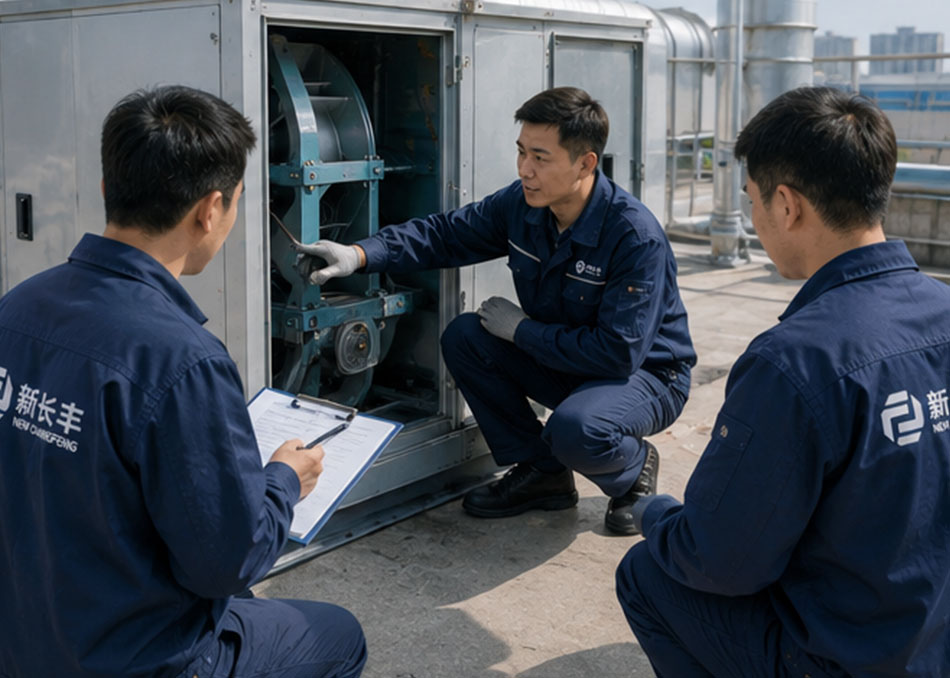
In Guangzhou, the summer is hot and humid, lasting for months. For commercial kitchens, this climate brings not only cooking discomfort but also a persistent engineering challenge—negative pressure. When range hoods operate at full capacity, extracting smoke and heat, the kitchen interior can develop significant negative pressure. Doors become hard to open, and instead of cool breezes, air infiltrates through window and door gaps, carrying sewer odors and outdoor heat. This can even cause gas burner flames to flicker or burn inefficiently. In such conditions, chef productivity drops, equipment wear increases, and safety hazards rise. The key to solving kitchen negative pressure lies in make-up air. For equipment selection in hot and humid regions like Guangzhou, water-cooled fresh air units are increasingly becoming the preferred choice for restaurant owners and HVAC contractors. They effectively balance negative pressure while also cooling the incoming air—a two-in-one solution. With a wide range of products on the market, how do you choose wisely and avoid pitfalls? This article analyzes the selection criteria for water-cooled fresh air units in the context of Guangzhou's climate and kitchen operating conditions.
Understanding Kitchen Negative Pressure: Why Make-Up Air Matters More Than Exhaust
Many restaurant owners mistakenly believe that kitchen ventilation is all about "exhausting smoke." In reality, a healthy kitchen ventilation system must adhere to the principle of exhaust-supply balance. According to GB 51251 (Technical Standard for Building Smoke Control and Exhaust Systems) and related ventilation design codes, when exhaust volume exceeds supply volume, negative pressure forms indoors. For a kitchen, a slight negative pressure can help contain odors, but excessive negative pressure leads to the problems described above. Proper make-up air ensures that the exhaust system can perform effectively without compromising indoor air quality or safety.
In Guangzhou, the challenge is compounded by high ambient temperatures and humidity. Simply pulling in untreated outdoor air to balance pressure would introduce heat and moisture, making the kitchen even more uncomfortable. This is where water-cooled fresh air units shine—they provide the necessary make-up air while simultaneously cooling it, creating a more comfortable and productive environment.
Key Selection Criteria for Water-Cooled Fresh Air Units in Guangzhou Kitchens
1. Cooling Capacity and Climate Adaptation
Guangzhou's summer outdoor temperatures often exceed 35°C with high humidity. A water-cooled fresh air unit must be capable of reducing the incoming air temperature significantly. Look for units with adequate cooling capacity, typically expressed in kW or BTU/h. The unit should be designed to handle the specific airflow rate required for your kitchen's exhaust volume. Always consult the manufacturer's performance data and select a unit that can maintain a comfortable supply air temperature (usually 25–28°C) even on the hottest days.
2. Airflow and Static Pressure Matching
The make-up air volume must be balanced with the kitchen's exhaust rate. A common rule of thumb is that make-up air should be 80–90% of the exhaust volume to maintain a slight negative pressure. However, the unit must also overcome the static pressure losses from ductwork, filters, and diffusers. Choose a unit with a fan curve that matches your system's pressure requirements. Avoid oversizing, which wastes energy, or undersizing, which fails to resolve negative pressure.
3. Water Quality and Maintenance
Water-cooled units rely on a water supply for cooling, typically via an evaporative pad or a coil. In Guangzhou, water quality can vary, and hard water may cause scaling on pads or coils, reducing efficiency. Opt for units with easily replaceable pads and accessible cleaning points. Consider installing a water filter or softener to prolong equipment life. Regular maintenance is essential to prevent mold or bacterial growth in the water system, which could compromise indoor air quality.
4. Energy Efficiency and Operating Costs
Water-cooled fresh air units are generally more energy-efficient than traditional air conditioning for this application because they use evaporative cooling. However, efficiency varies by design. Check the unit's energy efficiency ratio (EER) or coefficient of performance (COP). Also, consider the water consumption—units with recirculating pumps use less water than once-through systems. Over time, energy and water savings can offset the initial investment.
5. Noise and Installation Flexibility
Kitchens are already noisy environments, but excessive fan noise from make-up air units can add to discomfort. Choose units with low-noise fans and consider installing them away from workstations. Many water-cooled fresh air units are designed for ducted or ductless installation, offering flexibility in placement. Ensure the unit can be mounted safely, with proper drainage for condensate and overflow.
6. Compliance and Certification
Ensure the unit complies with relevant Chinese standards, such as GB/T 1236 (fan performance testing) and GB 19761 (fan energy efficiency). For kitchen applications, also verify that the unit meets local fire and building codes. Purchasing from a reputable manufacturer with certifications (e.g., ISO 9001) ensures reliability and after-sales support.
Practical Tips for Implementing Water-Cooled Fresh Air in Guangzhou Kitchens
- Balance the system: Work with an experienced HVAC engineer to calculate the exhaust rate and specify the make-up air unit accordingly. A well-designed system prevents negative pressure while avoiding over-pressurization.
- Position air inlets wisely: Supply air should be directed toward workstations but not directly at cooking surfaces to avoid disrupting flames or cooling food. Use adjustable diffusers to control airflow patterns.
- Integrate with exhaust controls: Consider linking the fresh air unit to the exhaust fan speed controller so that make-up air adjusts automatically when cooking loads change. This optimizes energy use and maintains balance.
- Plan for maintenance: Schedule regular cleaning of pads, filters, and drains. In Guangzhou's humid climate, check for algae or mold growth and replace pads as needed, typically every 1–2 seasons.
- Monitor performance: Install a simple pressure gauge or manometer to check the kitchen's pressure differential. Adjust the unit's airflow if necessary to maintain the desired balance.
Common Mistakes to Avoid
One common mistake is selecting a unit based solely on airflow without considering cooling capacity—this leads to insufficient cooling in Guangzhou's heat. Another is neglecting water quality, which causes frequent breakdowns. Some buyers choose the cheapest option, but low-quality units often have poor corrosion resistance and short lifespans in humid environments. Finally, do not forget to account for the pressure drop of ductwork and filters; a unit that cannot overcome this will underperform.
Frequently Asked Questions
Q: How do I know if my kitchen has negative pressure?
A: Common signs include doors that are hard to open, drafts from gaps, and backdrafting of exhaust fans. A simple test is to hold a smoke pencil or incense near a doorway—if smoke is pulled into the kitchen, negative pressure exists. For a quantitative measurement, use a manometer to check the pressure difference between the kitchen and adjacent areas.
Q: Can a water-cooled fresh air unit replace an exhaust fan?
A: No. A water-cooled fresh air unit is designed for make-up air supply, not exhaust. It works in conjunction with your existing exhaust system to balance airflow. The exhaust fan removes smoke and heat, while the fresh air unit provides conditioned replacement air.
Q: What size water-cooled fresh air unit do I need?
A: The size depends on your kitchen's exhaust volume. As a rule of thumb, the fresh air unit should supply 80–90% of the exhaust rate. For example, if your exhaust system moves 10,000 m³/h, you would need a unit that delivers 8,000–9,000 m³/h. However, the exact requirement should be calculated by an engineer considering kitchen dimensions, cooking equipment, and local codes.
Q: How much maintenance does a water-cooled fresh air unit require?
A: Regular maintenance includes cleaning or replacing the evaporative pad (every 1–3 months in hard water areas), checking the water pump and float valve, draining and cleaning the water reservoir, and inspecting the fan and motor. In Guangzhou's humid climate, also check for mold growth and clean the unit's interior periodically.
Conclusion
Solving kitchen negative pressure in Guangzhou requires a well-designed make-up air system that also addresses the region's heat and humidity. Water-cooled fresh air units offer an effective, energy-efficient solution, but careful selection is crucial. Consider cooling capacity, airflow, water quality, energy efficiency, noise, and compliance when choosing a unit. By working with a knowledgeable contractor and following the tips above, you can create a comfortable, safe, and productive kitchen environment. For more guidance or to explore high-quality water-cooled fresh air units, visit XCFFJ's website at www.xcffj.com or contact our team for expert support.