
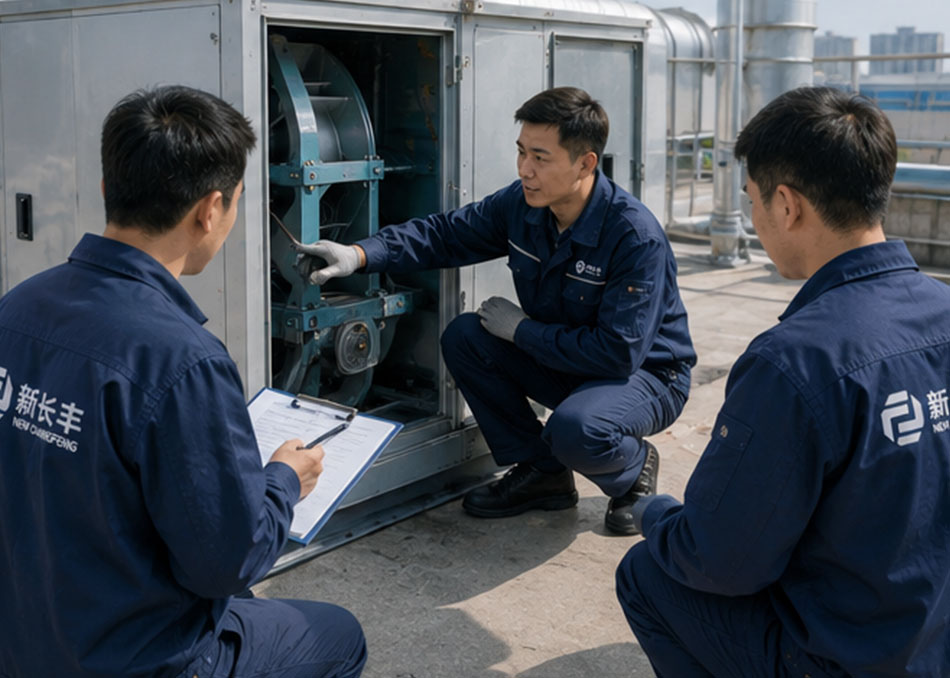
During the hot summer months, large industrial facilities—steel structure workshops, injection molding plants, metalworking shops, textile mills—all face the same challenge: indoor temperatures soar, workers tire quickly, productivity drops, and the risk of heat-related illness rises. Traditional compressor-based air conditioning often falls short in these settings. The upfront investment is high, electricity costs are staggering, and with workshop doors constantly opening and closing and a constant need for air circulation, cool air is hard to maintain. Evaporative air coolers (also known as swamp coolers or water-cooled air conditioners) have become a common solution for factory workshop cooling, thanks to their water-evaporation cooling principle, high air volume, and ability to operate with open windows for ventilation. However, with many product variations on the market, choosing the right evaporative air cooler for your specific workshop requires careful consideration of principles, sizing, installation, and maintenance.
First, Understand the Principle: Why Evaporative Air Coolers Suit Factory Workshops
The core of an evaporative air cooler is water-evaporation cooling. When the unit operates, a water pump distributes water over a cooling pad (evaporative filter). A fan draws hot outdoor air through the wet pad; as water evaporates, it absorbs sensible heat from the air, lowering the temperature of the air delivered into the workshop while providing clean, moist fresh air. This is a physical cooling process that does not rely on a compressor or refrigerant, so energy consumption is relatively low—one reason it is widely adopted in industrial plants.
Compared with compressor-based air conditioning, evaporative air coolers better match several characteristics of workshop environments:
- 100% fresh air operation: Workshops need continuous air exchange to remove heat, odors, and dust. Evaporative air coolers are inherently fresh-air supply devices; combined with open windows or negative-pressure exhaust, they can create an effective ventilation and cooling loop.
- High air volume, wide coverage: Industrial workshops often have large floor areas and high ceilings. Evaporative coolers are designed to move large volumes of air, making them suitable for open or semi-open spaces.
- Low energy consumption: The main power consumers are the fan and water pump, not a compressor. This translates to significantly lower operating costs compared with traditional air conditioning.
- Improved air quality: The evaporative pad acts as a filter, trapping some dust and particles, and the constant fresh-air supply helps dilute airborne contaminants.
Key Selection Factors: Matching the Cooler to Your Workshop
Not all evaporative air coolers are the same. Selecting the right unit requires evaluating your workshop's specific conditions. Start by calculating the required air volume. A common rule of thumb is to consider the volume of the space and the desired air exchange rate—typically 30–60 air changes per hour for industrial workshops, depending on heat load and activity level. However, it is best to consult a ventilation engineer or use manufacturer sizing guidelines rather than relying solely on rules of thumb.
Consider these factors when choosing a model:
- Cooling pad quality and area: The efficiency of evaporation depends on the pad material and surface area. Cellulose pads with cross-fluted design offer good water retention and evaporation efficiency. Larger pad area generally means better cooling, but also higher cost and space requirements.
- Fan type and performance: Centrifugal fans (such as cabinet centrifugal fans) can handle higher static pressure, making them suitable for ducted installations or when filters are used. Axial fans move high air volume at lower static pressure and are often used for direct discharge. Check that the fan performance is tested in accordance with standards like GB/T 1236.
- Energy efficiency: Look for units that comply with GB 19761 fan energy efficiency grades. Higher efficiency means lower electricity bills over the equipment's lifetime.
- Construction and durability: Industrial environments can be harsh. Choose units with corrosion-resistant housing (e.g., galvanized steel with anti-rust coating, or stainless steel) and robust motors.
- Control and automation: Variable frequency drives (VFDs) allow fan speed adjustment to match actual cooling demand, saving energy. Automatic water level control and drain systems reduce maintenance.
Installation and Layout: Making the System Work
Proper installation is critical to performance. Evaporative air coolers can be installed on the roof, wall-mounted, or placed on the floor, depending on the workshop layout and available space. For large workshops, a ducted system with multiple outlets may be needed to distribute cool air evenly. Ensure that the unit has unobstructed access to outdoor air and that exhaust paths (windows, louvers, or exhaust fans) allow hot air to escape.
Negative-pressure ventilation is often used in conjunction with evaporative coolers. By installing exhaust fans on the opposite side of the workshop, a negative pressure is created, drawing cool air from the evaporative coolers across the space and pushing hot air out. This combination can dramatically improve cooling effectiveness and air quality. For kitchens or areas with grease and fumes, separate exhaust purification systems (e.g., electrostatic fume purifiers) should be used to comply with GB 18483.
Also consider noise levels. Workshops with noise-sensitive areas may benefit from units with lower sound power levels or from locating the cooler away from workstations. Duct silencers can be added if necessary.
Maintenance and Operation: Ensuring Long-Term Performance
Evaporative air coolers require regular maintenance to operate efficiently and hygienically. The cooling pad should be cleaned or replaced periodically to prevent scale buildup, algae, and mold. Water quality matters: hard water can cause scaling, so water softening or periodic descaling may be needed. The water reservoir should be drained and cleaned regularly, especially before seasonal start-up.
Fan belts, bearings, and motors should be inspected according to the manufacturer's schedule. Air filters (if present) need cleaning or replacement. During operation, monitor for unusual noise or vibration, which can indicate fan imbalance or bearing wear. Proper maintenance not only extends equipment life but also maintains cooling efficiency and prevents health hazards from contaminated air.
For optimal energy management, consider integrating the cooler with a building management system (BMS) or using programmable timers to operate only when needed. In mild weather, the cooler can be run in ventilation-only mode (fan only, no water pump) to save water and energy.
Frequently Asked Questions
Q: Can an evaporative air cooler really cool a large factory workshop effectively?
A: Yes, when properly sized and installed. Evaporative coolers work best in hot, dry climates, but even in humid conditions they can provide significant relief by moving large volumes of air. The key is to ensure adequate air changes per hour and proper exhaust. In very humid areas, the temperature drop may be less, but the air movement still improves comfort. For large workshops, multiple units or a ducted system may be required.
Q: How do I calculate the right air volume for my workshop?
A: The required air volume depends on the workshop volume, heat load, and desired air exchange rate. A common starting point is 30–60 air changes per hour. For example, a workshop with a volume of 10,000 m³ might need 300,000–600,000 m³/h of air flow. However, this is a simplified approach. It is best to consult a ventilation engineer or use manufacturer sizing software that accounts for specific heat sources, insulation, and climate.
Q: What maintenance does an evaporative air cooler need?
A: Regular maintenance includes cleaning or replacing the cooling pad (typically once or twice a year, depending on water quality and usage), draining and cleaning the water tank, checking the water pump and fan motor, inspecting belts and bearings, and ensuring the water distribution system is free of blockages. In dusty environments, more frequent cleaning may be necessary. Always follow the manufacturer's manual.
Q: Are evaporative air coolers suitable for kitchens or areas with grease?
A: Evaporative air coolers are not designed to handle grease-laden air. For commercial kitchens, a separate exhaust hood and fume purification system (such as electrostatic precipitators meeting GB 18483) should be used. Evaporative coolers can supply make-up air to the kitchen, but the exhaust must be treated separately to avoid grease buildup in the cooler.
Conclusion
Choosing the right evaporative air cooler for your factory workshop involves understanding the cooling principle, accurately assessing your space and heat load, selecting a unit with appropriate fan performance and efficiency, and ensuring proper installation and maintenance. By following these guidelines, you can create a cooler, more comfortable, and more productive work environment while keeping energy costs under control. For tailored advice and a wide range of industrial ventilation and cooling equipment—including evaporative air coolers, cabinet centrifugal fans, negative pressure fans, and more—visit XCFFJ at www.xcffj.com.