
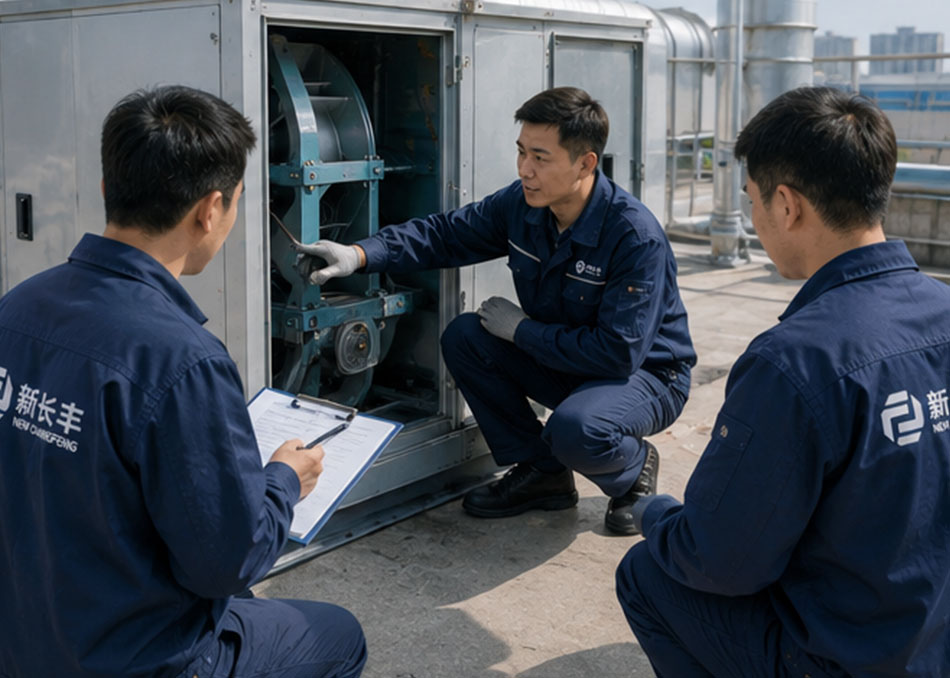
In restaurant back-of-house (BOH) kitchens, heat is not just uncomfortable—it's a persistent operational challenge. Open flames, steamers, fryers, and woks release intense radiant and convective heat, often pushing workstation temperatures far above the rest of the building. Many operators have already installed exhaust hoods, axial fans, or negative-pressure fans, yet staff still report: “There's air moving overhead, but I'm still burning up.” The issue is that exhaust systems handle overall air exchange and grease removal, while workstation cooling requires chilled, clean air delivered precisely where people stand. This is where a commercial kitchen air conditioner becomes essential.
Why Traditional Ventilation Falls Short for Workstation Cooling
From a ventilation engineering perspective, a kitchen exhaust system removes grease-laden air and moisture, creating a negative-pressure environment. However, makeup air—if not cooled—enters at near-outdoor summer temperatures. When blown onto a person, it provides only limited convective cooling. In high-humidity conditions, sweat evaporation efficiency drops, making it even harder for the body to dissipate heat. The result: discomfort, fatigue, and reduced productivity.
What's needed is a solution that delivers cooled, filtered air directly to the workstation. That's the core value of a commercial kitchen air conditioner. Unlike domestic comfort units, these systems are engineered for the kitchen environment: grease, moisture, cleaning chemicals, tight spaces, and noise sensitivity. Standard split systems often fail quickly due to clogged filters, oily heat exchangers, and condensate drainage issues.
How Commercial Kitchen Air Conditioners Work and Their Cooling Advantages
Commercial kitchen air conditioners are designed specifically for BOH applications. They typically combine cooling, ventilation, and filtration in one unit. Key features include:
- Grease-resistant heat exchangers and filters – Easy to clean and maintain, resisting oil buildup that cripples standard AC units.
- Targeted air delivery – Adjustable louvers or ducts direct cooled air to specific workstations (wok range, prep area, plating station).
- Humidity management – By cooling and dehumidifying, they improve sweat evaporation and perceived comfort.
- Corrosion-resistant construction – Stainless steel or coated components withstand steam and cleaning agents.
- Quiet operation – Low-noise fans and vibration isolation keep the kitchen environment manageable.
These units are not meant to replace the exhaust hood; they complement it. The exhaust removes heat and contaminants at the source, while the air conditioner provides cooled makeup air or spot cooling at the person level. This two-pronged approach addresses both air quality and thermal comfort.
Key Selection Criteria for BOH Workstation Cooling
Choosing the right commercial kitchen air conditioner requires careful assessment of the kitchen layout, heat load, and operational patterns. Consider the following:
- Cooling capacity and airflow – Match the unit's capacity to the heat generated by cooking equipment and the number of workstations. Avoid undersizing, which leads to inadequate cooling.
- Installation location – Units can be wall-mounted, ceiling-mounted, or ducted. Ensure they don't obstruct workflow or violate fire codes.
- Filtration and maintenance access – Filters must be easily removable for daily or weekly cleaning. Grease filters should meet relevant fire safety standards.
- Condensate management – Proper drainage or evaporative condensate disposal is critical to prevent slips and hygiene issues.
- Energy efficiency – Look for units that comply with GB 19761 fan energy efficiency or equivalent local standards to keep operating costs down.
- Noise level – In open kitchens, excessive noise can affect communication and customer experience. Choose low-dB models.
Additionally, verify that the unit's electrical requirements, refrigerant type, and control interface align with your facility. For kitchens with extreme grease loads, consider models with enhanced filtration stages.
Installation and Integration Best Practices
Even the best equipment underperforms if installed poorly. Here are practical guidelines:
- Coordinate with exhaust design – The air conditioner should not fight the exhaust system. Balance makeup air and exhaust rates to maintain slight negative pressure in the kitchen relative to dining areas.
- Position supply outlets correctly – Aim cooled air at the torso level of the workstation, not directly at the face or back of the head, to avoid discomfort.
- Seal ductwork and penetrations – Prevent grease and moisture from entering ceiling voids or adjacent spaces.
- Provide easy access for service – Schedule regular cleaning of coils and filters. In heavy-use kitchens, monthly professional maintenance is recommended.
- Comply with local codes – In many regions, kitchen ventilation must meet GB 18483 for fume emission and GB 51251 for smoke exhaust where applicable. Ensure your air conditioner does not interfere with these systems.
For existing kitchens, retrofitting a commercial kitchen air conditioner may require additional electrical capacity and drainage. Consult a qualified HVAC contractor to assess feasibility.
Frequently Asked Questions (FAQ)
Q: Can I use a regular split air conditioner in my restaurant kitchen?
A: Standard split systems are not designed for kitchen environments. Grease and moisture quickly clog filters and coat heat exchangers, leading to frequent breakdowns and poor air quality. Commercial kitchen air conditioners have specialized filtration, corrosion-resistant components, and condensate management to handle these conditions.
Q: Will a commercial kitchen air conditioner eliminate the need for an exhaust hood?
A: No. Exhaust hoods are essential for capturing grease, smoke, and heat at the source. The air conditioner complements the exhaust system by providing cooled, clean makeup air or spot cooling. Both are needed for a safe and comfortable kitchen.
Q: How do I determine the right cooling capacity for my kitchen?
A: Cooling load depends on cooking equipment, kitchen size, number of staff, and local climate. A professional HVAC assessment is recommended. As a rule of thumb, spot cooling units should be sized to handle the radiant heat from adjacent cooking appliances. Avoid oversizing, which can cause short cycling and poor humidity control.
Q: What maintenance does a commercial kitchen air conditioner require?
A: Regular cleaning of filters (daily to weekly), coil cleaning (monthly to quarterly), and inspection of condensate drains are essential. In high-grease environments, more frequent service may be needed. Always follow the manufacturer's maintenance schedule.
Q: Are there energy-efficient options available?
A: Yes. Look for units with high-efficiency compressors, EC fans, and compliance with energy efficiency standards such as GB 19761. Proper sizing and installation also significantly impact energy use.
Conclusion
Cooling the back-of-house isn't a luxury—it's a necessity for staff well-being, productivity, and retention. While exhaust and ventilation systems are vital, they alone cannot solve workstation heat stress. A commercial kitchen air conditioner, specifically designed for the rigors of the kitchen, delivers targeted cooled air that makes a measurable difference. When selecting a unit, prioritize robust filtration, corrosion resistance, and proper integration with your existing ventilation.
XCFFJ (Shenzhen Xinchangfeng Dust Removal & Cooling Equipment Co., Ltd.) manufactures a range of commercial kitchen air conditioners and ventilation solutions engineered for BOH environments. For tailored recommendations based on your kitchen layout and heat load, visit www.xcffj.com or contact our team.