
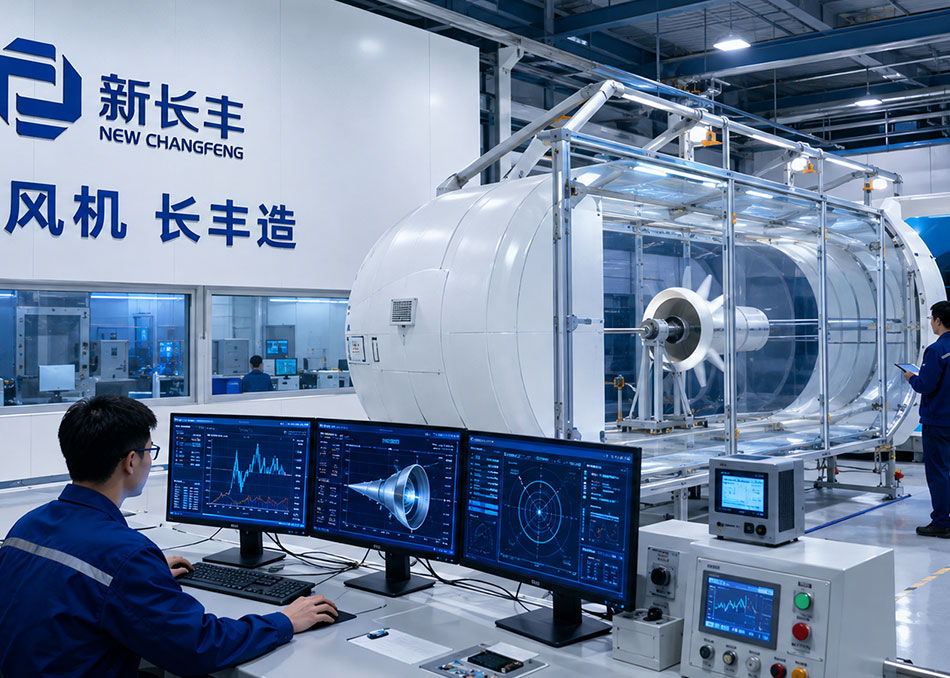
School cafeterias serve densely populated groups, making their kitchen exhaust systems critical not only for cooking comfort but also for food safety and fire protection. Facility managers often face challenges such as inadequate smoke extraction,油烟 backflow, and noise complaints. Among various exhaust devices, cabinet centrifugal fans stand out as the core power equipment for school kitchen exhaust systems due to their high static pressure, heat resistance, and compact structure. This article explores key application points from a system design perspective.
Unique Requirements of School Cafeteria Exhaust Systems
School cafeterias operate in concentrated cooking periods, generating high volumes of油烟 with peak instantaneous concentrations. Unlike commercial restaurants, school exhaust systems must balance low-load operation during class hours with high-efficiency extraction during meal peaks. This demands superior fan regulation performance and reliability. Additionally, cafeterias are often located near classrooms or dormitories, making noise control and emission compliance essential design constraints.
Under GB 18483 (Emission Standard for Cooking Fume), school cafeterias are classified as catering units, requiring油烟 emission concentrations to meet local environmental regulations. Meanwhile, GB 51251 (Technical Standard for Building Smoke Control and Exhaust Systems) provides explicit technical guidelines for selecting and installing exhaust fans. Designers must therefore consider air volume calculations, pressure balancing, and compatibility with purification equipment from multiple dimensions.
Role of Cabinet Centrifugal Fans in Exhaust Systems
In kitchen exhaust systems, cabinet centrifugal fans typically serve as the main exhaust fan, providing the necessary static pressure to overcome duct resistance and ensure effective油烟 capture. Their backward-curved or forward-curved blades deliver high airflow at moderate speeds, making them ideal for long duct runs and multiple hood connections common in school kitchens.
One key advantage is their compact, enclosed design, which reduces noise leakage and allows installation in tight spaces—often a constraint in existing school buildings. Many models feature direct-drive or belt-drive options, enabling precise airflow adjustment to match varying cooking loads. Heat-resistant construction ensures safe operation even when handling hot油烟-laden air.
Design Considerations for School Cafeteria Exhaust
Proper system design begins with accurate air volume calculation based on hood dimensions, cooking equipment heat output, and the number of meals served. Undersizing leads to poor capture, while oversizing wastes energy and increases noise. Pressure loss through ducts, elbows, and purification devices must be summed to select a fan with adequate static pressure capability.
Noise control is crucial in school environments. Cabinet centrifugal fans inherently produce lower noise than axial fans, but designers should still incorporate flexible connections, vibration isolators, and sound-attenuating ductwork. Placement away from classroom walls and the use of silencers can further mitigate disturbance.
Integration with油烟 purification equipment, such as electrostatic precipitators or UV oxidizers, is essential to meet emission standards. The fan must provide sufficient suction to draw油烟 through these devices without excessive pressure drop. Regular maintenance access for cleaning the fan and ductwork should be planned to sustain performance and fire safety.
Best Practices for Implementation
- Conduct a load assessment to determine peak and average exhaust requirements.
- Use variable frequency drives (VFDs) to modulate fan speed based on real-time cooking activity, saving energy and reducing noise during off-peak hours.
- Install the fan on a sturdy base with anti-vibration pads to minimize structure-borne noise.
- Coordinate with fire protection systems to ensure the fan meets smoke exhaust requirements and can operate safely in high-temperature conditions.
- Schedule regular inspections and cleaning of the fan impeller, housing, and ductwork to maintain efficiency and longevity.
FAQ
Q: Can a cabinet centrifugal fan handle high-temperature油烟?
A: Yes, cabinet centrifugal fans designed for kitchen exhaust are typically rated for continuous operation at elevated temperatures (e.g., up to 150°C) and can handle short bursts of higher heat. Always verify the fan's thermal rating against your specific cooking equipment and consult the manufacturer for extreme conditions.
Q: How do I determine the right fan size for my school cafeteria?
A: The fan size depends on total exhaust air volume (CFM) and static pressure requirements. Calculate the air volume based on hood area and capture velocity, then sum duct and equipment pressure losses. Use fan performance curves to select a model that operates efficiently at your design point. It's advisable to consult an HVAC engineer for accurate sizing.
Q: What maintenance is required for cabinet centrifugal fans in school kitchens?
A: Routine maintenance includes cleaning the impeller and housing to remove grease buildup, checking belt tension (if belt-drive), lubricating bearings, and inspecting electrical connections. Depending on usage, cleaning every 3–6 months is recommended. Regular maintenance ensures optimal performance and prevents fire hazards.
Conclusion
Cabinet centrifugal fans are indispensable in school cafeteria kitchen exhaust systems, offering reliable performance, space efficiency, and noise reduction. By adhering to design standards, optimizing fan selection, and implementing proactive maintenance, facility managers can achieve safe, comfortable, and compliant kitchen environments. For expert guidance on selecting the right fan for your school project, contact XCFFJ today.