
A bigger kitchen exhaust fan is not always a better one. What really determines exhaust performance is whether the hood capture, duct cross-section, duct length, number of elbows, purifier resistance and effective fan airflow all match. Many kitchens suffer from smoke overflow, doors that are hard to open, loud noise or motors running under high load — usually not because of poor equipment quality, but because selection only looked at the nameplate airflow instead of treating the whole exhaust system as one calculation.
The first step is to determine the actual exhaust volume. Wok stations, steamers and fryers differ greatly in heat and fume output, so you should consider the number of appliances, hood length, opening area and simultaneous usage together. For retrofit projects, also check whether the existing duct is undersized, heavily greased or locally reduced. If the duct is too narrow, even a larger fan may fail to reach the target airflow because of high system resistance.
The second key parameter is static pressure. Pressure overcomes the resistance of straight ducts, elbows, transitions, backdraft dampers and purifiers. The higher the floor, the longer the duct and the more elbows, the more pressure is usually required. A short direct exhaust is not selected the same way as a long high-rise discharge. For high-resistance duct runs, consider equipment such as the GX high-pressure cabinet; for ordinary kitchen exhaust and building ventilation, a cabinet centrifugal fan or another centrifugal fan can be chosen based on site conditions.
Third, pay attention to noise, maintenance and installation space. Impellers collect grease over time, so kitchen projects must reserve room for inspection, cleaning and removal. If the equipment is near residential areas, commercial complexes or indoor plant rooms, also consider speed, vibration isolation, flexible connections and silencing. A quiet fan is only the baseline — high duct velocity, bracket resonance and poor outlet design can also produce obvious noise.
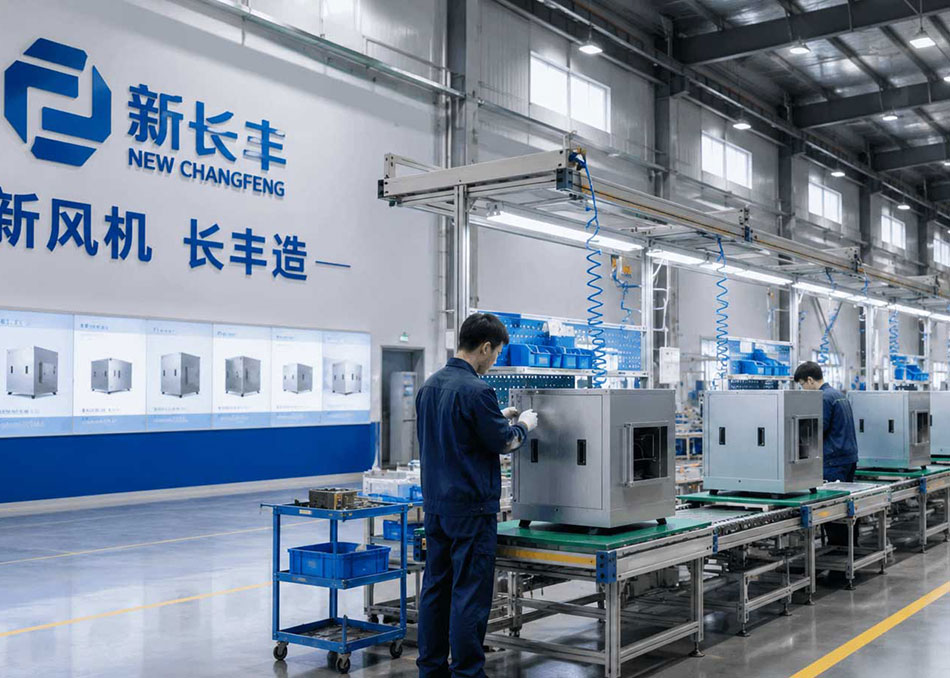
For kitchen ventilation projects, Xin Changfeng recommends confirming the application, required airflow and static pressure, installation conditions and noise limits first, then matching products such as the DT cabinet centrifugal fan, GX high-pressure cabinet and multi-wing centrifugal fan. Correct fan selection means enough airflow, matched pressure, controllable noise and easy maintenance — not simply more power. Gathering the hood size, duct length, number of elbows, purifier and discharge location before purchasing usually improves selection accuracy and reduces rework and energy waste.