
Grease-laden exhaust from a commercial kitchen is more than a comfort issue. When fumes escape the capture hood, they deposit sticky oil films on walls, ductwork, and cooking surfaces—raising cleaning costs and creating a real fire risk. At the same time, untreated exhaust often fails to meet environmental limits on particulate and grease concentration. For factory canteens, hotel kitchens, and chain restaurant outlets, selecting a kitchen exhaust purifier that matches the actual cooking load is the decisive step toward reliable extraction, cleaner air, and compliant discharge. This guide outlines a practical selection framework based on purification principles, system integration, and maintenance realities.
What Role Does the Kitchen Exhaust Purifier Play in the System?
A complete commercial kitchen exhaust system typically consists of a capture hood, ductwork, the kitchen exhaust purifier, an exhaust fan, and a discharge point. The purifier sits in the middle of this chain, intercepting grease particles and a portion of gaseous contaminants before they reach the fan and ductwork. It is both the core air-pollution control device and a protective barrier that keeps fan impellers balanced and slows grease accumulation inside ducts.
If the purifier is undersized or its efficiency is inadequate, grease migrates downstream. Fan impellers gradually become unbalanced, noise increases, duct walls thicken with oil, system resistance rises, and the symptom is a kitchen that “just can’t pull enough air.” For this reason, selection should never focus on the purifier in isolation—it must be evaluated as part of the entire exhaust system.
Common purification methods include mechanical filtration, electrostatic precipitation, and combined approaches. Mechanical filters—such as baffle or mesh types—capture larger grease droplets and are often used as pre-filters. Electrostatic purifiers charge particles and collect them on oppositely charged plates, achieving high efficiency on fine grease aerosols and some smoke. In many real-world installations, a multi-stage design (mechanical pre-filter plus electrostatic stage, sometimes with an activated carbon or UV stage for odor) delivers the best balance of performance and maintenance cost.
Key Selection Factors for Kitchen Exhaust Purifiers
Choosing the right purifier requires matching its rated capacity to the actual exhaust volume and contaminant load of the kitchen. Undersizing leads to grease carryover; oversizing wastes energy and may reduce capture efficiency at the hood. The following factors should be assessed before specification.
- Exhaust airflow and static pressure: Determine the required airflow based on hood dimensions, cooking equipment type, and local code requirements. The purifier must be rated for that airflow with minimal added resistance. Always account for the pressure drop introduced by the purifier when selecting the fan.
- Purification efficiency: Look for verified efficiency data, ideally tested according to relevant standards such as GB/T 1236 for fan performance or GB 18483 for kitchen fume emission limits. Efficiency should be stated for the target particle size range (grease aerosols and fine smoke).
- Grease loading and cleaning interval: High-volume wok cooking or charbroiling generates more grease. Choose a purifier with sufficient collection capacity and an accessible design that allows easy cleaning without disassembling the entire duct.
- Fire safety: Electrostatic purifiers must include safety interlocks, and all components should be non-combustible or fire-resistant. Ductwork should comply with fire codes such as GB 51251 for smoke and heat exhaust where applicable.
- Energy efficiency: Fans and power supplies should meet relevant efficiency standards (e.g., GB 19761 for fan energy efficiency). A purifier that adds excessive pressure drop forces the fan to work harder, increasing operating costs.
- Noise level: Kitchen staff and neighboring spaces are affected by fan and purifier noise. Look for low-noise designs and consider acoustic treatment if the unit is installed near sensitive areas.
- Ease of maintenance: Access doors, removable filter cells, and drain provisions reduce downtime and ensure consistent performance.
- Compliance and certification: Verify that the purifier meets local environmental and fire safety regulations. In many regions, grease removal efficiency must be documented for permitting.
Installation and Maintenance Best Practices
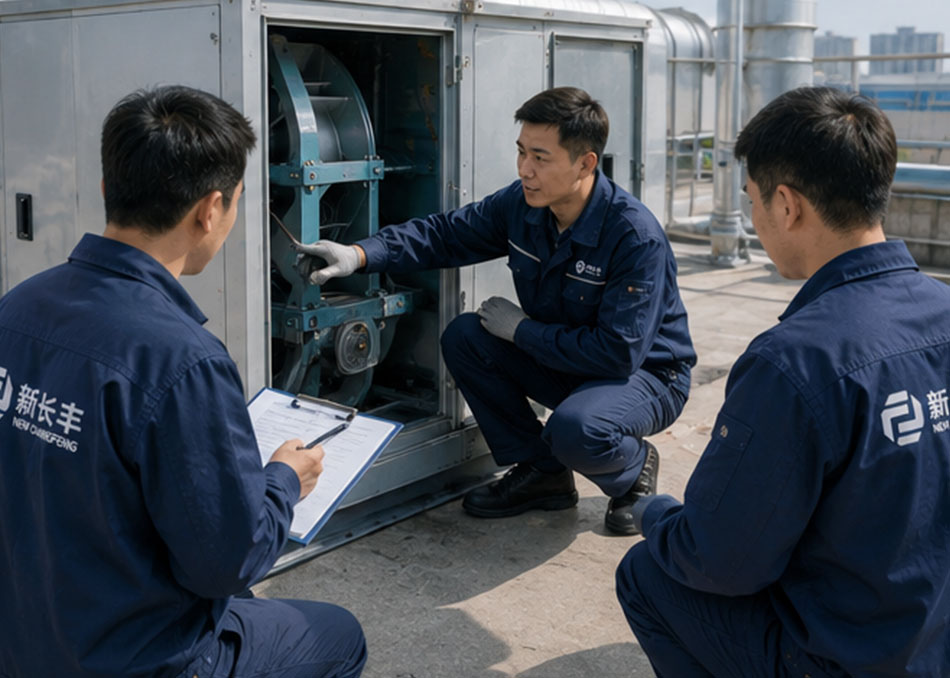
Even a well-chosen purifier can underperform if installed incorrectly. The unit should be positioned so that exhaust air is evenly distributed across the filter face. Duct transitions should be gradual to avoid turbulence and grease dropout. Provide adequate access for cleaning and inspection, and ensure that electrical connections comply with local codes.
Maintenance is not optional. Electrostatic cells must be cleaned regularly—typically weekly or biweekly in heavy-use kitchens—to prevent arcing and efficiency loss. Mechanical filters need frequent degreasing. Neglecting maintenance not only reduces purification efficiency but also increases fire risk. A documented maintenance schedule, with logbook, helps demonstrate compliance during inspections.
For kitchen exhaust systems, it is also wise to integrate the purifier with the fan control so that the fan runs only when the purifier is operational—this prevents grease from bypassing an inactive purifier and fouling the ductwork.
FAQ: Common Questions About Kitchen Exhaust Purifiers
Q: How do I know what size purifier my kitchen needs?
A: Sizing starts with the exhaust airflow required by your hood and cooking equipment. The purifier must be rated for at least that airflow, with a pressure drop that your fan can handle. A qualified ventilation engineer can calculate the load based on hood dimensions, cooking type, and local code. Undersizing is a common mistake that leads to grease carryover.
Q: What is the difference between mechanical and electrostatic purifiers?
A: Mechanical purifiers use baffles or mesh to capture larger grease droplets; they are simple and low-cost but less effective on fine smoke. Electrostatic purifiers use high-voltage electrodes to charge and collect fine particles, achieving higher efficiency on grease aerosols and smoke. Many commercial kitchens use a combination: mechanical pre-filtration followed by electrostatic precipitation.
Q: How often should I clean my purifier?
A: Cleaning frequency depends on cooking volume and grease load. In heavy wok cooking, electrostatic cells may need cleaning weekly; lighter operations might go two to four weeks. Mechanical filters often require more frequent degreasing. Always follow the manufacturer’s recommendations and keep a maintenance log.
Q: Can a purifier eliminate all cooking odors?
A: No single purifier eliminates all odors. Electrostatic and mechanical stages primarily remove grease and particulate matter. For odor control, additional stages such as activated carbon filtration or UV photolysis may be needed, depending on local regulations and neighborhood sensitivity.
Making a Confident Purchase Decision
Selecting a kitchen exhaust purifier is a balance of purification efficiency, airflow capacity, fire safety, and maintenance practicality. It should be part of an integrated exhaust strategy—not an afterthought. For factory canteens, hotel kitchens, and chain restaurants, investing in a properly sized and well-maintained purifier protects equipment, reduces cleaning costs, and helps meet environmental standards.
At XCFFJ, we manufacture a range of ventilation and purification equipment, including kitchen exhaust purifiers, cabinet centrifugal fans, and complete fresh air solutions. Our team can help you evaluate your kitchen’s specific requirements and choose a system that performs reliably over the long term. Visit www.xcffj.com to learn more or contact us for a consultation.