
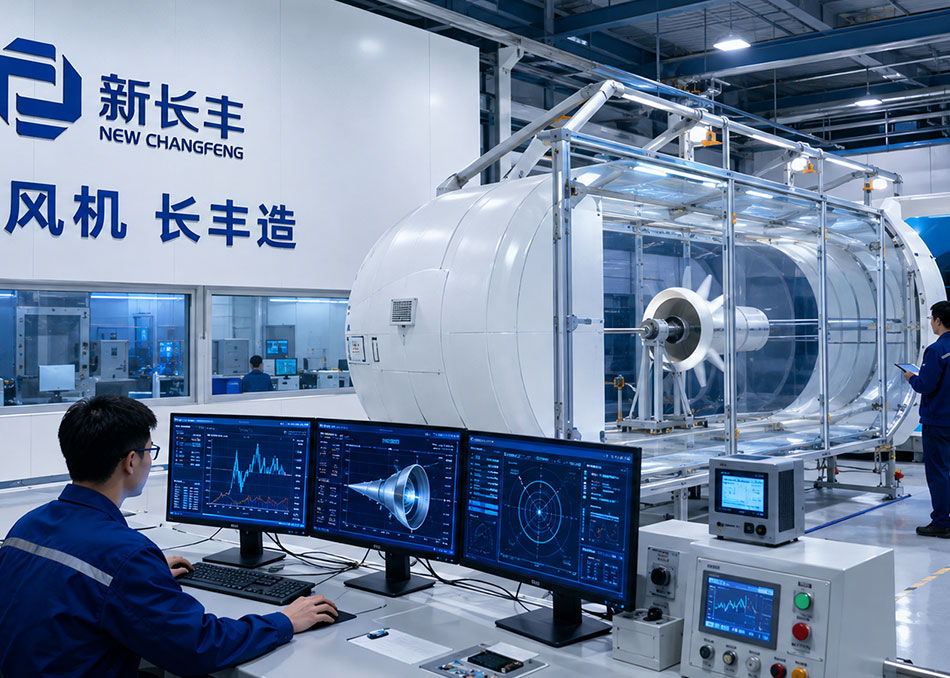
Commercial kitchen exhaust systems are a critical infrastructure investment for food safety, fire protection, and staff well-being. Yet many restaurant owners and engineering contractors fall into common selection traps: oversizing the airflow, which leads to excessive noise and energy waste, or undersizing the static pressure, which causes grease-laden smoke to linger in ductwork, resulting in poor ventilation or even backdrafts. Given the high grease concentration, complex duct layouts with multiple elbows, and the resistance introduced by air purification devices, the DT cabinet centrifugal fan has emerged as a reliable core power unit for commercial kitchen exhaust systems. Its compact structure, stable pressure performance, and ease of installation and maintenance make it a preferred choice. This article explores the practical considerations for selecting centrifugal fans, focusing on the DT cabinet model within the context of kitchen exhaust purification.
Why Kitchen Exhaust Conditions Demand a Different Selection Approach
Kitchen exhaust systems differ significantly from general industrial ventilation scenarios. First, the exhaust air contains high levels of grease particles and high-temperature gaseous pollutants. Over time, these accumulate on the fan impeller and volute, affecting dynamic balance and operational efficiency. Second, kitchen ductwork often features numerous bends and complex routing, and it must include an air cleaner (such as an electrostatic precipitator or a composite unit). These elements add to the system’s total resistance. Third, noise control is a critical concern—especially in commercial complexes near residential areas or facing the street. Fan noise can directly lead to environmental complaints and regulatory issues.
Therefore, when selecting a DT cabinet centrifugal fan for a kitchen exhaust system, one cannot simply estimate airflow based on the number of cooking stations. Instead, a comprehensive assessment is required, taking into account duct length, number of elbows, the pressure drop across the purification equipment, and the desired capture velocity at hoods. A generic formula may lead to either an undersized fan that fails to exhaust effectively or an oversized unit that wastes energy and creates noise problems.
Key Selection Criteria for DT Cabinet Centrifugal Fans in Kitchen Exhaust
To ensure optimal performance and longevity, the following factors should be carefully evaluated:
- Total System Resistance: Calculate the cumulative pressure loss from the hood, ductwork (including elbows, transitions, and dampers), and the air cleaner. The fan’s static pressure rating must exceed this total to maintain the required exhaust rate.
- Airflow Requirements: Base the airflow on the heat load and the number of cooking appliances, but also consider the hood type and the desired capture velocity. Industry guidelines (such as those in ASHRAE) recommend specific exhaust rates per unit of hood length, which should be adjusted for the cooking duty.
- Grease Handling and Maintenance: Look for fans designed with easy-access cleaning ports and robust construction that can tolerate grease buildup. DT cabinet fans are engineered with a compact footprint and removable panels, simplifying routine maintenance.
- Noise and Vibration: In noise-sensitive environments, select a fan with a lower specific sound power level. Consider installing vibration isolators and flexible connectors to minimize transmitted noise and structural vibration.
- Compliance with Standards: Ensure the fan meets relevant local codes and standards, such as GB/T 1236 for performance testing and GB 19761 for energy efficiency. For smoke control and exhaust in buildings, reference GB 51251 where applicable.
Practical Tips for Integration with Purification Systems
Kitchen exhaust purification systems typically include an electrostatic precipitator (ESP) or a composite filter. These devices create additional pressure drop, often ranging from 150 to 300 Pa depending on the type and maintenance condition. When selecting a DT cabinet centrifugal fan, it is essential to account for this resistance at the design stage. If the fan is undersized, the ESP may not receive adequate airflow, leading to inefficient purification and potential fire hazards due to grease accumulation. Conversely, an oversized fan can cause the ESP to operate at an airflow above its design range, reducing capture efficiency.
Another practical point is the placement of the fan relative to the purification unit. In many installations, the fan is located downstream of the ESP to pull air through the cleaner, which places the fan in a relatively clean airstream. However, if the fan must be upstream (e.g., due to space constraints), it will be exposed to grease-laden air, accelerating the need for cleaning. DT cabinet fans are designed for serviceability, but regular inspection and cleaning schedules are still vital to maintain performance and prevent imbalance.
Common Mistakes and How to Avoid Them
One frequent mistake is selecting a fan solely based on the exhaust hood size or the kitchen area, ignoring the detailed duct layout. Another is underestimating the pressure drop of duct fittings—each 90-degree elbow can add significant resistance. Additionally, some installers choose a belt-drive fan without proper tensioning, leading to slippage and reduced airflow. To avoid these pitfalls, it is recommended to work with experienced ventilation engineers who can perform a thorough system analysis, including a duct traverse test after installation to verify actual performance.
Frequently Asked Questions
Q: How do I determine the required airflow for my kitchen exhaust fan?
A: The airflow is typically based on the cooking equipment’s heat output and the hood’s capture area. A common rule of thumb is to aim for a capture velocity of 0.3 to 0.5 m/s at the hood face, but the exact requirement depends on the cooking process (e.g., charbroilers need more airflow than steam kettles). Consult industry guidelines or a ventilation engineer for a precise calculation.
Q: Can I use a general-purpose centrifugal fan instead of a DT cabinet fan?
A: While a general-purpose fan may work in some light-duty applications, it is not recommended for commercial kitchens. The DT cabinet centrifugal fan is specifically designed to handle the higher static pressures and grease exposure typical of kitchen exhaust, with features such as a robust housing and accessible cleaning points. Using a non-specialized fan can lead to premature failure and inadequate exhaust.
Q: How often should I clean the fan and the ductwork?
A: Cleaning frequency depends on the volume of cooking and the type of cuisine. As a general guideline, inspect the fan and ductwork at least quarterly, and clean them when visible grease buildup exceeds 2 mm. For high-output operations (e.g., wok cooking), monthly inspections may be necessary. Regular cleaning not only maintains performance but also reduces fire risk.
Conclusion
Selecting the right DT cabinet centrifugal fan for a commercial kitchen exhaust system is a balance between airflow, static pressure, noise, and maintainability. By understanding the unique demands of kitchen exhaust—grease-laden air, complex ductwork, and purification equipment—you can make an informed choice that ensures efficient ventilation, compliance with environmental standards, and a safer working environment. For expert guidance and a wide range of ventilation solutions, visit XCFFJ (www.xcffj.com) to explore our DT cabinet fans and other products tailored for industrial and commercial applications.