
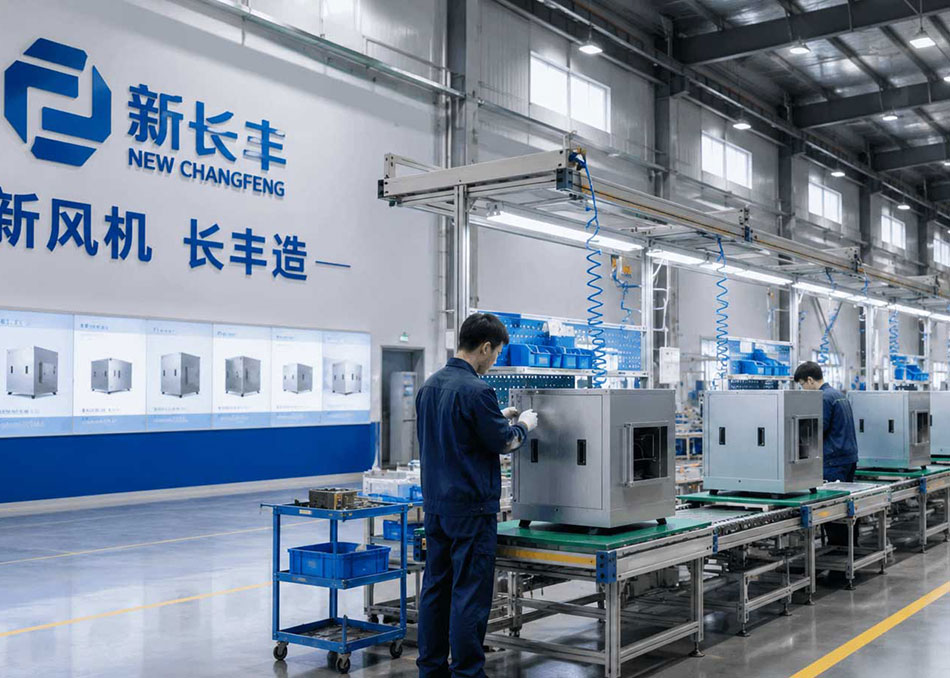
Internet cafes pack enormous heat load into every square meter: rows of gaming PCs, monitors, networking gear, and people, all inside a tightly sealed room. Split or cabinet air conditioners cool the same recirculated air without introducing fresh air, so CO₂ and odors build up even while the temperature looks fine. Simply adding exhaust fans swings the room into negative pressure, doors stick, and conditioned air is wasted. The core challenge is balancing fresh air supply, cooling, noise, and energy use. Water-cooled fresh air units are designed for exactly this — combining evaporative cooling with filtered fresh air to lower supply air temperature while replenishing oxygen.
Why Ordinary Fans and AC Alone Fall Short in Internet Cafes
Internet cafes are high-density occupancies. Dozens or hundreds of PCs, plus displays, routers, and switches, release heat continuously. Because doors and windows are usually kept closed to preserve air conditioning, airflow stagnates, CO₂ rises, and odors accumulate — hurting customer experience and seat turnover.
Split and cabinet air conditioners run a refrigeration cycle; they do not introduce outdoor air. In a sealed room, they simply re-cool the same air and move heat outdoors, so air quality does not improve. When the room is crowded, stuffiness remains. Adding exhaust fans alone creates excessive negative pressure — doors become hard to open, and cooled air is pulled out, raising energy costs.
The core conflict is clear: bring in enough outdoor fresh air without destroying the indoor cooling balance, while controlling noise and energy consumption. Water-cooled fresh air units address this by combining evaporative cooling with fresh air supply, lowering the temperature of incoming air while meeting ventilation needs.
How Water-Cooled Fresh Air Units Work — and Why They Fit Internet Cafes
A water-cooled fresh air unit (also called an evaporative fresh air unit) draws outdoor air through a wet cooling pad or water-cooled heat exchanger. As air passes, water evaporates and absorbs heat, reducing the supply air temperature before it enters the room. At the same time, the unit continuously introduces filtered outdoor air, diluting CO₂ and odors and maintaining a slight positive pressure that keeps hot, humid outside air from infiltrating through gaps.
For internet cafes, this dual function matters. Unlike a pure exhaust fan, the unit does not create strong negative pressure, so doors operate normally and air conditioning losses are reduced. Unlike a recirculating AC, it actually improves air quality. And unlike a simple fresh air fan, it tempers the incoming air, avoiding the common problem of blowing hot, humid outdoor air directly into a cooled space.
Selection should consider the unit's airflow, cooling effectiveness, noise level, and filtration. Because internet cafes operate long hours, energy efficiency and low maintenance are also critical. Units that use evaporative cooling typically consume less power than comparable refrigeration-based fresh air systems, but actual performance depends on local climate and unit design.
Key Selection Factors for Internet Cafe Applications
Choosing the right water-cooled fresh air unit requires balancing several practical factors. Over-sizing wastes energy and can create drafts; under-sizing fails to solve heat and air quality problems.
- Cooling capacity and airflow: Match the unit to the room's heat load, occupancy, and volume. High-density gaming areas need higher fresh air volumes. Avoid relying on vague claims — request performance data tested to relevant standards such as GB/T 1236 for fan performance.
- Noise level: Internet cafes are customer-facing spaces. Fans and water circulation should operate quietly, especially during late hours. Look for units designed with low-noise centrifugal fans and vibration isolation.
- Filtration and hygiene: Outdoor air carries dust and pollutants. Multi-stage filtration protects both customers and equipment. Easy access for filter cleaning and pad replacement is essential.
- Energy efficiency: Check fan energy efficiency against GB 19761 where applicable. Evaporative cooling can reduce compressor load, but water consumption and maintenance must be factored in.
- Control and integration: Variable speed control, temperature/humidity sensing, and compatibility with existing exhaust systems help maintain balanced pressure and comfort.
- Climate suitability: Evaporative cooling works best in hot, dry climates. In humid regions, sensible cooling capacity is lower, so units may need to be combined with dehumidification or conventional cooling.
Installation and Operational Best Practices
Proper installation determines whether a water-cooled fresh air unit delivers its intended benefits. Supply air should be distributed to occupied zones without short-circuiting directly to exhaust points. In internet cafes, ceiling or ducted distribution is common, but duct design must minimize pressure loss and noise.
Maintain a slight positive pressure relative to adjacent spaces to prevent infiltration of untreated air. If the cafe has kitchen or toilet exhaust, ensure the fresh air unit compensates for that exhaust to avoid negative pressure. Regular maintenance — cleaning cooling pads, checking water quality, replacing filters, and inspecting fan belts — keeps performance stable and prevents microbial growth.
For cafes in mixed-use buildings, coordinate with building management regarding outdoor air intake locations, noise, and water supply/drainage. In some cases, a hybrid approach using water-cooled fresh air for ventilation and a separate AC for peak cooling provides the best comfort and efficiency.
FAQ
Q: Can a water-cooled fresh air unit replace my air conditioner entirely?
A: Not always. Evaporative cooling lowers supply air temperature but may not achieve the same temperature drop as a refrigerant-based AC, especially in humid climates. It is best used to improve ventilation and reduce cooling load, often alongside existing AC. In dry climates, it can sometimes handle a significant portion of the cooling.
Q: Will it create negative pressure like an exhaust fan?
A: No. A water-cooled fresh air unit supplies outdoor air into the room, helping maintain neutral or slightly positive pressure. This reduces door operation issues and prevents uncontrolled infiltration of hot, humid air.
Q: How much maintenance does it need?
A: Regular maintenance includes cleaning or replacing filters, checking water quality and cooling pads, and inspecting fans and pumps. The frequency depends on local air quality and usage hours. A maintenance schedule is typically provided by the manufacturer.
Q: Is it noisy?
A: Noise varies by model and installation. Units designed for commercial spaces often use low-noise centrifugal fans and vibration isolation. Proper duct design and mounting also reduce noise. Always check published sound level data and consider a demo if noise is a concern.
Q: Can it help with kitchen exhaust in a cafe that serves food?
A: Yes, if the cafe has a kitchen, the fresh air unit can provide makeup air to balance kitchen exhaust, preventing negative pressure that pulls odors and smoke into dining areas. For kitchen exhaust purification, dedicated fume purifiers are also recommended. Consult a specialist to design an integrated system.
Conclusion
Internet cafes need more than cooling — they need clean, fresh air without wasting energy. Water-cooled fresh air units offer a practical way to introduce filtered outdoor air, lower its temperature through evaporation, and maintain a comfortable, odor-free environment. By selecting the right unit, installing it correctly, and maintaining it regularly, operators can improve customer experience and potentially reduce overall cooling costs. To explore equipment options for your cafe, visit www.xcffj.com or contact XCFFJ for a consultation.