
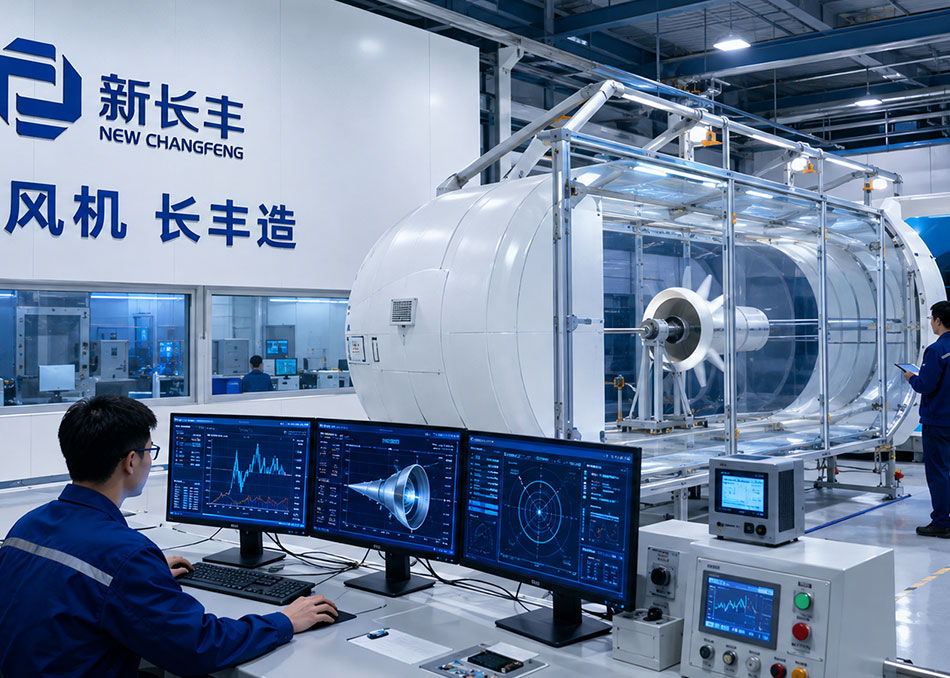
School canteens in Shenzhen share a common challenge: mealtimes are highly concentrated, and the kitchen is simultaneously wok-frying, steaming, and deep-frying. The result is a sudden surge of high-temperature, odor-laden cooking fumes. Because canteens are often adjacent to teaching buildings or dormitories, a poorly selected exhaust system can lead to grease escaping onto walls, noise complaints, and costly maintenance. Among the many options, the DT cabinet centrifugal fan has become a common choice for school canteen exhaust systems due to its compact structure, pressure adaptability, and ease of integration with air purification units. However, "common" does not mean "choose at random"—the wrong model can multiply cleaning, repair, and energy costs. This article explains the selection logic for DT cabinet centrifugal fans based on the actual operating conditions of school canteens in Shenzhen.
Why School Canteens Favor DT Cabinet Centrifugal Fans
School canteen exhaust systems differ significantly from those in ordinary commercial restaurants. They typically consist of multiple cooking stations, steaming zones, and exhaust hoods, with many branches and long duct runs that must pass through floors or climb along exterior walls to the roof. This means the system requires not "high airflow at low pressure" but a fan that can maintain stable suction under the resistance of long ducts and purification equipment.
Centrifugal fans are inherently better suited to such high-resistance, long-duct applications than axial fans. The DT cabinet centrifugal fan integrates the impeller, motor, and belt drive into a single cabinet, creating a structured unit. The cabinet design offers three direct benefits: first, the inner walls can be lined with sound-absorbing and thermal insulation materials to reduce mid-to-high frequency noise; second, the enclosed structure protects the motor and transmission from grease and moisture; third, the unit can be placed outdoors or on the roof, saving indoor space.
Additionally, DT cabinet centrifugal fans can be easily combined with electrostatic fume purifiers or UV photolysis units. The fan's pressure output must overcome the resistance of the purification equipment while still drawing fumes effectively from the hoods. This compatibility makes the DT fan a practical backbone for school canteen exhaust systems.
Key Selection Factors for DT Cabinet Centrifugal Fans
Selecting the right DT cabinet centrifugal fan requires a systematic evaluation of the actual cooking operations, duct layout, and local regulations. The following factors are critical.
- Airflow and pressure requirements: Calculate the total exhaust volume based on the number and type of cooking stations (wok ranges, steamers, fryers). Then estimate the system resistance, including duct length, elbows, hoods, and purification equipment. The fan must deliver the required airflow at that resistance. Refer to GB/T 1236 for fan performance testing to ensure the fan's published curve matches real-world conditions.
- Motor power and energy efficiency: Choose a motor that provides sufficient margin without being oversized. An undersized motor may overheat; an oversized one wastes energy. Check the fan's energy efficiency against GB 19761 to minimize operating costs.
- Noise control: School canteens are often near classrooms or dormitories. Select a fan with low noise levels and consider additional silencers or acoustic enclosures. The cabinet design itself provides some attenuation, but belt-driven models may require extra attention to belt tension and pulley alignment to avoid excessive noise.
- Material and construction: The fan must withstand grease-laden, humid air. Choose models with corrosion-resistant coatings or stainless steel components where necessary. The cabinet should be easy to open for cleaning and maintenance.
- Compliance with emission standards: In China, kitchen fume emissions must meet GB 18483. The exhaust system, including the fan and purifier, should be designed to achieve the required purification efficiency. For fire safety, refer to GB 51251 for smoke exhaust considerations if the duct passes through fire compartments.
- Installation and maintenance access: Ensure the fan location allows safe access for routine cleaning, belt replacement, and bearing lubrication. Roof-mounted units need weather protection and vibration isolation.
Integrating DT Fans with Fume Purification Systems
A DT cabinet centrifugal fan is only one part of a complete exhaust and purification system. The fan must be matched with an appropriate fume purifier—typically electrostatic precipitators or combined electrostatic and UV units—to remove grease, smoke, and odor. The fan should be installed downstream of the purifier to avoid grease accumulation on the impeller, which can cause imbalance and reduce performance. However, in some layouts, a pre-filter or grease filter is placed before the fan to capture heavy grease.
The system design should also consider make-up air. If the kitchen exhausts a large volume of air without adequate replacement, negative pressure can cause doors to be hard to open and reduce exhaust efficiency. A balanced supply of fresh air, possibly through a dedicated make-up air unit, helps maintain proper airflow and improves kitchen comfort.
For school canteens, it is advisable to use variable frequency drives (VFDs) on the fan motor. During off-peak hours, the fan speed can be reduced to save energy and lower noise. VFDs also allow fine-tuning of airflow to match actual cooking loads, which is especially useful when the menu or cooking equipment changes.
Common Pitfalls and How to Avoid Them
Many school canteen exhaust problems stem from avoidable mistakes during selection and installation. Being aware of these pitfalls can save significant time and money.
- Underestimating system resistance: Adding a purifier or extra ductwork after the fan is selected can reduce airflow dramatically. Always calculate the total resistance with all components included.
- Ignoring future expansion: Schools may add cooking stations or extend operating hours. Selecting a fan with some reserve capacity (but not excessive) can accommodate future needs without premature replacement.
- Overlooking maintenance: Grease buildup on the impeller is a leading cause of vibration and failure. Specify a fan that is easy to clean and establish a regular maintenance schedule.
- Neglecting noise ordinances: Shenzhen has strict noise regulations, especially at night. Choose low-noise models and consider additional attenuation.
- Improper installation: Incorrect belt tension, misaligned pulleys, or inadequate foundation can cause premature wear and noise. Follow the manufacturer's installation instructions carefully.
Frequently Asked Questions
Q: What is the difference between a DT cabinet centrifugal fan and a standard centrifugal fan?
A: The DT cabinet centrifugal fan is a packaged unit with the impeller, motor, and drive enclosed in a cabinet. This design reduces noise, protects components from grease and weather, and simplifies outdoor installation. Standard centrifugal fans are often open and require additional enclosures or weather protection.
Q: Can I install the DT fan before the fume purifier?
A: It is generally not recommended. Installing the fan before the purifier exposes the impeller to heavy grease, which can cause imbalance and reduce efficiency. The fan should ideally be placed after the purifier, unless a pre-filter is used to capture most grease. Always consult the purifier and fan manufacturers for the best arrangement.
Q: How often should a school canteen exhaust fan be cleaned?
A: Cleaning frequency depends on cooking volume and the effectiveness of the grease filters. In a busy school canteen, inspect the fan and ductwork monthly and clean as needed. At minimum, perform a thorough cleaning at least once per semester. Regular cleaning maintains airflow and prevents fire hazards.
Q: What should I do if the fan is too noisy?
A: First, check for loose components, worn belts, or unbalanced impellers. If the noise persists, consider adding a silencer to the duct or installing the fan in an acoustic enclosure. Also ensure the fan speed is appropriate for the required airflow—excessive speed increases noise. If noise remains a problem, consult a ventilation engineer to review the system design.
Choosing the right DT cabinet centrifugal fan for a school canteen in Shenzhen requires careful attention to airflow, pressure, noise, energy efficiency, and maintenance. By understanding the unique demands of school kitchens and following industry standards, you can create a reliable, compliant, and cost-effective exhaust system. For tailored advice and high-quality ventilation equipment, contact XCFFJ—we specialize in industrial and commercial ventilation solutions, including DT cabinet centrifugal fans, fume purifiers, and complete kitchen exhaust systems.