
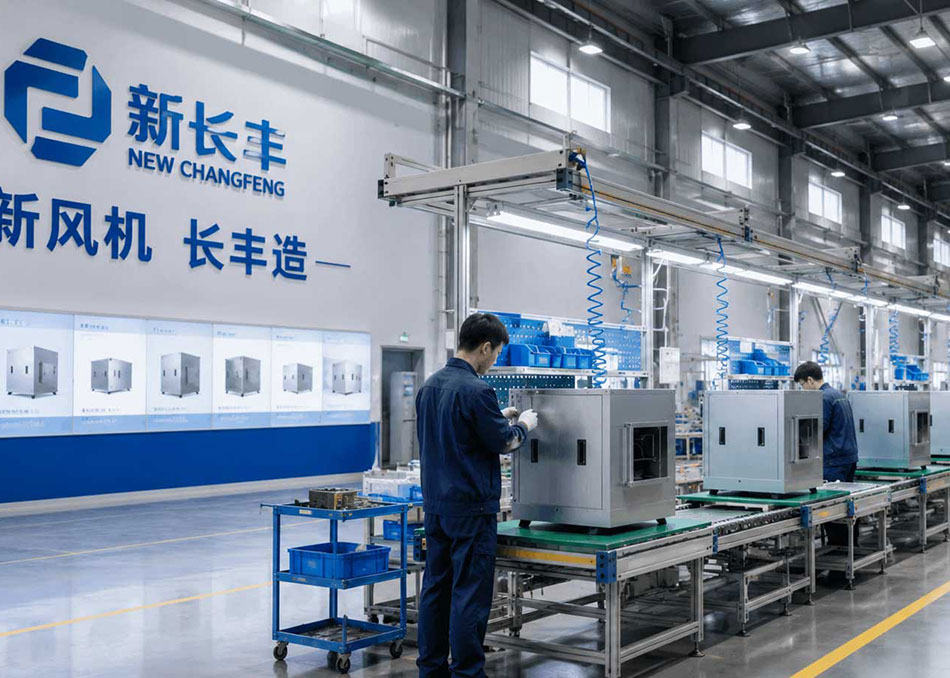
Internet cafés are high-density, long-operating-hours, enclosed commercial spaces. With dozens or even hundreds of computers and monitors continuously generating heat, plus dense occupancy and doors and windows that stay closed, the indoor heat load and pollutant concentration are far higher than in ordinary commercial spaces. Many operators find that air conditioning alone leads to a familiar dilemma: the temperature won't come down, the air feels increasingly stuffy, and electricity bills keep climbing. Truly solving ventilation and cooling in an internet café requires addressing both cooling and air exchange together—and that is exactly where water-cooled fresh air units come into play. This article covers the technical principles, selection criteria, installation, and maintenance, and offers practical advice on choosing a manufacturer.
Why Air Conditioning Alone Falls Short in Internet Cafés
The heat source structure of an internet café dictates ventilation needs that differ from ordinary shops. Equipment heat dissipation is a continuous sensible heat load, while respiration and sweat evaporation from occupants add a latent heat load. Together, they cause indoor enthalpy to rise continuously. Traditional split air conditioners or cabinet units circulate and cool air within a closed space; they can only move heat around, not introduce fresh air. Carbon dioxide, odors, dust, and volatile organic compounds accumulate indoors, and customers experience the space as "cold but stuffy."
From a ventilation engineering perspective, an internet café needs a stable "supply–exhaust" airflow organization. If you only exhaust without supplying, the space becomes negatively pressurized, and untreated hot outdoor air and dust are drawn in through door and window gaps. If you only supply without exhausting, polluted air cannot escape, and the effect is equally compromised. A water-cooled fresh air unit fulfills the role of "organized supply air plus evaporative cooling." When paired with exhaust facilities to create directional airflow, it can carry away heat, moisture, and pollutants together.
How Water-Cooled Fresh Air Units Work
A water-cooled fresh air unit draws in outdoor air and passes it through an evaporative cooling pad or spray chamber. As water evaporates, it absorbs sensible heat from the air, lowering the dry-bulb temperature while increasing humidity. The cooled fresh air is then delivered into the room by a centrifugal fan. Compared with conventional air conditioning, this approach consumes far less electricity because the main energy consumer is the fan and a small water pump, not a compressor.
The unit operates as a direct evaporative cooler. Its cooling effect depends on the outdoor wet-bulb temperature: in dry climates, the temperature drop is significant; in humid regions, the drop is smaller but still provides ventilation and some cooling. Importantly, the unit continuously introduces fresh air, creating positive pressure indoors that prevents the infiltration of untreated outdoor air and pollutants through gaps. This positive-pressure fresh air supply is the core advantage for internet cafés.
Selection and Sizing Considerations
Proper selection ensures the unit meets cooling and ventilation demands without excessive energy use. Consider the following factors:
- Cooling load calculation: Account for heat from computers, lighting, occupants, and solar gain through the building envelope. Use a professional load calculation rather than rule-of-thumb estimates.
- Airflow requirement: Determine the required fresh air volume based on occupancy and space volume, referring to ventilation standards for public buildings. Ensure the unit's airflow matches the calculated demand.
- Static pressure: Consider the resistance of ductwork, filters, and outdoor louvers. Select a unit with sufficient external static pressure to overcome the system resistance.
- Water quality and consumption: Evaporative cooling consumes water; ensure a reliable water supply and consider water treatment to prevent scale and bacterial growth.
- Noise level: Internet cafés require a quiet environment. Choose units with low-noise centrifugal fans and consider acoustic insulation in the installation.
Work with a manufacturer that provides performance data tested in accordance with GB/T 1236 (fan performance testing) and compliant with GB 19761 (fan energy efficiency). This ensures the unit's airflow and efficiency claims are reliable.
Installation and Airflow Organization
Correct installation is critical to performance. The unit should be located outdoors or in a dedicated plant room, with ductwork routing fresh air to occupied zones. Supply air outlets should be positioned to avoid direct drafts on customers while ensuring good mixing. Exhaust fans should be installed to remove stale air, preferably at high level or near heat sources, to create a directional airflow from clean to dirty zones.
Maintain a slight positive pressure indoors (typically a few pascals) to prevent infiltration. This is achieved by balancing supply and exhaust air volumes. In practice, supply air volume should slightly exceed exhaust volume. Use adjustable dampers and commissioning to achieve the correct balance. Also ensure that the unit's outdoor air intake is away from exhaust outlets and pollution sources.
Maintenance and Operational Best Practices
Regular maintenance preserves cooling efficiency and air quality. Key tasks include:
- Periodically clean or replace the evaporative cooling pad to prevent scaling and mold.
- Inspect and clean water filters, pumps, and distribution systems.
- Check fan belts and bearings for wear, and lubricate as needed.
- Clean ductwork and air outlets to avoid dust accumulation.
- Monitor water quality and treat if necessary to control bacteria and scale.
Operationally, use the unit in conjunction with exhaust fans and, if needed, supplemental air conditioning during peak summer. The water-cooled fresh air unit handles ventilation and sensible cooling, reducing the load on air conditioning and lowering overall energy consumption. In milder seasons, the unit can provide ventilation without cooling (dry mode) to save water and energy.
Choosing a Manufacturer
Selecting a reliable manufacturer is essential for long-term performance and support. Look for the following:
- Experience in commercial ventilation and cooling, with a track record in similar projects.
- Products tested to relevant standards and with documented performance data.
- Customization capabilities to match specific airflow and static pressure requirements.
- Comprehensive after-sales service, including installation guidance and spare parts availability.
- Compliance with safety and quality certifications.
XCFFJ (Shenzhen Xinchangfeng Dust Removal & Cooling Equipment Co., Ltd.) specializes in industrial and commercial ventilation and cooling equipment, including water-cooled fresh air units. With expertise in airflow design and a focus on energy efficiency, XCFFJ provides tailored solutions for internet cafés and other commercial spaces. Visit www.xcffj.com to learn more.
FAQ
Q: Can a water-cooled fresh air unit replace air conditioning in an internet café?
A: Not entirely. A water-cooled fresh air unit provides ventilation and evaporative cooling, which can significantly reduce the cooling load on air conditioning. However, in hot and humid climates, additional air conditioning may be needed to maintain comfortable temperatures. The unit is most effective when used in combination with air conditioning and exhaust fans.
Q: How much maintenance does a water-cooled fresh air unit require?
A: Regular maintenance is important. The cooling pad should be cleaned or replaced periodically (frequency depends on water quality and usage), and water filters, pumps, and fans should be inspected. A monthly check and an annual thorough service are typical. Following the manufacturer's maintenance schedule ensures optimal performance and longevity.
Q: What is the typical lifespan of a water-cooled fresh air unit?
A: With proper installation and maintenance, a quality unit can last many years. The fan and motor are the main components subject to wear; regular servicing extends their life. The evaporative cooling pad is a consumable and will need replacement periodically. Choosing a reputable manufacturer with available spare parts helps maximize lifespan.
Q: Is a water-cooled fresh air unit suitable for areas with hard water?
A: Yes, but water treatment may be necessary. Hard water can cause scale buildup on the cooling pad and in the water system, reducing efficiency. Installing a water softener or using scale inhibitors is recommended. Consult the manufacturer for specific guidance based on your water quality.
In summary, water-cooled fresh air units offer an energy-efficient solution for internet café ventilation and cooling by combining fresh air supply with evaporative cooling. Proper selection, installation, and maintenance are key to realizing their benefits. For expert advice and tailored solutions, contact XCFFJ today.