
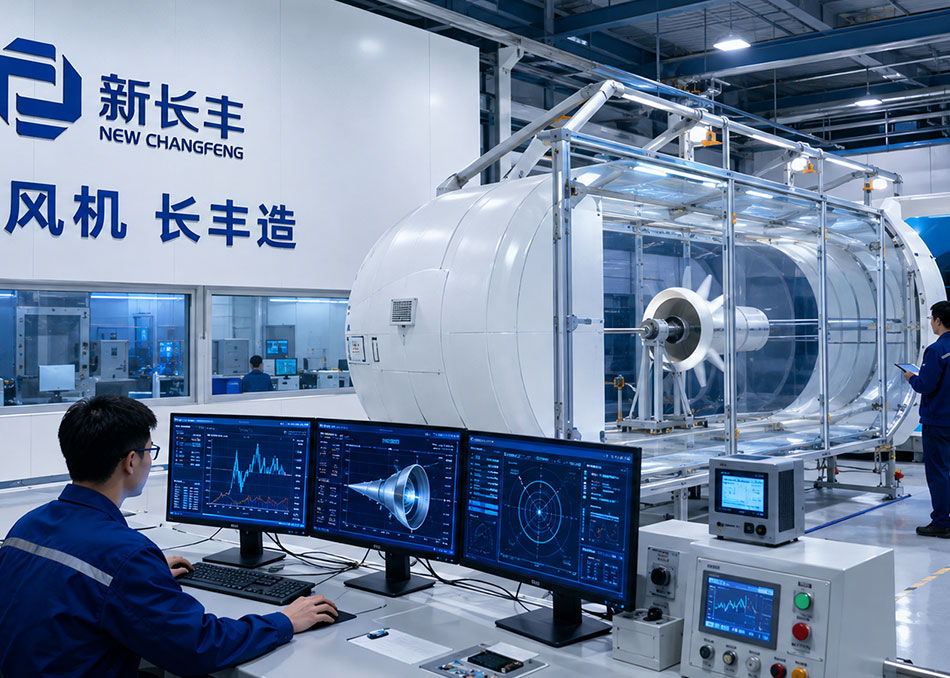
Walk into any busy commercial kitchen—a hotel back-of-house, a school canteen, a factory staff kitchen—and you will often feel it before you see it: doors that resist opening, exhaust hoods that seem to struggle, cooking odors drifting into the dining room. These are classic symptoms of excessive negative pressure. The culprit is rarely the exhaust system alone; it is an imbalance between what is being pulled out and what is allowed back in. This article explains why negative pressure occurs in commercial kitchens, why it matters, and how water-cooled fresh air units (水冷新风机) can provide a controlled, temperature-conditioned make-up air solution.
Why Negative Pressure Builds Up in Commercial Kitchens
Commercial kitchen exhaust systems are designed to capture grease, smoke, heat, and moisture at the source. High-capacity exhaust fans—often roof-mounted or wall-mounted centrifugal units—move large volumes of air out of the kitchen. In many facilities, however, the make-up air system is undersized, poorly designed, or simply absent. When exhaust airflow exceeds supply airflow, the kitchen becomes negatively pressurized relative to adjacent spaces and the outdoors.
Under negative pressure, air does not politely wait to enter through a dedicated make-up air unit. It forces its way in through any available opening: door gaps, wall penetrations, drainage traps, and even the exhaust ductwork itself. This uncontrolled infiltration is what causes the familiar operational headaches:
Doors become difficult to open and may not latch properly, creating security and fire-safety concerns.
Air curtains and door barriers fail because their airflow is overwhelmed by the pressure differential.
Grease and odor migration occurs as cooking fumes are drawn into dining areas or neighboring spaces.
Burner performance becomes unstable when combustion air supply is inconsistent.
Staff discomfort increases due to hot, humid, or drafty conditions.
From a ventilation engineering standpoint, kitchen exhaust and make-up air must be balanced dynamically. The goal is not simply to exhaust more air, but to establish a stable, controllable, and temperature-conditioned supply path that compensates for the air being removed.
How Water-Cooled Fresh Air Units Work
A water-cooled fresh air unit is an evaporative cooling-based make-up air system. Outdoor air is drawn through a wet media pad or water spray film. As water evaporates, it absorbs sensible heat from the air, lowering its dry-bulb temperature before the air is delivered into the kitchen by a centrifugal fan. This is not refrigeration-based air conditioning; it is evaporative cooling, which is most effective in hot, dry climates and still provides useful relief in humid conditions when properly sized.
Compared with a simple axial supply fan, a water-cooled fresh air unit does more than just fill the air balance. It introduces cooler, fresher air into the kitchen, helping to offset the heat generated by cooking equipment and improving working conditions. Compared with directly drawing in hot outdoor air, it reduces the temperature of the make-up air stream, which can lessen the load on any supplemental cooling system and improve overall kitchen comfort.
Key components typically include:
Evaporative cooling media or spray system — where heat exchange occurs.
Centrifugal fan section — to overcome ductwork resistance and deliver air to the desired location.
Water circulation and distribution system — pump, piping, and controls to maintain proper wetting of the media.
Filtration — to keep the cooling media and supply air clean.
Controls — for fan speed, water flow, and integration with the kitchen exhaust system.
Integrating Water-Cooled Fresh Air Units into a Kitchen Ventilation Strategy
Effective negative pressure control requires a holistic approach. The water-cooled fresh air unit is one part of a balanced system that includes exhaust hoods, ductwork, exhaust fans, and controls. Here are practical considerations for integration:
Balance exhaust and supply airflow: Work with a ventilation engineer to determine the required make-up air volume based on the exhaust system's actual operating airflow. The goal is to maintain a slight negative pressure relative to the dining area (to contain odors) while avoiding excessive negative pressure that causes operational problems.
Locate supply air outlets thoughtfully: Direct cool air toward hot zones—near cooking lines—without creating drafts that disrupt hood capture. Avoid short-circuiting air directly into exhaust hoods.
Consider climate and humidity: Evaporative cooling performance varies with outdoor wet-bulb temperature. In humid climates, supplemental dehumidification or alternative cooling may be needed. In dry climates, water-cooled fresh air units can be highly effective.
Plan for maintenance: Water quality, media cleanliness, and pump operation affect performance and hygiene. Regular inspection and cleaning are essential to prevent scale, algae, and odors.
Integrate controls: Variable-frequency drives on supply and exhaust fans allow the system to modulate based on actual cooking activity, saving energy and maintaining balance.
For projects in China, relevant standards such as GB 18483 for kitchen fume emission and GB 51251 for smoke and heat exhaust systems provide useful reference points. Fan performance should be verified according to GB/T 1236, and energy efficiency can be evaluated against GB 19761. These standards help ensure that equipment selections are not only effective but also compliant and energy-conscious.
Benefits of Water-Cooled Fresh Air Units for Negative Pressure Relief
When properly applied, water-cooled fresh air units offer several advantages for commercial kitchens:
Pressure balance: They provide a dedicated, controlled path for make-up air, reducing uncontrolled infiltration and its associated problems.
Temperature relief: By cooling the incoming air, they improve kitchen comfort and can reduce the perceived heat load.
Energy efficiency: Evaporative cooling consumes less energy than mechanical refrigeration for equivalent temperature reduction in suitable climates.
Improved hygiene: By maintaining proper pressure relationships, they help contain grease and odors within the kitchen zone.
Scalability: Units can be selected and combined to match the specific airflow and cooling requirements of a given kitchen.
Frequently Asked Questions
Q: Can a water-cooled fresh air unit completely solve negative pressure problems on its own?
A: No single component can solve negative pressure in isolation. The unit must be correctly sized and integrated with the exhaust system and controls. The goal is to achieve a balanced airflow where supply air compensates for most of the exhaust volume, leaving only a slight negative pressure to contain odors. A qualified ventilation engineer should assess the entire system.
Q: Is evaporative cooling effective in humid climates?
A: Evaporative cooling performance depends on the difference between dry-bulb and wet-bulb temperatures. In humid climates, the cooling effect is reduced. In such cases, water-cooled fresh air units can still provide ventilation and some cooling, but supplemental dehumidification or refrigeration-based cooling may be necessary to achieve desired comfort levels. It is important to evaluate local climate data before selecting equipment.
Q: What maintenance does a water-cooled fresh air unit require?
A: Regular maintenance includes checking and cleaning the evaporative cooling media, inspecting the water distribution system for clogs or scale, maintaining the pump, checking fan belts and bearings, and replacing filters. Water quality treatment may be needed to prevent biological growth and mineral buildup. A maintenance schedule should be developed based on local water conditions and operating hours.
Q: How does a water-cooled fresh air unit compare with a traditional make-up air unit?
A: Traditional make-up air units may simply supply outdoor air without cooling, or they may use chilled water or DX coils for cooling. Water-cooled fresh air units use evaporative cooling, which is generally more energy-efficient in suitable climates but less effective in humid conditions. The choice depends on climate, budget, and specific project requirements.
Conclusion
Negative pressure in commercial kitchens is a common but solvable problem. The key is to treat exhaust and make-up air as a balanced system, not as independent components. Water-cooled fresh air units offer a practical way to provide temperature-conditioned make-up air, helping to stabilize pressure, improve comfort, and contain odors. For facility managers, kitchen designers, and HVAC professionals, integrating the right make-up air strategy early in the design process can prevent costly operational issues down the line.
If you are planning a kitchen ventilation project or troubleshooting negative pressure issues, consult with a qualified ventilation engineer and consider equipment that meets relevant performance and efficiency standards. XCFFJ manufactures a range of commercial ventilation and cooling equipment, including water-cooled fresh air units, and can provide application guidance for your specific project. Visit www.xcffj.com to learn more.