
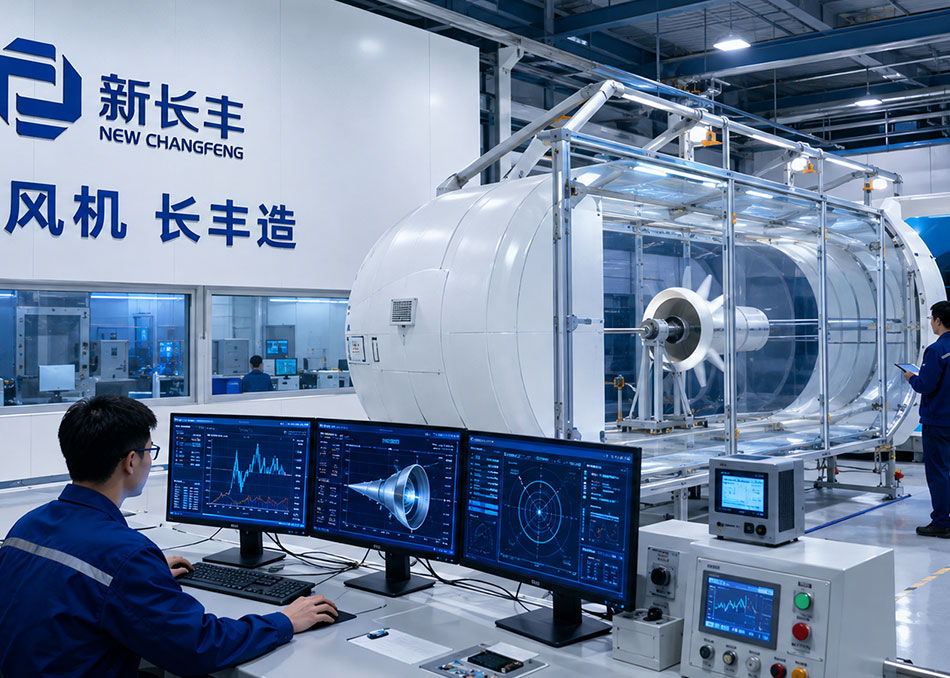
In commercial kitchens, a powerful exhaust hood alone rarely delivers a comfortable, safe working environment. After upgrading the exhaust system, many operators notice a familiar set of problems: the hood seems to have decent suction, yet the cooking area stays oppressively hot; chefs sweat through their uniforms; cooking fumes spill out from unexpected places; doors become hard to open or close; and odors creep in from adjacent spaces. The root cause is often not a weak exhaust fan — it is inadequate make-up air.
Why Negative Pressure Is a Hidden Problem in Commercial Kitchens
When a kitchen exhaust system runs, it continuously removes large volumes of air from the space. If no corresponding amount of fresh air is supplied, the kitchen develops negative pressure relative to surrounding areas. This pressure imbalance has several concrete consequences:
- Reduced effective exhaust volume: The exhaust hood's actual airflow drops below its rated capacity because the fan is fighting against a starved air supply.
- Insufficient combustion air: Gas-fired cooking equipment may receive less oxygen than needed, affecting performance and safety.
- Fume spillage: Cooking fumes can escape from hood edges or other unintended openings rather than being captured.
- Odor migration: Smells from the kitchen can be drawn into dining areas or neighboring rooms through pressure-driven pathways.
- Accelerated heat stress: In hot, humid conditions, stagnant air and high temperatures push staff comfort and productivity down.
According to the Technical Standard for Smoke Control and Exhaust Systems in Buildings (GB 51251) and general principles of commercial kitchen ventilation design, exhaust and make-up air should be planned as an integrated system. Make-up air volume needs to be matched with exhaust volume to maintain a balanced or slightly positive kitchen environment. This is where a water-cooled fresh air unit plays a distinct role: it handles the make-up air task while also cooling the incoming outdoor air through evaporative water cooling, addressing both ventilation and temperature control in one step.
What a Water-Cooled Fresh Air Unit Does in a Commercial Kitchen
A water-cooled fresh air unit is an evaporative cooling type of outdoor air handling device. Its working principle is straightforward: water evaporates and absorbs heat, cooling the incoming outdoor air through an enthalpy exchange process. The cooled fresh air is then delivered into the kitchen via ductwork or direct discharge.
Compared with a standard axial fan or a simple supply fan, the key advantage is that it lowers the supply air temperature while providing make-up air. In a commercial kitchen, where internal heat gains from cooking equipment are high, this dual function helps mitigate the common problem of hot, humid make-up air adding to the discomfort rather than relieving it.
From a system design perspective, a water-cooled fresh air unit can be positioned to:
- Deliver filtered, cooled outdoor air directly to the cooking zone or to the perimeter of the kitchen.
- Help maintain the kitchen at a slight negative pressure relative to the dining area — enough to contain odors, but not so negative that exhaust performance suffers.
- Reduce the load on separate air conditioning systems by pre-cooling ventilation air.
Installation and Integration Considerations
Proper installation is critical to getting the expected performance from a water-cooled fresh air unit. While every kitchen layout differs, the following general guidelines apply:
- Locate the unit for easy service access: Water supply, drainage, and evaporative media need periodic maintenance. Avoid installing the unit in cramped or hard-to-reach areas.
- Plan ductwork to minimize pressure loss: Long, winding ducts or excessive fittings reduce airflow. Keep duct runs as direct as practical and size them according to the unit's rated capacity.
- Coordinate with exhaust system controls: Ideally, the make-up air unit and exhaust fan should be interlocked or modulated together so that supply and exhaust remain balanced under varying cooking loads.
- Ensure proper water quality and drainage: Evaporative cooling performance depends on clean water and effective drainage. Poor water quality can lead to scale buildup, reducing efficiency and requiring more frequent maintenance.
- Consider air distribution: Supply air should be directed to avoid blowing directly on cooking surfaces (which can affect flame stability) and to avoid short-circuiting into the exhaust hood.
For kitchens in hot and humid climates, the evaporative cooling effect is particularly valuable. However, in extremely humid conditions, the temperature drop may be less pronounced. A professional ventilation assessment can help determine whether a water-cooled fresh air unit alone is sufficient or whether supplementary cooling is needed.
Key Benefits for Restaurant Back-of-House Operations
Integrating a water-cooled fresh air unit into a kitchen ventilation strategy offers several practical benefits:
- Improved exhaust performance: By relieving negative pressure, the exhaust hood can operate closer to its designed airflow, capturing fumes more effectively.
- Better working conditions: Cooler supply air reduces heat stress, which can improve staff comfort, morale, and retention.
- Enhanced odor control: A balanced pressure relationship helps keep cooking odors contained within the kitchen zone.
- Energy efficiency: Evaporative cooling typically consumes less energy than refrigerated air conditioning for the same ventilation air volume.
- Compliance support: A properly designed make-up air system helps meet ventilation requirements and supports compliance with kitchen fume emission standards such as GB 18483.
Frequently Asked Questions
Q: Can I just open a window or door to provide make-up air?
A: While opening a window or door can relieve some negative pressure, it is an uncontrolled solution. It may allow hot, humid, or polluted outdoor air into the kitchen, and it cannot ensure consistent airflow matching the exhaust volume. A dedicated make-up air unit provides filtered, cooled air in a controlled manner, which is far more reliable for maintaining kitchen comfort and exhaust performance.
Q: How do I know if my kitchen has a negative pressure problem?
A: Common signs include difficulty opening doors outward, exhaust hoods that seem weak despite being properly sized, cooking odors in adjacent areas, and visible fume spillage around hood edges. A qualified ventilation professional can measure pressure differentials and airflow to confirm whether make-up air is insufficient.
Q: Does a water-cooled fresh air unit require a lot of maintenance?
A: Maintenance is generally straightforward but should be regular. Key tasks include checking and cleaning the evaporative media, ensuring proper water supply and drainage, and inspecting the unit for scale or debris. The frequency depends on local water quality and usage intensity. Following the manufacturer's maintenance schedule helps sustain cooling efficiency and airflow.
Q: Can a water-cooled fresh air unit be retrofitted into an existing kitchen?
A: In many cases, yes. Retrofitting requires evaluating available space, duct routing, water supply, and electrical connections. It is best to work with a ventilation specialist who can assess the existing exhaust system and design a make-up air solution that integrates properly.
Conclusion
Negative pressure in commercial kitchens is a common but often overlooked issue that undermines exhaust performance, staff comfort, and odor control. A water-cooled fresh air unit addresses this by supplying cooled, filtered outdoor air to balance the exhaust system. When properly selected, installed, and maintained, it can transform a hot, stuffy back-of-house into a more comfortable and efficient working environment.
If you are planning a kitchen ventilation upgrade or dealing with persistent negative pressure problems, XCFFJ offers a range of water-cooled fresh air units and ventilation solutions designed for commercial kitchen applications. Contact us to discuss your project requirements and find the right make-up air solution for your kitchen.